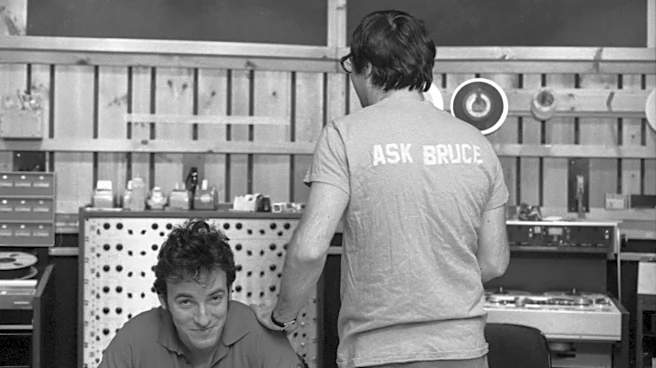






Bruce Springsteen's 1973 album, *The Wild, the Innocent & the E Street Shuffle*, marked a significant shift in his musical direction, moving away from the folk influences of his debut towards a more robust, full-band rock and R&B sound. The creation of this album was a concentrated effort, primarily taking place in the summer and early fall of 1973. The recording sessions were characterized by intense periods of work, including the rapid completion
of many backing tracks and the development of new songs right up until the final days. This period was crucial in solidifying the sound that would become synonymous with Springsteen and the E Street Band.
Initial Sessions and Early Discarded Tracks
The recording journey for *The Wild, the Innocent & the E Street Shuffle* commenced on May 14, 1973. The very first day in the studio was dedicated to a track initially titled "Circus Song," which would later be refined and renamed "Wild Billy's Circus Story." This initial session laid some groundwork, but the process was not without its detours. Just two days after starting, another song, "The Fever," was recorded in a single take. However, despite its quick completion, this track was ultimately discarded and did not make it onto the final album, illustrating the selective nature of the creative process.
Following these early efforts, there was a brief hiatus in recording. Sessions did not resume until June 22, indicating a pause before the main bulk of the album's material began to take shape. This break might have allowed for further song development or planning before the band re-entered the studio with renewed focus. The subsequent period proved to be highly productive, with most of the album's backing tracks and a significant portion of the overall material being laid down by the end of that week in June.
Intensive Summer Recording and Final Touches
The summer of 1973 was a busy time for Springsteen and his band. Key tracks for the album were completed during this period. For instance, "The E Street Shuffle" was recorded in a single session on June 28, the same day "Circus Song" was finalized and retitled. Another significant piece, "New York City Serenade," reached completion on August 7. These sessions highlight a period of intense creativity and productivity, where the band was actively shaping the album's distinct sound.
The final day of recording sessions, September 23, 1973, was particularly eventful and crucial for the album's completion. On this day, final touches were applied to "Kitty's Back." Additionally, the last verse of "4th of July, Asbury Park (Sandy)" received an overdub with new lyrics, indicating ongoing lyrical refinement. Perhaps most notably, two brand new songs, "Rosalita (Come Out Tonight)" and "Incident on 57th Street," were recorded from scratch and fully completed on this very last day. This demonstrates a dynamic and evolving creative process, with significant material being added right up to the deadline.
Musical Evolution and Release Challenges
Biographer Peter Ames Carlin noted that with *The Wild, the Innocent & the E Street Shuffle*, Springsteen developed a "renewed passion for full-band rock 'n' roll." This sentiment is echoed by Sputnikmusic critic Adam Thomas, who observed that the album moved away from the folk influences of Springsteen's debut, *Greetings from Asbury Park, N.J.*, towards "a grand fusion of nostalgic rock 'n' roll and soulful R&B." This stylistic shift was clearly evident in the tracks recorded during these sessions, showcasing a more expansive and energetic sound.
The album's release, however, was not without its complications. While Springsteen's official website lists September 11, 1973, as the release date, it is known that recording continued past this point, with September 23 being the final session. After mixing and sequencing, the album was actually released on November 5, 1973. This delayed release was accompanied by very little press, no advertisements in trade papers, and no release party. This subdued launch was possibly due to Springsteen's deteriorating relationship with Columbia Records and the departures of John Hammond and Clive Davis, the executives who had signed him. This challenging situation would persist, nearly leading to the termination of Springsteen's contract in 1974, underscoring the difficult environment surrounding the album's debut despite its musical significance.