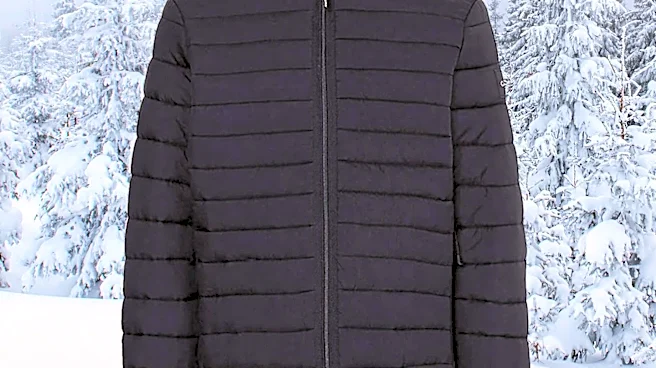








The puffer jacket, commonly known as a down jacket, is more than just a winter coat; it's a marvel of insulation technology wrapped in a continually evolving fashion statement. At its core, the jacket's effectiveness stems from its unique construction: it is a quilted garment insulated with either duck or goose feathers. These feathers, particularly down feathers, are crucial because they create numerous small air pockets within the jacket. These air pockets are the key
to retaining warm air, making the puffer jacket an exceptionally efficient insulator against cold temperatures. This blend of scientific principle and aesthetic adaptability has cemented its place as a winter wardrobe essential.
The Insulating Power of Down
The primary reason down is favored for insulation, especially among hikers and backpackers, is its superior warmth-to-weight ratio and compressibility. Down can be easily compressed into a small size, making it convenient for packing. The insulating capability of down is measured by its "fill power," which quantifies the number of cubic inches one ounce of down fills. For instance, one ounce of 700 fill-power down will occupy 700 cubic inches. A higher fill power indicates that the jacket will compress better and be lighter relative to its volume and warmth. Generally, goose down is considered loftier than duck down, offering superior insulation properties.
Beyond fill power, the construction of the jacket's baffles also plays a role in its warmth. "Box construction" baffles are typically warmer than "sewn through" baffles, as they prevent cold spots. However, down's effectiveness is compromised when wet; if water absorbs into the down material, it loses its puffy loft and, consequently, its warmth until it dries. To combat this, some down jackets feature a durable water repellent (DWR) finish, allowing them to withstand light drizzles for about an hour. Others use hydrophobic down, which is coated with a material to delay water absorption. For jackets without these features, such properties can often be added at home with specialized products. Additionally, some jackets are labeled "downproof" to indicate a reduced tendency to leak feathers.
Synthetic Alternatives and Durability
While real down offers an excellent warmth-to-weight ratio and compressibility, synthetic down alternatives have their own advantages. Synthetic insulation generally provides better water resistance than untreated natural down. In terms of durability, both real and synthetic down jackets are considered equally robust. This means consumers can choose based on their priorities: superior natural insulation and compressibility with real down, or enhanced water resistance with synthetic options.
Fashion Evolution and Modern Trends
The puffer jacket's journey from a purely functional item to a fashion icon is marked by several key transformations. After its initial popularity in winter sports communities, it was tailored and marketed to the wealthy as an evening layer in the 1940s. The 1970s saw designer Norma Kamali reimagine it as an athleisure jacket for women, famously calling it the "sleeping bag jacket." This version used a synthetic down alternative, highlighting the adaptability of the jacket's core concept.
Throughout the 1980s, bright neon-colored puffers were popular in Italy, reflecting the era's vibrant fashion. The 1990s brought a surge in popularity among ravers and later hip-hop artists in the U.S., solidifying its place in youth culture and urban fashion. In recent decades, the puffer jacket has become a winter fashion staple. While designers and influencers in 2020 favored longer, knee-length styles in subtle beige tones, praising their versatility, cropped puffer jackets continue to be in fashion in 2024. This ongoing evolution demonstrates how the fundamental insulating properties of the puffer jacket can be continually adapted to meet changing aesthetic demands, ensuring its enduring presence in both practical and stylish wardrobes.