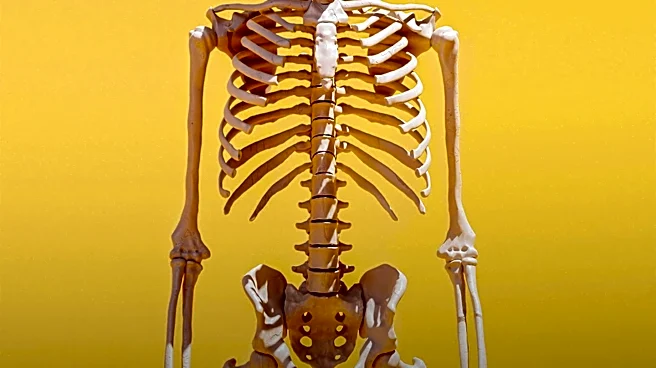







The clavicle, commonly known as the collarbone or keybone, is a fascinating and crucial component of the human skeletal system. This slender, S-shaped long bone, typically measuring about 6 inches (15 centimeters) in length, plays a vital role in connecting the shoulder blade to the sternum, or breastbone. Unique among the body's long bones, the clavicle is the only one that lies horizontally. There are two clavicles, one positioned on each side of the body,
and together with the shoulder blade, they form what is known as the shoulder girdle. Its name originates from the Latin word "clavicula," meaning "little key," a reference to how the bone rotates along its axis, much like a key, when the shoulder is moved away from the body.
Structural Significance and Position
Beyond its distinctive S-shape, the clavicle's primary function is to act as a strut, maintaining the scapula (shoulder blade) in its correct position. This structural support allows the arm to hang freely and move through a wide range of motion. Located directly above the first rib, the clavicle forms two important joints. At its rounded medial end, also called the sternal end, it articulates with the manubrium of the sternum, creating the sternoclavicular joint. This connection is crucial for the stability of the shoulder girdle.
The flattened lateral end, known as the acromial end, articulates with the acromion, a process of the scapula, forming the acromioclavicular joint. These articulations are essential for the overall mobility and function of the arm and shoulder. The clavicle's design, with its varying shapes and articulations, underscores its importance in the complex mechanics of the upper body.
Anatomy of the Clavicle's Shaft
The shaft of the clavicle is divided into two main regions: the medial region and the lateral region. The medial region, also referred to as the sternal region, constitutes the longest part of the clavicle, making up two-thirds of its entire shaft. This section has a long curve that extends laterally and anteriorly.
In contrast, the lateral region, or acromial region, is both the widest and thinnest part of the clavicle. This section features an even larger posterior curve, designed to articulate with the acromion of the scapula. The lateral end also presents a rough inferior surface, which includes a ridge called the trapezoid line and a slight rounded projection known as the conoid tubercle. These specific surface features serve as crucial attachment sites for various muscles and ligaments that contribute to the stability and movement of the shoulder.
The Clavicle's Susceptibility to Fracture
Despite its critical role, the clavicle holds the unfortunate distinction of being the most commonly broken bone in the human body. Its exposed position and function as a strut make it particularly vulnerable to injury. Fractures often occur due to impacts to the shoulder, such as those resulting from falling on outstretched arms, or from a direct hit to the bone itself. The middle third of the clavicle is particularly susceptible to fractures, accounting for 80% of all clavicle breaks. This area is considered its weakest point, often taking on a hollow tubular shape with limited medullary bone.
When a clavicle fracture occurs, the sternocleidomastoid muscle tends to pull the portion of the clavicle closer to the trunk upwards, while the weight of the arm and certain ligaments pull the portion closer to the shoulder downwards. This opposing force often results in the characteristic "S" shaped deformity frequently observed in clavicle injuries. The high incidence of fractures highlights the delicate balance between the clavicle's essential structural role and its inherent fragility.