
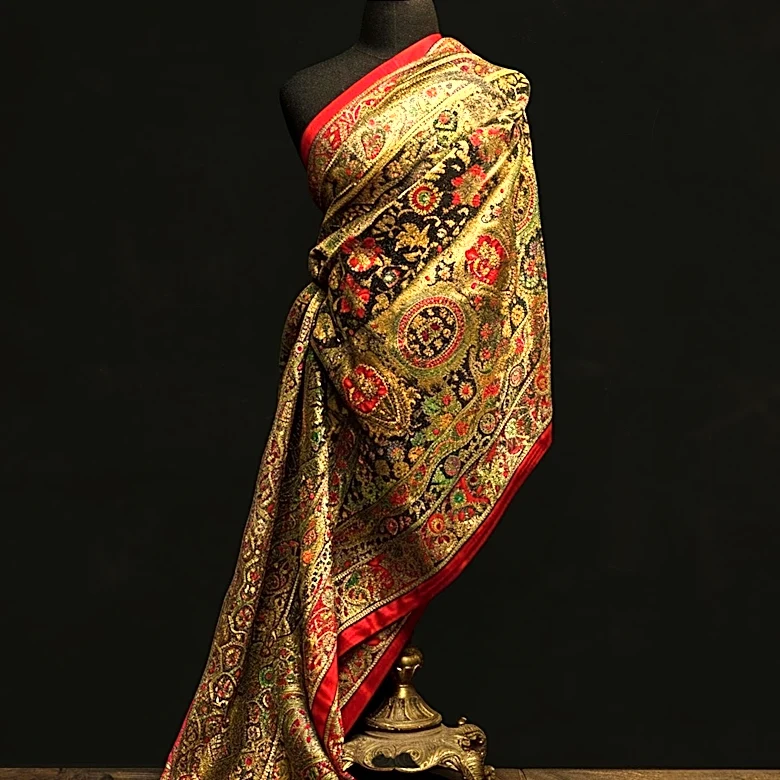






The salwar kameez is a traditional trouser suit worn by both men and women across various regions of South Asia. This garment, also known as shalwar kamiz or shalwar qamiz, is particularly prevalent in North India, Pakistan, Bangladesh, and Afghanistan. Its name itself offers a clue to its origins, deriving from Arabic, either directly or through Persian. While it has been especially popular among immigrants from Punjab in Britain and Canada, leading
to its recognition as a Punjabi suit in those countries, its history and usage extend far beyond a single region.
Components of the Salwar Kameez
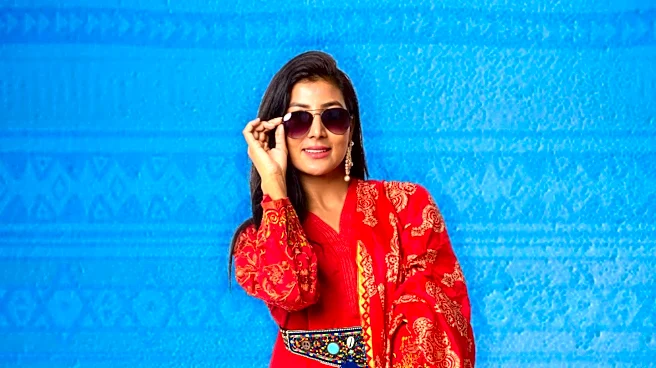
The salwar kameez is fundamentally composed of two main parts: the salwar and the kameez. The salwar refers to loose, pajama-like trousers. These trousers are typically wide and ample, though modern styles can be narrower, sometimes even resembling jeans. They are secured at the waist with a drawstring or an elastic band. The kameez, on the other hand, is a long shirt or tunic. Traditionally, it extended to the upper knee, but contemporary fashion often features shorter tunics. A key characteristic of the kameez is the presence of slits on both sides, usually below the waist, which are known as *chaak*. These slits are designed to facilitate movement, offering comfort and flexibility to the wearer.
Historical Context and Evolution
The history of the salwar kameez is extensive, with evidence suggesting its use for at least 2,000 years. Archaeological excavations at Tillya Tepe in Northern Afghanistan have uncovered royal tombs dating back to the first century, where women were found dressed in salwar kameez. This indicates the garment's long-standing presence and significance in the region. The widespread adoption of the salwar kameez in South Asia became more pronounced from the 15th century onwards, following the arrival of Muslim conquerors. Initially, it was primarily a garment worn by the Muslim population, but over time, its popularity spread and it became common among Hindus as well.
Regional and Gender Variations
The usage of the salwar kameez varies significantly across different South Asian countries and between genders. In Afghanistan and Pakistan, both men and women commonly wear the suit. However, in India, Bangladesh, Nepal, and Sri Lanka, it is predominantly a women's garment. For women, the ensemble almost always includes a long scarf or shawl, known as a *dupatta*. This dupatta is often draped around the head, particularly by Muslims, or gathered over the chest with its ends hanging down the back, a style frequently seen among Hindus. Men's kameez are sometimes referred to as *kurta*, a term also used for a similar men's outfit. Modern fashion has introduced numerous variations, with tunics becoming shorter and trousers tighter, and Bollywood musicals often showcase very minimalist versions of the attire, reflecting its adaptability and enduring appeal in contemporary culture.