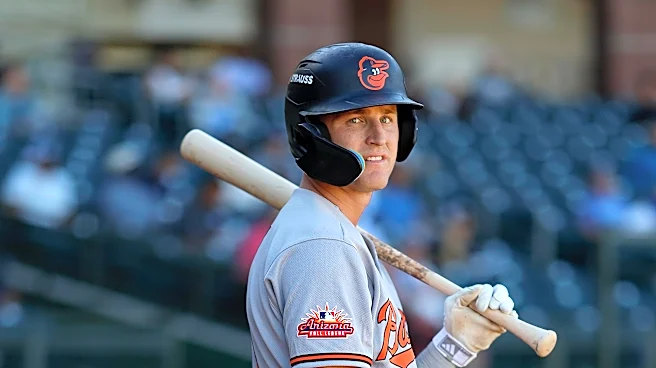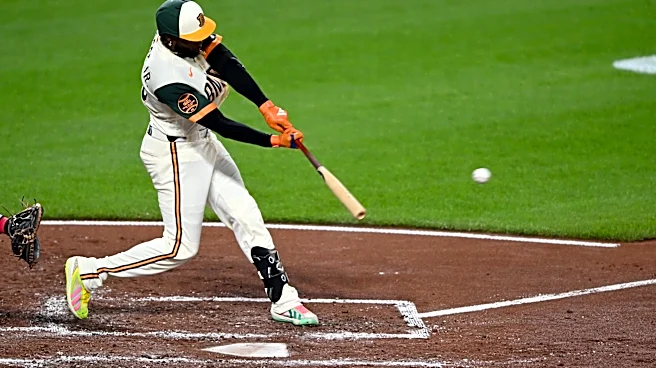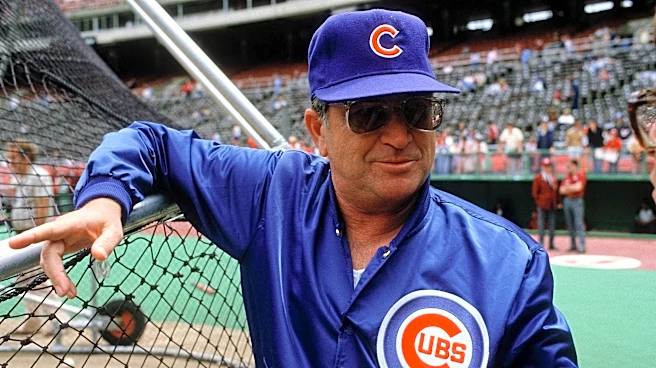



John Wesley "Boog" Powell carved out a significant career in Major League Baseball, primarily as a first baseman and left fielder. His journey, spanning from 1961 to 1977, is most notably associated with the Baltimore Orioles, where he became a central figure in one of baseball's most dominant eras. Powell's powerful hitting and consistent presence helped the Orioles secure four division titles and two World Series championships between 1966 and 1971,
cementing his legacy as a key player in the team's history. His individual accolades, including leading the American League in slugging percentage in 1964 and earning the American League MVP in 1970, underscore his impact on the game.
Early Career and the Road to Baltimore
Powell's professional baseball journey began in 1959 when he signed with the Baltimore Orioles as a free agent. Before making his Major League debut, he honed his skills in the Orioles' minor league system, including playing for the Rochester Red Wings. His versatility was evident early on, as he played 112 games at first base and 44 in the outfield for the Red Wings in 1961. Powell himself noted that he was initially signed as an outfielder, and the Orioles attempted to convert him to a first baseman in 1960 and 1961. However, the presence of All-Star first baseman Jim Gentile meant Powell's path to first base was temporarily blocked, leading him back to the outfield.
His signing with the Orioles involved an unusual coin flip with the St. Louis Cardinals, who were also pursuing the 18-year-old free agent. To avoid a bidding war, the heads of the Orioles' and Cardinals' minor league systems agreed to a coin toss. The Orioles' scout, Jim Russo, successfully called tails, allowing him to sign Powell for a $25,000 bonus, a figure significantly less than what a competitive bidding process might have yielded.
Establishing Himself with the Orioles
Powell joined the Orioles in 1962, making his MLB debut on September 26, 1961, against the New York Yankees. In his rookie season of 1962, he started 112 games in left field, hitting .243 with 15 home runs and 53 RBIs in 400 at-bats. He also became the first player to hit a home run over the left-center field hedges at Baltimore's Memorial Stadium, a blast measured at 469 feet. His defensive skills were also noted, as he ranked fifth among American League left fielders with a .969 fielding percentage.
In 1963, Powell continued to develop, hitting .265 with 25 home runs and 82 RBIs. He showcased his power by hitting three home runs in a single game against the Washington Senators on August 10. His breakout season at the plate came in 1964, where he hit .290 and led the American League in slugging percentage with an impressive .606. Despite missing several weeks due to a fractured wrist sustained from crashing into the outfield wall at Fenway Park, he still managed a career-high 39 home runs. His 99 RBIs placed him eighth in the American League, and he was second in the league in home runs behind Harmon Killebrew.
Transition to First Base and Championship Glory
Powell's role with the Orioles evolved, particularly in 1965, when he split time between the outfield and first base. This transition was partly influenced by recurring shin splints, which were particularly severe before the 1965 season. While some considered him better suited for the outfield, the development of rookie Paul Blair led manager Hank Bauer to implement a platoon system, with Powell playing left field against right-handed pitchers and first base against left-handed pitchers.
By 1966, Powell became the Orioles' full-time first baseman, starting 132 games at the position. This move proved highly successful, as he hit .287 with 34 home runs and 109 RBIs, earning him the American League Comeback Player of the Year award from both the Associated Press and The Sporting News. He was also third in the American League MVP voting, behind teammates Frank Robinson and Brooks Robinson. That year, Powell was instrumental in leading the Orioles to their first World Series championship, where they swept the Los Angeles Dodgers. He had the highest batting average of any player in the series at .357.
MVP Season and Continued Success
After a challenging 1967 season marked by injuries and reduced playing time, Powell rebounded strongly. In 1968, despite it being the "Year of the Pitcher," he led the Orioles with 22 home runs and 85 RBIs and was selected for the All-Star Game. His performance continued to improve in 1969, where he achieved a career-high .304 batting average, along with 37 home runs and 121 RBIs. He was second in the American League MVP voting that year.
The pinnacle of his individual career came in 1970 when Powell was named the American League Most Valuable Player. He hit 35 home runs, drove in 114 RBIs, and maintained a .297 batting average, along with career highs in walks (104) and on-base percentage (.412). This marked the first time a full-time first baseman had won the AL MVP since Jimmie Foxx in 1938. In the 1970 World Series, Powell hit home runs in the first two games, helping the Orioles defeat the Cincinnati Reds in five games. He continued to be a key player in 1971, appearing on the cover of Sports Illustrated's baseball preview issue and helping the Orioles reach their third consecutive World Series, though they ultimately lost to the Pittsburgh Pirates.
Later Career and Legacy
Powell remained with the Orioles through the 1974 season, though his playing time and offensive production began to decline due to injuries, particularly a sore shoulder in 1973. He was traded to the Cleveland Indians in February 1975, playing two seasons there before concluding his career with the Los Angeles Dodgers in 1977. In 1979, Powell's significant contributions to the Baltimore Orioles were recognized with his induction into the team's Hall of Fame, solidifying his place among the franchise's greats.