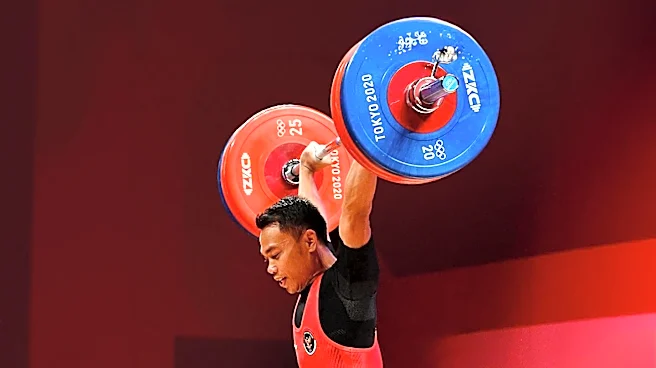


USA Powerlifting (USAPL) serves as a prominent national and international powerlifting organization based in the United States. It plays a crucial role in sanctioning local, regional, national, and even international meets within the U.S. and several other member countries. As a governing body, USAPL sets standards for competition, including rules on equipment and drug testing, aiming to ensure fair play and athlete safety. However, like many sports
organizations, it has faced its share of challenges and controversies, particularly regarding its relationship with international federations and its policies on athlete eligibility.
Structure and Regulations of USAPL
USA Powerlifting operates as a drug-tested organization, a key aspect of its competitive philosophy. This means athletes competing under USAPL must adhere to strict anti-doping regulations. In terms of equipment, USAPL has specific guidelines for both its equipped and raw divisions. In the equipped division, the use of single-ply suits and shirts is restricted to an approved list. For the raw division, which emphasizes lifting without the aid of supportive suits, lifters are permitted to use wrist wraps, knee sleeves, and a lifting belt. These regulations aim to create distinct competitive environments, catering to different preferences for equipment use while maintaining a level playing field.
The organization's president, Larry Maile, leads USAPL in its mission to promote and regulate powerlifting. The USAPL's structure allows for a hierarchy of competitions, from local events that introduce new lifters to the sport, up to national championships that showcase top talent. This tiered system provides a clear pathway for athletes to progress and compete at higher levels, fostering growth and development within the sport across the United States.
International Relations and Expulsion from IPF
A significant turning point for USA Powerlifting occurred in November 2021 when it was controversially expelled from the International Powerlifting Federation (IPF). This expulsion stemmed from USAPL's failure to comply with changes to some of the IPF's policies. The IPF, as the largest powerlifting federation globally and recognized by the General Association of International Sports Federations (GAISF), sets international standards, and non-compliance can lead to severe consequences for national affiliates.
Following its expulsion from the IPF, USA Powerlifting adapted by expanding its own international presence. It began sanctioning meets in countries such as Australia, Ireland, and South Korea, effectively becoming an international organization in its own right. To replace the IPF World Championships, USAPL initiated its own high-level competitions, including the USA Powerlifting Pro Series Circuit and the USA Powerlifting Open World Cup, demonstrating its resilience and commitment to providing competitive opportunities for its athletes on a global scale.
Transgender Athlete Policy Controversy
USA Powerlifting has also been at the center of a notable controversy regarding its policy on transgender athletes. In 2018, USAPL denied female transgender weightlifter JayCee Cooper's application to compete in the women's category and subsequently revoked her competitive status, making her ineligible for future USAPL events. In 2019, the organization publicly announced that transgender women would not be permitted to compete as women.
This policy led to a discrimination lawsuit filed by Cooper against USA Powerlifting in the District Court of Minnesota on January 14, 2021. In late February 2023, a Minnesota District Court ruled that USA Powerlifting must allow transgender athletes to compete. This ruling was further affirmed by the Minnesota Court of Appeals in March 2024, marking a significant legal development that impacts the organization's athlete eligibility policies and broader discussions about inclusion in sports.