





Mariner 2 stands as a monumental achievement in space exploration, marking humanity's first successful interplanetary spacecraft. Launched on August 27, 1962, this mission was designed to journey to Venus, providing an unprecedented close-up look at Earth's enigmatic neighbor. Its success not only demonstrated the feasibility of deep space travel but also delivered groundbreaking scientific data that reshaped our understanding of Venus and the space between
planets. The mission's journey culminated in a close flyby of Venus in December 1962, after which it continued into a heliocentric orbit, leaving a lasting legacy in the annals of space history.
The Genesis of a Historic Mission
The Mariner program, initiated in 1960, aimed for frequent, small-scale exploration of nearby planets, leveraging the Atlas launch vehicles and JPL's developing Deep Space Instrumentation Facility, later known as the Deep Space Network. The name "Mariner" itself was chosen to evoke the sense of long-distance travel to remote lands, aligning with nautical terms. A key design philosophy for the Mariner projects was to launch two spacecraft for each mission, anticipating potential issues with the then-untested launch vehicles. This foresight proved crucial, as Mariner 1, the sister craft to Mariner 2, was lost shortly after its launch on July 22, 1962, due to a malfunctioning Atlas-Agena rocket.
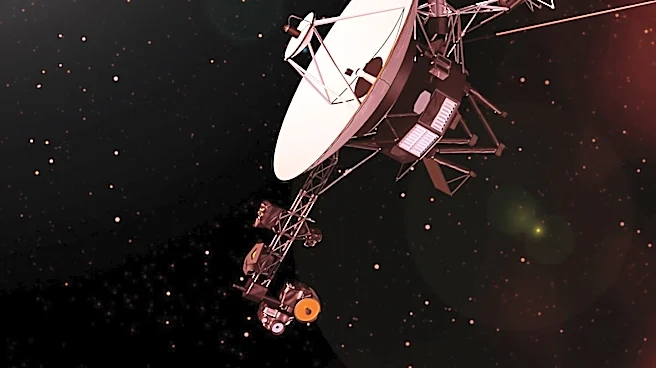
Mariner 2, designated Mariner R-2, was launched just over a month later. The mission's primary objectives were to develop and launch two spacecraft to the vicinity of Venus, receive communications, and perform radiometric temperature measurements of the planet. A secondary, but equally important, goal was to measure interplanetary magnetic fields and particle levels both en route to and near Venus. The spacecraft was designed to be three-axis-stabilized, a departure from spinning probes, and featured solar panels for power and a dish antenna for communication with Earth.
The Perilous Journey to Venus
The launch of Mariner 2 on August 27, 1962, from Cape Canaveral Air Force Station Launch Complex 12, was not without its challenges. A software bug that had caused the loss of Mariner 1 had not yet been identified, though it fortunately did not affect Mariner 2's launch. During the ascent, the V-2 vernier engine experienced a loss of pitch and yaw control, causing the launch vehicle to roll rapidly. This incident, traced to a loose electrical connection, nearly threatened the integrity of the stack and caused ground guidance to lose lock. However, the rolling stopped, and the launch continued, with the Atlas and Agena-Mariner separating five minutes after liftoff.
Following separation, the Agena performed two burns, injecting Mariner 2 into a geocentric escape hyperbola. Approximately 44 minutes after launch, the solar panels were extended, and the spacecraft acquired Sun lock. With all subsystems performing normally and adequate power from the solar panels, cruise science experiments were activated on August 29. A mid-course correction was necessary due to the Atlas-Agena placing Mariner slightly off course. This maneuver, involving a roll-turn, pitch-turn, and motor-burn sequence, was successfully executed on September 4, though it temporarily caused the sensors to lose Sun and Earth lock, which were subsequently reacquired.
Unveiling Venus and Interplanetary Space
Mariner 2's encounter with Venus on December 14, 1962, was a historic moment, as it passed within approximately 34,773 kilometers (21,607 miles) of the planet after 110 days of flight. The data collected during this flyby provided the first close-up insights into Venus. One of the most significant findings was the measurement of Venus's atmospheric temperature, which was determined to be an extremely hot 500 degrees Celsius (932 degrees Fahrenheit). This confirmed theories about the planet's scorching surface and optically thick atmosphere.
The spacecraft's microwave radiometer conducted three scans of Venus, revealing peak temperatures of 490 K on the dark side, 595 K near the terminator, and 511 K on the light side. This indicated no significant temperature difference across the planet, but suggested a limb darkening effect, where temperatures appear cooler near the edge of the planetary disk and higher near the center. The infrared radiometer also supported these findings, showing consistent radiation temperatures with Earth-based measurements and further evidence of limb darkening, suggesting a thick cloud structure rather than surface temperatures.
Beyond Venus, Mariner 2 made crucial observations of interplanetary space. Its solar wind experiment measured the density, velocity, composition, and variation over time of the solar wind for the first time, confirming Eugene Parker's prediction of a continuous stream of charged particles from the Sun. The magnetometer detected a persistent interplanetary magnetic field, varying between 2 and 10 nanotesla, and found no detectable magnetic field near Venus, suggesting it was at least smaller than 1/10 that of Earth's. The cosmic dust density was found to be much lower than in the near-Earth region, and the Geiger-Müller tube detected several small solar bursts of radiation, but no radiation belt at Venus similar to Earth's. The mission concluded on January 3, 1963, after 129 days, with its last transmission received as it continued its heliocentric orbit, having forever changed our understanding of our solar system.