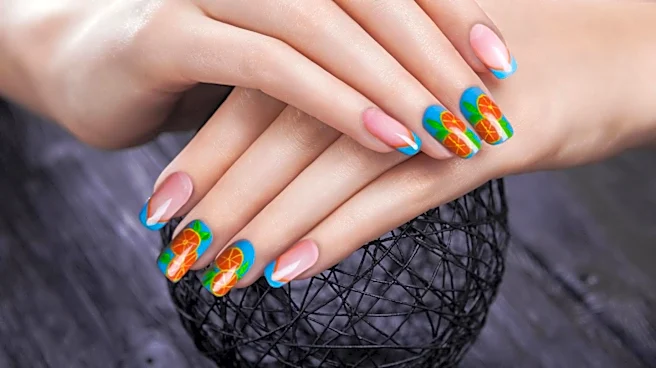










Nail art, the intricate decoration of fingernails and toenails, has transcended its basic function as a beauty treatment to become a significant cultural phenomenon. Throughout history, and particularly in modern times, it has served as a powerful medium for communication, identity, and social commentary. From ancient civilizations where nail color dictated one's place in society to contemporary trends where it embodies personal style and self-expression,
nail art reflects broader societal values and individual aspirations. This journey highlights its enduring role as more than just an aesthetic choice, but as a deeply embedded aspect of human culture and identity.
Ancient Status and Social Hierarchy
In ancient societies, nail art was far from a mere decorative choice; it was a potent symbol of social status and hierarchy. In Babylonia around 3200 BC, men painted their nails with kohl, using black for noblemen and green for common men, clearly delineating social standing. Similarly, in ancient Egypt (5000 to 3000 BC), women dyed their nails with henna, with specific colors reserved for different classes. Lower-class women wore pastel shades, while the elite, like Queen Nefertiti with her red nails, sported deep, bright hues. Queen Cleopatra's choice of rustic tones with gold undertones further emphasized this distinction, as common women were forbidden from using royal colors.Ancient China also mirrored this trend. The first nail polish, developed around 3000 BC from beeswax, egg whites, and vegetable dyes, produced colors ranging from pink to red. During the Zhou Dynasty (600 BC), royalty used gold and silver dust on their nails to signify their status, later preferring black and red. The Ming Dynasty (1368-1644) saw extremely long nails protected by elaborate guards, a clear sign of wealth and leisure, as servants performed personal chores to prevent damage. These historical examples underscore how nail art was intrinsically linked to social stratification, serving as a visible marker of one's position within society.
Modern Identity and Self-Expression
In contemporary culture, nail art has largely shifted from a rigid status symbol to a dynamic form of self-expression. It allows individuals to create their own identity through fashion, using colors and shapes to signify personal style and independence. This practice is often associated with femininity, marking a transition from childhood into the adult world and allowing individuals to forge their own aesthetic away from parental influence. While historically dominated by women, nail art is also gaining increasing popularity among men, further broadening its cultural reach.The rise of do-it-yourself (DIY) nail art has democratized the practice, enabling individuals to create designs without professional assistance, using common household tools or specialized kits. This accessibility has fueled its growth as a global phenomenon, spreading from Asia to Europe and the United States, largely facilitated by the internet. Nail art is now a fashionable trend, even appearing in cinematic productions to extend makeup artistry to the fingertips. This evolution from an ancient indicator of status to a modern vehicle for personal identity highlights nail art's enduring power as a form of visual communication and creative expression.