





The Woman Suffrage Procession of March 3, 1913, was intended to be a powerful, visually stunning demonstration for women's voting rights in Washington, D.C. Organized by Alice Paul and Lucy Burns, it was the first large-scale civil rights demonstration in the nation's capital. However, what unfolded on Pennsylvania Avenue was a mix of determined protest and unexpected chaos, largely due to severe security failures and a hostile crowd. Despite the difficulties,
the marchers persevered, turning adversity into an unexpected surge of public attention for their cause.
Anticipating and Underestimating the Crowd
Alice Paul, the primary organizer, had strategically chosen the day before President Woodrow Wilson's inauguration to maximize publicity. This decision meant that Washington, D.C., was already overflowing with visitors, with media estimating crowds between a quarter and a half million people. Paul was acutely aware of the potential for large crowds and expressed concerns about the local police force's ability to manage them. Her apprehension proved to be well-founded.
District superintendent of police, Major Richard H. Sylvester, initially offered only 100 officers for security, a number Paul considered grossly inadequate for an event of this magnitude. Despite her attempts to secure more robust protection, including appealing to President William Howard Taft and Secretary of War Henry L. Stimson, significant reinforcements were not guaranteed. A week before the parade, Congress did pass a resolution directing district police to halt all traffic and prevent interference along the route. However, the actual deployment and effectiveness of these measures would fall far short of what was needed, setting the stage for the disorder that ensued.
The Breakdown of Order on Pennsylvania Avenue
As the parade participants gathered near the Peace Monument around noon, the police began roping off parts of the route. However, even before the procession officially began, these ropes were already badly stretched and coming loose in places, indicating an immediate lack of crowd control. The sheer volume of spectators was so immense that President-elect Wilson, arriving in town that day, was reportedly mystified by the apparent absence of people elsewhere, as everyone seemed to be lining the parade route.
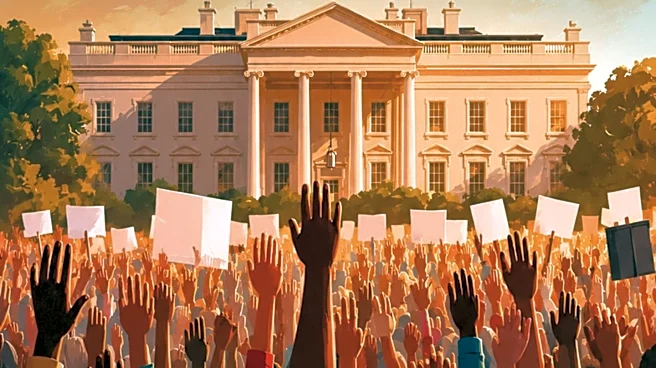
Once the procession began, the district police utterly failed to keep the enormous crowd off the street. Spectators surged forward, impeding the marchers' progress and creating a chaotic scene. Many participants found themselves subjected to heckling, verbal abuse, and physical interference from parts of the crowd. The marchers, who included diverse groups from various states, professions, and even countries where women already had the vote, struggled to maintain their formation and advance through the throngs of people. The situation became so severe that the marchers' progress was almost entirely halted in some sections.
Citizen Intervention and Official Aftermath
In the face of police inaction and the escalating disorder, citizens' groups stepped in to assist the beleaguered marchers. These impromptu efforts helped clear paths and protect the suffragists from the more aggressive elements of the crowd. Eventually, the cavalry was called in to restore order and help the procession complete its route. The intervention of both citizens and military forces highlighted the severe inadequacy of the initial police presence and planning.
The widespread security failures did not go unnoticed. The district police department became the subject of a congressional inquiry due to their inability to manage the crowd and protect the marchers. This official investigation brought further public attention to the event and, by extension, to the cause of women's suffrage. While the experience on the street was undoubtedly harrowing for many participants, the ensuing scandal and media coverage inadvertently amplified the message of the procession. The event, despite its chaotic nature, successfully brought the demand for a national constitutional amendment for women's suffrage to the forefront of national consciousness, putting pressure on President Wilson and marking a new, more assertive phase in the movement.