






The 34th America's Cup in 2013 was not only a spectacle of competitive sailing but also a showcase for significant technological advancements and innovative race dynamics. Held in San Francisco Bay, the event introduced new classes of boats, specifically the AC72 wing-sail foiling catamarans for the main races and the scaled-down AC45 for preliminary events and the Youth America's Cup. These high-speed vessels, combined with a specially designed course
and refined race rules, created a thrilling and tactically complex competition that captivated audiences and pushed the boundaries of sailing.
The Revolutionary AC72 Catamarans
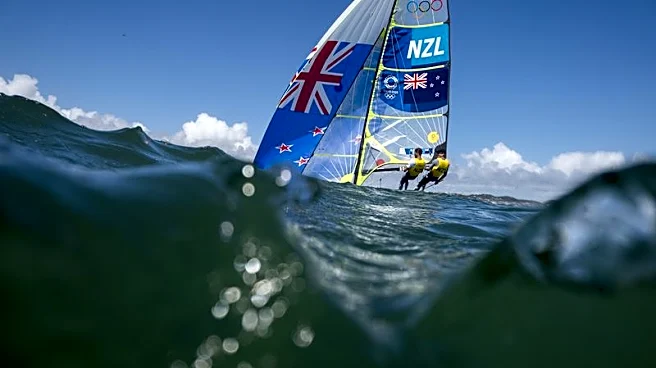
A cornerstone of the 2013 America's Cup was the introduction of the AC72 wing-sail foiling catamarans. These boats represented a radical departure from previous America's Cup Class (ACC) boats. The AC72s were capable of reaching average speeds of about 30 knots (56 km/h; 35 mph), with peaks exceeding 40 knots (74 km/h; 46 mph). This speed could be as much as 1.8 to slightly over twice the actual wind speed, a stark contrast to the 11 to 13 knots (20 to 24 km/h; 13 to 15 mph) achieved by the older ACC boats. The AC45 class, a scaled-down, one-design version of the AC72, was used for preliminary training, racing, and the Youth America's Cup, allowing younger sailors to master the techniques required for these advanced catamarans.
The design of these boats, particularly their foiling capability, meant that they would lift out of the water, significantly reducing drag and enabling their incredible speeds. The amended AC72 Class Rule version 1.1 was published on February 22, 2011, setting the stage for these high-performance machines. The decision to use these boats was part of a broader effort to increase global awareness and attract sponsors, with an America's Cup World Series held in the 2011–12 and 2012–13 seasons using AC45 one-design catamarans to build excitement and provide competitive racing.
Course Design and Tactical Elements
The racecourse for the 34th America's Cup was specifically designed to leverage the unique conditions of San Francisco Bay, aiming to bring the racing within easy viewing distance of the shore for the first time. The course length varied but was typically around 10 nautical miles (19 km; 12 mi) and generally took about 25 minutes to complete. Some races, particularly during the Louis Vuitton Cup, featured an extra lap, extending the course to about 16 nautical miles (30 km; 18 mi) and taking approximately 45 minutes.
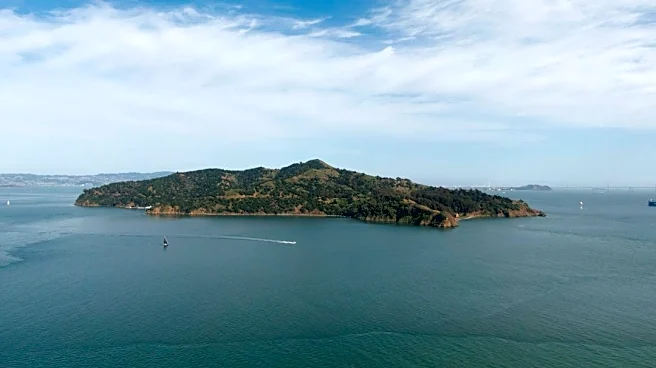
A critical element of the San Francisco Bay course was Alcatraz Island. During the first week of the event, flood tides created a unique tactical zone near the island where the incoming tide was noticeably less than in other parts of the racecourse. On the upwind leg, when boats had to sail against the flood tide, tactical use of this "cone" of reduced current was crucial for gaining an advantage. The starting area was positioned furthest from the shore, close to the Golden Gate Bridge, with specific rules governing entry into the starting box to reduce the danger of two boats traveling at high speeds colliding.
Evolving Race Rules and Penalties
The 2013 America's Cup also featured refined race rules and penalty systems designed to manage the high-speed catamarans and ensure fair play. A boundary delineated the racecourse, and going outside it incurred a penalty, indicated by blue lights on board the boats. Green lights flashed when a boat was within three boat lengths of the boundary or a mark. The boat that entered the three boat-length circle around a mark first had "mark rights," allowing them to round without concern for the other boat, unless an overlap existed, in which case room had to be made for safe rounding. Races had a maximum time limit of 40 minutes, after which they would be stopped.
Penalties awarded against a boat resulted in a "moving penalty line" calculated and placed two boat lengths behind them, advancing on a direct heading to the mark or wind. The penalized boat had to slow its Velocity Made Good until it fell behind this line. This was calculated in real-time by computers and communicated to the teams via lights and direct radio. These sophisticated rules and the dynamic nature of the AC72s transformed the America's Cup into a fast-paced, technologically driven contest, demanding exceptional skill and strategic acumen from the competing teams.