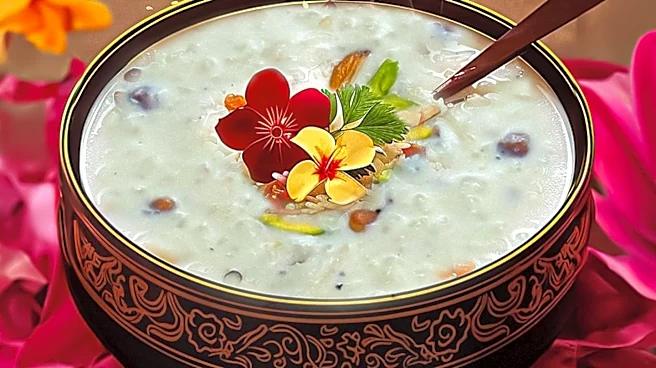









Rice pudding is a versatile dish made from rice and milk, often enhanced with sweeteners, spices, flavorings, and sometimes eggs. This comforting dessert is enjoyed across many continents, particularly in Asia, where rice is a fundamental part of the diet. Its widespread appeal is evident in the diverse forms it takes, reflecting local ingredients and culinary traditions from India to the Americas.
Ancient Roots and Widespread Adoption
The concept of rice pudding, or similar rice and milk
preparations, has a long history. While specific origins are hard to pinpoint, the dish's presence in various cultures suggests an ancient lineage. The earliest rice pudding recipes in the United Kingdom and Ireland, for instance, were known as "whitepot" and date back to the Tudor period. This indicates that the combination of rice and milk as a sweet dish has been a part of European cuisine for centuries, evolving over time to become the familiar dessert known today.
Across the globe, rice pudding has adapted to local tastes and available ingredients. In India, it is known as *kheer* or *paysam*, often incorporating dry fruits and jaggery. The Spanish and American versions are called *arroz con leche*, directly translating to "rice with milk," highlighting its core components. These regional names and variations underscore the dish's adaptability and its deep integration into diverse culinary landscapes.
Regional Flavors and Preparations
Different regions boast unique takes on rice pudding, showcasing a rich tapestry of flavors and textures. In Egypt, *rozz bi-laban* (meaning "rice with milk") is a traditional dessert made with rice flour, milk, sugar, and vanilla, frequently topped with cinnamon, raisins, coconut, or nuts for added flavor and texture. This Egyptian variant emphasizes a smooth consistency, often achieved with rice flour.
In the United Kingdom and Ireland, rice pudding is traditionally made with "pudding rice," a high-starch, short-grained rice. It typically includes milk, cream, and sugar, and can be flavored with vanilla, nutmeg, currants, raisins, jam, or cinnamon. Preparation methods vary, with some preferring to gently simmer the ingredients in a saucepan until tender, while others bake it in an oven at a low temperature for several hours, resulting in a creamy consistency and sometimes a thick crust. An alternative recipe in the north of England uses butter instead of cream and a pinch of salt, allowing the pudding to set firmly when cooled, enabling it to be sliced like cake.
Serving Traditions and Modern Availability
Serving traditions for rice pudding also differ by region. In the UK, it is commonly sprinkled with cinnamon, sugar (or syrup), and a small knob of butter, and can be served with milk or fruit juice. Wealthier households might serve it with cream poured on top, while others use full-fat milk. A spoonful of sweet jam or conserve is a frequently added topping, with clotted cream often used in the West Country. The availability of ready-made, pre-cooked rice pudding in supermarkets, either chilled or in cans, highlights its enduring popularity and convenience in modern times.
The global presence of rice pudding, from the *paayesh* of Bengal with its basmati rice and jaggery to the *arroz doce* served for Christmas in Portugal, demonstrates its universal appeal. Whether served hot or cold, as a simple comfort food or an elaborate dessert, rice pudding continues to be a beloved dish that transcends cultural boundaries, offering a taste of home and tradition to many.