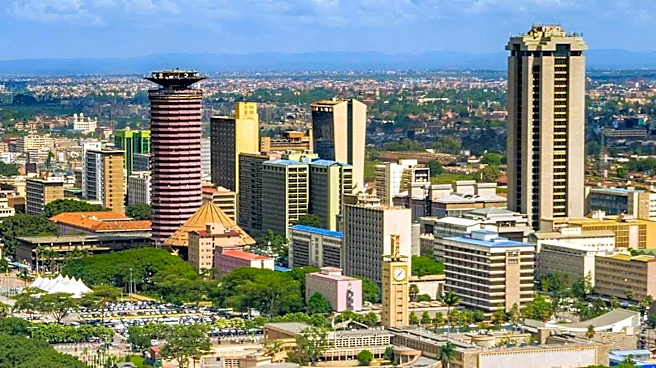


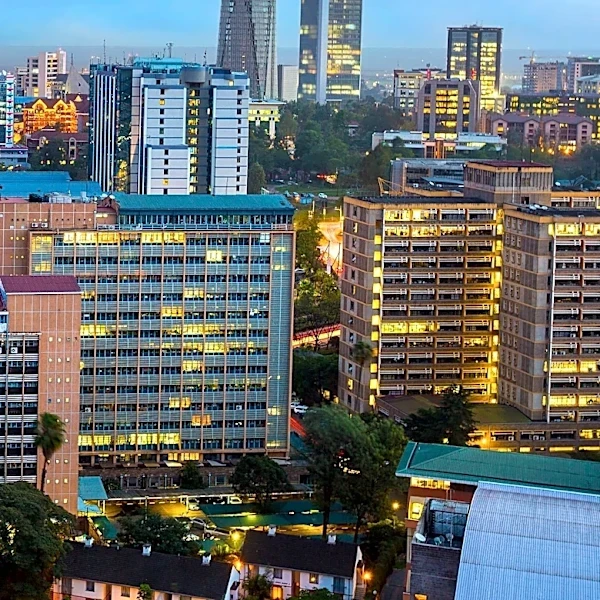






Nairobi, the capital city of Kenya, has a rich history that dates back to its founding in 1899. Originally established as a railway camp, Nairobi has grown into a bustling metropolis and the largest city in Kenya. This article explores the historical development of Nairobi, highlighting key milestones and events that have shaped its evolution.
The Founding of Nairobi
Nairobi was founded in 1899 as a supply depot and railway camp for the Uganda Railway, which was being constructed
by the British colonial administration. The site was chosen for its central location between Mombasa and Kampala, as well as its network of rivers that could supply water to the camp. The name "Nairobi" is derived from the Maasai phrase Enkare Nyrobi, meaning "place of cool waters," referring to the Nairobi River that flows through the area.
The initial settlement consisted of tents and basic structures housing approximately 5,000 railway workers, including European engineers, indentured Indian laborers, and African porters. The area was previously inhabited by the Maasai, Akamba, and Kikuyu people, who were displaced by colonial authorities. In 1900, an outbreak of bubonic plague led to the burning and rebuilding of the original settlement, resulting in more organized urban planning.
Nairobi's Growth and Development
By 1905, Nairobi had grown sufficiently to replace Machakos as the capital of the East Africa Protectorate. The railway headquarters moved from Mombasa to Nairobi in 1901, establishing the city as a critical transport and administrative hub. In 1919, Nairobi formally became a municipality, with its boundaries extended to include surrounding settlements.
During the colonial era, Nairobi attracted European settlers who established farms in the fertile highlands, with the city serving as their commercial and administrative center. Urban development during this period was characterized by racial segregation, with Europeans occupying the northern and western areas, Asians in central commercial areas, and Africans confined to overcrowded eastern and southern sectors.
Post-Independence Nairobi
Following Kenya's independence in 1963, Nairobi retained its status as the national capital. The city experienced rapid population growth driven by rural-to-urban migration, expanding from approximately 348,000 in 1965 to 531,000 by 1970. European residents largely departed, with their properties acquired by the new African elite and government officials.
Today, Nairobi is a vibrant and dynamic city, known for its diverse culture, economic opportunities, and historical significance. As the city continues to grow and evolve, it remains a testament to the resilience and adaptability of its people.
In conclusion, Nairobi's historical journey from a railway camp to a capital city is a story of growth, change, and development. As the city continues to thrive, it stands as a symbol of Kenya's rich history and promising future.