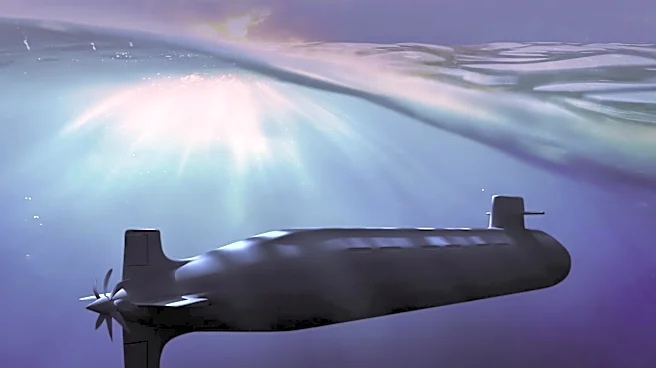







In the summer of 1958, the USS Nautilus (SSN-571) embarked on a mission that would etch its name into the annals of history. Known as Operation Sunshine, this mission saw the Nautilus become the first submarine to complete a submerged transit under the North Pole. This remarkable feat was not just a demonstration of technological prowess but also a strategic move in the Cold War era, showcasing the United States' advancements in nuclear submarine technology.
The Genesis of Operation Sunshine
Operation Sunshine was conceived during a time when the United States was eager to demonstrate its technological capabilities. The Soviet Union had recently launched Sputnik, creating a perception of technological superiority. In response, the U.S. sought to highlight areas where it was ahead, particularly in nuclear and submarine technology. The USS Nautilus, the world's first nuclear-powered submarine, was the perfect vessel for this task. Its nuclear reactor allowed it to remain submerged far longer than conventional submarines, making it ideal for the mission.
The mission was initially attempted in August 1957, but the Nautilus was forced to turn back due to deep ice. It wasn't until the following summer that the submarine, under the command of William Anderson, set out again from Pearl Harbor, heading north towards the Bering Strait. This time, the conditions were more favorable, and the Nautilus successfully crossed under the North Pole on August 3, 1958.
Challenges and Triumphs
The journey under the polar ice was fraught with challenges. The crew had to navigate through thick ice and deal with mechanical failures. The mission was timed to coincide with the lowest ice levels in the Arctic, but the unpredictability of the environment meant that the crew had to be constantly vigilant. Despite these challenges, the Nautilus and its crew persevered, demonstrating the reliability and endurance of nuclear-powered submarines.
The mission also served as a testing ground for new navigational equipment. Traditional magnetic compasses were unreliable near the North Pole, so the crew experimented with a gyro-compass, which proved to be much more effective. This innovation was crucial in ensuring the success of the mission and highlighted the importance of technological advancements in navigation.
A Legacy of Innovation
The successful completion of Operation Sunshine had far-reaching implications. It not only bolstered American confidence during the Cold War but also set a precedent for future submarine missions. The Nautilus's journey under the North Pole demonstrated the strategic advantages of nuclear-powered submarines, influencing naval strategies and submarine design for years to come.
The mission's success was recognized with a Presidential Unit Citation, underscoring its significance in naval history. Today, the USS Nautilus is preserved as a museum ship, serving as a testament to the ingenuity and determination of those who made Operation Sunshine a reality. The legacy of this historic journey continues to inspire advancements in submarine technology and exploration.