
The song "Someday We'll Be Together" has a rich history rooted in the early 1960s, long before it became a celebrated Motown hit. Penned in 1961 by a collaborative trio of Johnny Bristol, Jackey Beavers,
and Harvey Fuqua, its journey began with the duo Johnny & Jackey. This initial recording laid the groundwork for what would become a significant piece of music history, showcasing the talents of its creators and setting the stage for its eventual widespread recognition.
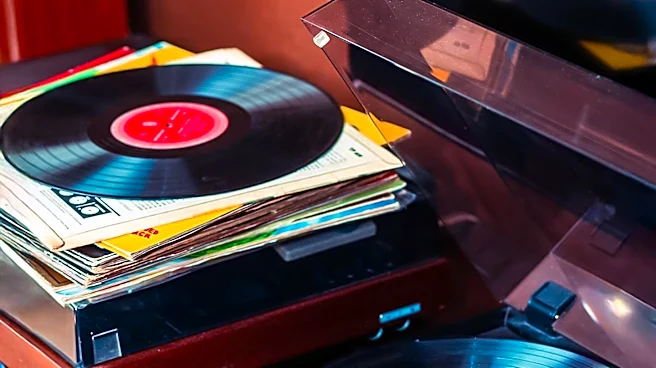
Johnny Bristol and Jackey Beavers, performing as Johnny & Jackey, were the first to record "Someday We'll Be Together" in 1961. This recording was released on Tri-Phi Records, a label established by Harvey Fuqua, one of the song's co-writers. The single made its debut in November 1961, featuring "Sho Don't Play" as its B-side, and was assigned the catalog number TP-1005. This early release marked the song's entry into the music world, introducing its doo-wop and rhythm and blues sound to audiences.
Early Release and Initial Reception
Upon its release, the single by Johnny & Jackey encountered a minor title discrepancy. Early copies of the 7-inch single initially bore the title "Sometime We'll Be Together" on the A-side. This was later corrected to the now-familiar "Someday We'll Be Together." Despite this small detail, the song garnered attention from music industry publications, indicating its potential.
Billboard magazine reviewed the single in its November 20, 1961, issue, awarding it four stars. The publication praised "Someday We'll Be Together" as an appealing melody and highlighted the vocal performance as "good, soulful." While the recording achieved moderate success within the Midwest region of the United States, it did not manage to gain national traction at that time. This initial reception, though not a national breakthrough, demonstrated the song's inherent quality and appeal to critics and regional audiences.
The Song's Enduring Appeal and Genre Roots
The musical style of Johnny & Jackey's original recording of "Someday We'll Be Together" was firmly rooted in the genres of doo-wop and rhythm and blues. These styles were popular during the early 1960s and contributed to the song's soulful character. The track had a duration of 3 minutes and 34 seconds, a standard length for singles of that era, designed for radio play and jukebox appeal.
Harvey Fuqua, beyond his role as a co-writer, also served as the producer for Johnny & Jackey's version. His involvement in both the creation and production of the song underscores his significant contribution to its initial form. The song's enduring melody and soulful vocal delivery, noted by early reviewers, suggest why it would later be revisited and achieve even greater fame, solidifying its place in music history as a timeless composition.