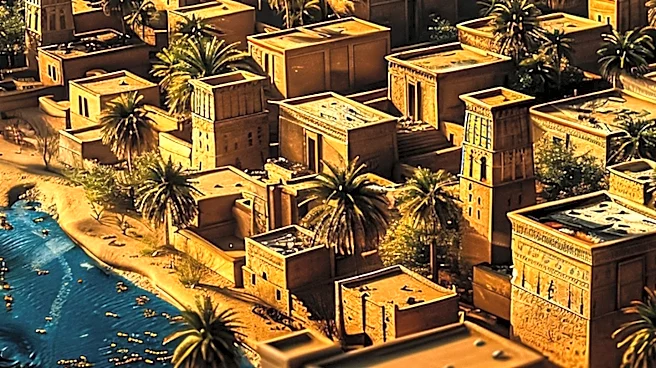









Qatar, a country in West Asia, holds a rich history that stretches back tens of thousands of years, with its very name evolving through various linguistic and geographical interpretations. From ancient Roman accounts to local dialect pronunciations, the designation of this Arabian Peninsula nation has a fascinating etymology. Beyond its name, evidence of human presence on the peninsula dates back to the Stone Age, revealing a long and continuous story of settlement
and cultural exchange in this strategically located region.
The Evolution of a Name: From Catharrei to Qatar
The name "Qatar" has a complex linguistic history, with several theories attempting to explain its origin. In Standard Arabic, the name is pronounced [ˈqɑtˤɑr], while the local Qatari Arabic dialect uses [ˈɡɪtˤɑr]. English speakers often use approximate pronunciations due to the presence of sounds in Arabic that are not found in English. One classical linguistic account suggests that "Qatar" might derive from *muqāṭarah*, an informal transaction where goods were bought in sealed containers at a fixed price without measuring or weighing them. This practice, also known as *jazāf*, was reportedly common in Qatar's markets. Another theory links the name to *qiṭār*, meaning "camel train," possibly hinting at Qatar's historical significance in trade routes.
The earliest documented reference to the inhabitants of the peninsula comes from the Roman writer Pliny the Elder around the mid-first century AD, who called them the *Catharrei*. This designation may have originated from a prominent local settlement. A century later, Ptolemy created the first known map depicting the peninsula, labeling it "Catara." His map also showed a town named "Cadara" to the east of the peninsula. The term "Catara" (with its inhabitants referred to as *Cataraei*) was exclusively used until the 18th century. After this period, "Katara" emerged as the most commonly recognized spelling. Over time, through variations like "Katr," "Kattar," and "Guttur," the modern derivative "Qatar" was eventually adopted as the country's official name.
Tracing Human Habitation: From Stone Age to Mesopotamian Influence
The history of human habitation in Qatar is remarkably ancient, with evidence suggesting a continuous presence for at least 50,000 years. Archaeological findings across the peninsula have unearthed settlements and tools dating back to the Stone Age, providing tangible links to its earliest inhabitants. These discoveries paint a picture of early communities adapting to and thriving in the region's environment.
Further historical insights come from Mesopotamian artifacts, specifically those from the Ubaid period (approximately 6500–3800 BC), which have been found in abandoned coastal settlements within Qatar. One of the most significant Ubaid sites in the country is Al Da'asa, located on the western coast. This site is believed to have been a small, seasonal encampment, indicating a pattern of temporary or migratory settlements during this ancient era. The presence of these Mesopotamian artifacts suggests early trade or cultural connections between Qatar and the broader Mesopotamian civilization. Some historians have even put forth theories suggesting that the Sumerians, one of the earliest known civilizations in the historical region of Mesopotamia, might have originated from this very region, further highlighting Qatar's deep historical roots and its potential role in the development of ancient civilizations.