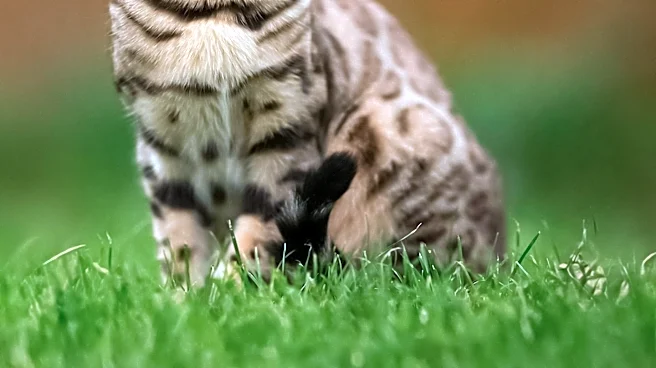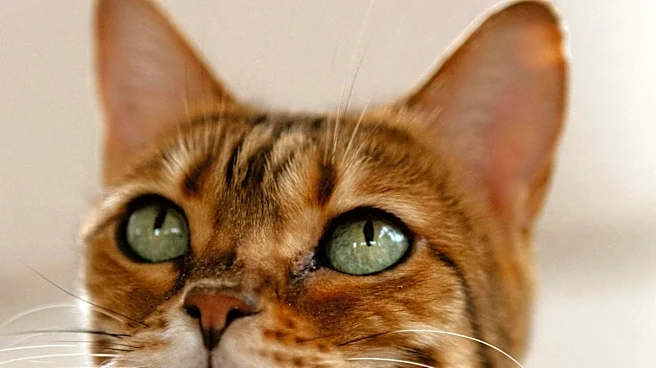




The Bengal cat is a fascinating hybrid breed, a result of crossbreeding an Asian leopard cat with domestic cats. Its striking appearance and unique lineage have made it a popular choice among cat enthusiasts. The journey of the Bengal cat from its wild origins to a recognized domestic breed is a story spanning decades, marked by dedicated breeders and scientific advancements. This breed's name itself, "Bengal," is derived from the taxonomic name of its wild ancestor,
*Prionailurus bengalensis*, which refers to the Bengal region of South Asia.
Early Hybridization Efforts
The earliest recorded mention of an Asian leopard cat and domestic cat hybrid dates back to 1889, when Harrison Weir documented them in his work, *Our Cats and All About Them*. However, the modern Bengal breed as we know it today truly began to take shape much later. Jean Mill of California, US, is widely credited with initiating the deliberate crossbreeding that led to the contemporary Bengal cat. In 1963, while residing in Yuma, Arizona, Mill performed the first known intentional cross between an Asian leopard cat and a domestic black tomcat. This event is considered the first documented instance of this specific felid hybrid.
Mill's motivation for creating the Bengal cat breed stemmed from a desire to protect the Asian Leopard cat, which was facing severe threats from poaching. She believed that if people could acquire a cat that resembled a wild leopard cat, it might reduce the demand for actual wild leopard cat furs and prevent the capture of cubs for sale. Despite her initial efforts, the breed's development did not gain significant momentum until the 1970s.
Resurgence and Breed Establishment
Jean Mill restarted her breeding program in 1970. A significant turning point occurred in 1975 when Willard Centerwall provided her with a group of hybrid Bengal cats. These cats had been bred for his feline leukemia research in Loma Linda, California. Mill continued to refine the breed, and in 1982, she acquired a spotted domestic cat from an American shelter. Later that same year, during a trip to India, Mill encountered an orange spotted domestic cat living in a rhinoceros pen at the New Delhi Zoo. The zookeepers captured this cat for her, and it was shipped to the United States, where she named him Millwood Tory of Delhi. She then bred both this Indian cat and the American spotted cat with the Centerwall hybrid cats.
Throughout the 1980s, Mill successfully established the Bengal breed, overcoming the challenge of early-generation hybrid sterility that had hindered previous attempts. She meticulously backcrossed Bengals until she achieved the F5 generation, which exhibited a domestic-cat temperament. Other breeders also began contributing to the development of the Bengal. The International Cat Association (TICA) officially recognized the Bengal cat as a new breed in 1986, granting it championship status in 1991.
Growth and Popularity
By 1992, TICA had registered 125 Bengal breeders, indicating a growing interest in the breed. The 2000s saw a significant surge in the Bengal's popularity, solidifying its status as a highly sought-after breed. In 2024, the Bengal cat became the most popular breed within TICA, with nearly 200,000 registered kittens bred by over 2,000 private breeders since the breed's inception. This remarkable growth highlights the success of the breeding programs and the enduring appeal of the Bengal cat's unique characteristics.
In the 2024 statistics from FIFe, another major global cat registry, the Bengal ranked as the 7th most popular cat breed. It accounted for 3.7% of their total registered kittens that year, translating to 3,559 cats. This widespread recognition across different registries underscores the Bengal cat's established presence and continued popularity in the world of pedigreed cats.
The Long-Haired Variety: Cashmere Bengal
Historically, long-haired kittens born within Bengal breeding programs were typically neutered and excluded from further breeding. This was because the focus was on the short-haired, wild-looking coat. However, some breeders later began to intentionally develop this long-haired variety, often referring to it as the Cashmere Bengal. The long-hair trait is believed to have originated from domestic cats used in the breed's foundation, introduced through backcrossing. It is a recessive gene, meaning that two Bengal cats carrying the gene can produce long-haired offspring. Genetic testing, including a test developed by UC Davis in the US, now allows breeders to identify carriers for selective breeding purposes.
While recognition for the long-haired Bengal remains somewhat limited, it is steadily increasing. Since 2013, the New Zealand Cat Fancy (NZCF) has granted preliminary breed status to the Cashmere Bengal. More recently, in 2017, The International Cat Association (TICA) began accepting the Bengal Longhair for competition, further solidifying its place within the breed's evolving standards.