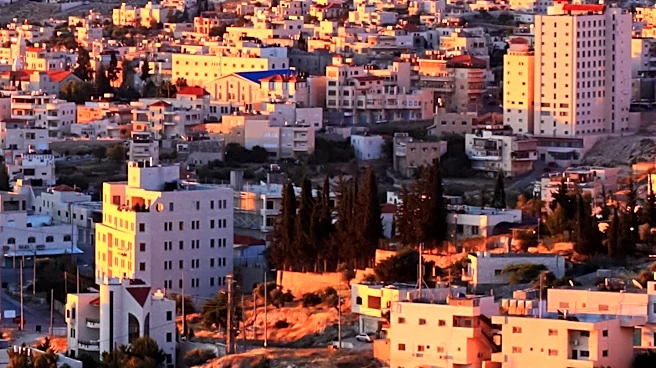








Amman, the capital of Jordan, presents a fascinating study in urban development, characterized by its unique topography and rapid expansion. What began as a settlement nestled among seven hills has transformed into a sprawling metropolis covering 19 hills and encompassing 22 distinct areas, all administered by the Greater Amman Municipality. This growth reflects not only demographic pressures but also a deliberate process of urban planning and infrastructure
development that has shaped the city's distinctive character.
The city's geography, with its numerous hills and valleys, has played a crucial role in defining its urban layout. Areas often derive their names from these natural features, such as Jabal al-Luweibdeh (hill) and Wadi Abdoun (valley). This organic growth, combined with planned expansion, has resulted in a city that seamlessly blends ancient history with modern amenities, creating a dynamic environment for its five million residents.
The Topography of Growth: Hills and Valleys
Amman's initial settlement was strategically located on seven hills, a feature that provided natural defenses and defined its early urban form. However, as the city grew, particularly after its designation as Transjordan's capital in 1921, it expanded significantly. This expansion was not confined to the original seven hills but spread across 19 hills, leading to a complex and varied urban landscape. The Greater Amman Municipality now oversees 22 distinct areas, each contributing to the city's overall fabric.
The downtown area, known as Wast Al-Balad, is situated in a narrow valley called Wadi Amman. This valley, historically crossed by the Seil stream, was a crucial factor in attracting early urban settlement due to the availability of water resources. The surrounding hills, including Jabals of Amman, Luweibdeh, Qal'a, Joufeh, and Ashrafieh, created a natural enclosure that facilitated the development of an urban space. Roads began expanding parallel to the contours of these mountains, initially for animal transportation and later for modern vehicles, further integrating the hilly terrain into the city's infrastructure.
East Meets West: A Tale of Two Ammans
Amman's urban landscape is often characterized by a distinct division between its eastern and western parts, each possessing a unique identity and function. East Amman is predominantly rich in historic sites and serves as a frequent host for cultural activities. This area reflects the city's ancient roots and its continuous historical narrative, with landmarks and traditional architecture.
In contrast, West Amman is recognized as the more modern and economic center of the city. This part of Amman showcases contemporary architecture, commercial hubs, and a more modern lifestyle. This dual character allows Amman to offer a diverse experience, from exploring ancient ruins and cultural heritage in the east to engaging with modern business and entertainment in the west. This distinction highlights the city's ability to evolve while preserving its historical essence, making it a vibrant and multifaceted capital.