






The Naval War College (NWC) campus at Naval Station Newport in Rhode Island is not only a center for strategic thought but also a collection of historically significant buildings and structures. These edifices tell the story of the college's growth, its evolving mission, and the influential figures who shaped its legacy. From its humble beginnings in a repurposed asylum to state-of-the-art wargaming facilities, the architecture of the NWC reflects
its enduring importance to the United States Navy.
Early Foundations and Historic Landmarks
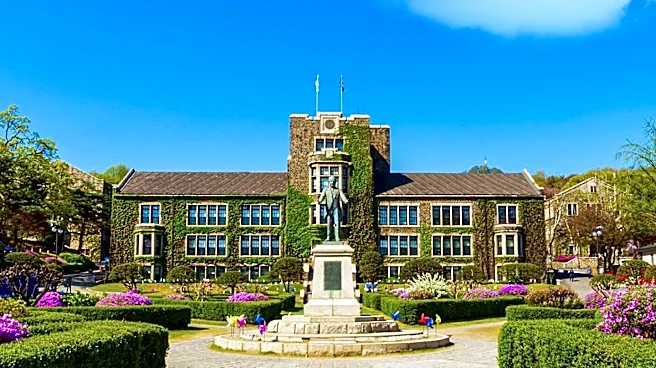
The college's original home, established in 1884, was the former Newport Asylum for the Poor on Coasters Harbor Island. This building, a testament to the NWC's modest origins, now serves as the Naval War College Museum, preserving the institution's rich history. In 1892, the college saw the opening of Luce Hall, named in honor of its founder, Commodore Stephen B. Luce. This building, initially designed to house lecture rooms and a library, also provided quarters for the college president and faculty members. Luce Hall, along with its original companion building, was designated a National Historic Landmark in 1964 and listed on the National Register of Historic Places, underscoring its architectural and historical significance.
Another pivotal structure is Mahan Hall, completed and opened in 1904. Named after the renowned Captain Alfred Thayer Mahan, this building features the historic Mahan Rotunda and Reading Room, which has become an impromptu museum displaying gifts and artifacts donated by graduating international students over the years. Mahan Hall stands as a tribute to one of the college's most influential early faculty members and presidents, whose strategic theories profoundly impacted naval thought worldwide.
Expanding Facilities for Evolving Missions
As the NWC's mission expanded, so did its physical footprint. Pringle Hall, named after Vice Admiral Joel R. P. Pringle, opened in 1934. This building served as the principal site for wargaming from its completion until 1957. Its exterior, faced with pink Milford granite, was designed to complement the appearance of Luce Hall, to which it is connected by enclosed bridges. Pringle Hall houses a large auditorium, lecture rooms, and the Naval War College Press, reflecting the college's commitment to both instruction and publication.
In 1947, an existing barracks building was acquired and converted into a secondary wargaming facility, named Sims Hall after former War College President Admiral William Sowden Sims. By 1957, Sims Hall became the primary center for the NWC's wargaming department, a role it maintained until 1999. The 1970s marked the college's most active period of expansion, with the opening of three significant buildings. Spruance Hall, completed in 1972 and named after Admiral Raymond A. Spruance, provides faculty offices and a large auditorium, serving as a primary venue for major lectures and cultural events. Conolly Hall, named in honor of Admiral Richard L. Conolly, houses administrative and faculty offices, classrooms, and conference rooms. Hewitt Hall, opened in 1976 and named after Admiral Henry Kent Hewitt, is home to the Henry E. Eccles Library, the Trident Café, and student study areas.
Modern Wargaming and Research
The commitment to advanced wargaming continued with the opening of McCarty Little Hall in 1999. This state-of-the-art facility replaced Sims Hall as the college's primary wargaming center. Named after Captain William McCarty Little, a key figure in refining wargaming techniques, this high-tech building is primarily used by the Center for Naval Warfare Studies to conduct war games, major conferences, and research and analysis. McCarty Little Hall features advanced technology to support multi-media needs for simultaneous wargames, symbolizing the NWC's ongoing dedication to cutting-edge strategic development and research.