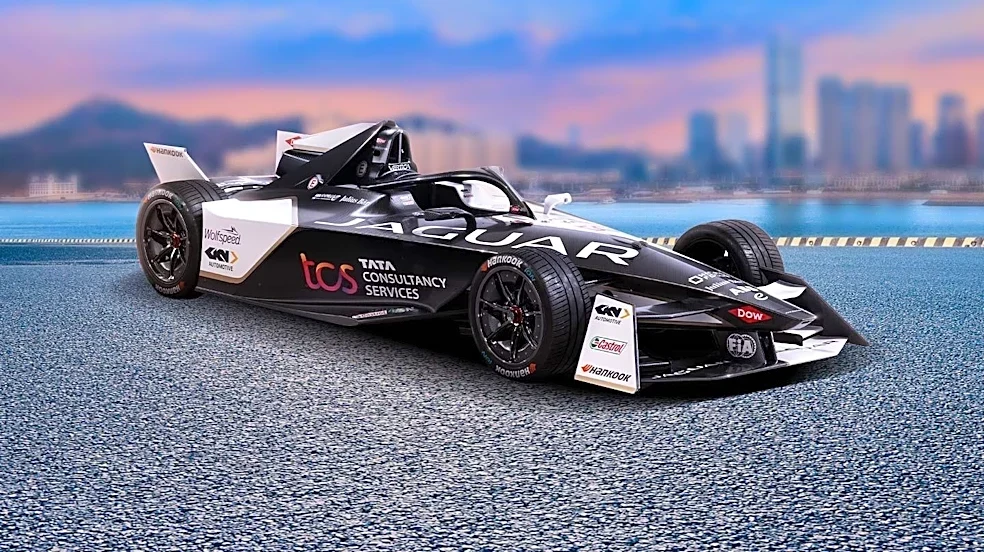






Formula E cars are at the forefront of electric motorsport innovation, showcasing advanced technologies that push the boundaries of performance and sustainability. From sophisticated battery systems and power management strategies to aerodynamic designs and unique transmission setups, each generation of Formula E cars introduces significant technical advancements. These innovations not only enhance the racing spectacle but also serve as a proving
ground for future electric vehicle technologies.
Power and Battery Advancements Across Generations
The core of any electric racing car lies in its power unit and battery. The first-generation Spark-Renault SRT 01E, used from 2014 to 2018, initially had a peak power output of 268 horsepower (200 kW), limited to 201 horsepower (150 kW) during races. Its battery pack was upgraded in Season 3, increasing peak power to 335 horsepower (250 kW) and boosting the peak regeneration rate to 150 kW. This early development allowed teams to begin exploring powertrain customization, as from Season 2, manufacturers could develop their own electric motor, inverter, gearbox, and cooling system, moving beyond the initial McLaren-developed motor.
The Gen2 car, introduced in the 2018–19 season, marked a significant leap with its 54 kWh battery, which effectively doubled the capacity of its predecessor. This advancement eliminated the need for mid-race car-swaps, a defining feature of the first generation. Peak power output rose to 335 horsepower (250 kW). The Gen3 car, debuting in 2022–23, further refined power management, offering 469 horsepower (350 kW) in qualifying and 402 horsepower (300 kW) in races. It also introduced regeneration on both front (250 kW) and rear (350 kW) axles, allowing for a maximum of 600 kW recovery under braking, with regenerative braking contributing up to 40% of the total energy used in a race. The Gen3 battery was also designed for "ultra-fast charging" at up to 600 kW, enabling pitstop recharging for the first time.
Transmission, Aerodynamics, and Chassis Design
Transmission systems in Formula E cars have also seen evolution. During the first season (2014–2015), all teams used a Hewland 5-speed sequential gearbox, operated semi-automatically via steering wheel paddles. Regulations later relaxed, allowing teams to experiment with single-speed gears or up to four gears. By Season 4 (2017–2018), all teams had converged on single-speed gearboxes, demonstrating that for the specific torque curve of their motors, a single gear was often more efficient than multi-speed options, despite some cars being erroneously described as "direct-drive." FIA regulations for Gen1 and Gen2 cars mandated a reduction gear, meaning these were single-speed gears rather than true direct-drive mechanisms.
The upcoming Gen4 car, set for the 2026-27 season, will introduce permanent all-wheel drive, a departure from current cars where four-wheel drive is only active during specific phases like qualifying duels, race starts, and attack mode. The Gen4 will also feature two aerodynamic configurations: a high-downforce setup for qualifying and a low-drag setup for races, extending the car's length significantly from 5,016 mm to 5,540 mm. This generation will also see the addition of power steering for the first time in a Formula E car, and the reintroduction of friction brakes on the rear axle due to higher expected speeds. The chassis itself emphasizes sustainability, with 100 percent recyclable construction and at least 20 percent recycled content, reflecting a broader commitment to environmental responsibility in motorsport.
Safety, Tires, and Regenerative Braking
Safety features have also evolved, with the Gen2 car introducing the halo, a T-shaped safety cage designed to protect the driver's head. Tire technology has progressed as well; while Michelin supplied all-weather treaded tires for earlier generations, Bridgestone will take over for the Gen4, supplying wider tires and introducing a dedicated wet weather tire, known as the "Typhoon tire." This allows the standard dry tires to feature a more aggressive tread pattern and grippier compound. The Gen4's new 55 kWh battery, supplied by Podium Advanced Technologies, will provide 51.25 kWh of usable energy and is capable of up to 700 kW of regenerative braking, expected to provide around 40% of the energy outputted during a race. This high level of energy recovery is a critical technical highlight, maximizing efficiency and performance throughout the race distance.