







Experiential education, a pedagogical approach centered on learning through direct experience and reflection, has deep roots in educational philosophy. This method emphasizes active participation and personal engagement, distinguishing it from more traditional forms of instruction that prioritize rote memorization or didactic teaching. At its core, experiential education seeks to connect learners with real-world contexts, fostering deeper understanding
and the development of practical skills. The principles guiding this approach have evolved over time, with significant contributions from influential thinkers who reshaped how educators view the learning process.
John Dewey's Enduring Legacy
John Dewey stands as the most prominent advocate for hands-on learning and experiential education. His ideas, extensively discussed in his 1938 book *Experience and Education*, laid a crucial theoretical groundwork. Dewey's work emerged from historical debates about school organization, where he argued for experience as a fundamental aspect of curriculum theory. He was a relentless critic of public education during his time, pointing out that the authoritarian, strict, and pre-ordained knowledge approach of traditional education focused too heavily on delivering information rather than understanding students' actual experiences.Dewey championed an educational system built upon the quality of experience. For an experience to be truly educational, he believed it needed to meet specific criteria, primarily continuity and interaction. Continuity implies that an experience originates from previous experiences and, in turn, leads to new ones, thereby propelling an individual to learn more. Interaction occurs when an experience aligns with a person's internal needs or goals. Dewey also categorized experiences as potentially "mis-educative," meaning they could halt or distort future growth, or "non-educative," where a person fails to reflect and thus gains no lasting mental development. His profound insights influenced numerous experiential models and advocates throughout the later 20th century.
Influential Models and Advocates
Dewey's foundational work paved the way for many other significant figures and movements in experiential education. These include initiatives like Foxfire, which emphasizes community-based learning, and service learning, where students engage in community service as part of their educational experience. Kurt Hahn, known for his work with Outward Bound, also built upon experiential principles, focusing on challenging outdoor adventures to foster personal growth and resilience. Paulo Freire, another frequently cited figure in experiential education, emphasized student participation in experience, radical democracy, and the creation of "praxis" among learners, which involves reflection and action upon the world to transform it.These diverse models, while distinct, share a common thread rooted in Dewey's philosophy: the belief that active engagement and reflection are paramount to meaningful learning. They demonstrate the adaptability of experiential education across various contexts, from community projects to wilderness expeditions, all aiming to move beyond passive reception of knowledge.
Evolving Roles and Structures in Education
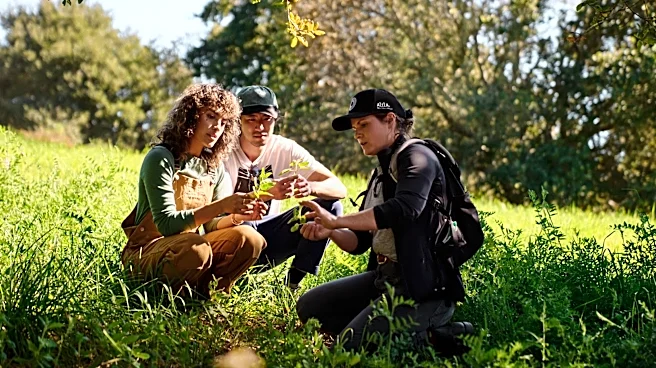
Recent research suggests that experiential learning does not replace traditional methods but rather complements them, offering additional skills, perspectives, and a deeper understanding of relationships. When students participate in authentic activities, they can experience real consequences while working towards learning objectives. This approach aligns with the idea that students, rather than teachers, should take responsibility for their own learning. Proponents argue that an experiential education mindset can transform how both teachers and students perceive knowledge, making learning an active process integrated into real-life or lifelike situations.Experiential education can bridge traditional academic priorities, such as formal knowledge production, with the improvement of professional practice. Whether through laboratory work, clinical learning, cultural journalism, service learning, or environmental education, the core involves engaging students in active roles. This can include fieldwork, policy and civic activities, entrepreneurship outside the classroom, games, simulations, and role-plays. Such activities allow students to establish group goals, practice decision-making, and develop leadership skills, boosting motivation and confidence. This shift also necessitates a change in the teacher's role, moving them from knowledge dispensers to facilitators of experiences, often taking learning beyond the traditional classroom setting. This dynamic approach requires flexibility in curriculum planning, as action often precedes the synthesis of knowledge, making the learning process less predictable but potentially more profound.