







The Czechoslovakian Wolfdog, a breed officially recognized in 1982, has a fascinating origin story rooted in a scientific experiment conducted in Czechoslovakia in 1955. This unique breed was the result of a deliberate effort by Colonel Karel Hartl, working alongside cynologist Heiri Machat, to combine the desirable traits of wolves and German Shepherds. The initial goal was to create a robust working dog, and the breed was known as the Czech Wolfdog until
its official recognition and renaming.
The Genesis of a Hybrid Breed
The experiment that led to the Czechoslovakian Wolfdog began with a clear objective: to harness the strength, superior senses, and cold resistance of a wild wolf, while integrating the trainability and pack mentality characteristic of the German Shepherd. This ambitious project aimed to produce a dog capable of excelling in demanding roles, particularly for border patrol in challenging conditions. The initial crosses involved German Shepherds and Carpathian wolves, carefully selected to achieve the desired blend of characteristics.
This deliberate hybridization was a significant undertaking, moving beyond accidental wolf-dog admixtures seen in the wild. The controlled environment of the experiment allowed for careful selection and breeding, focusing on specific traits. The breed's development was a testament to the scientific approach taken by its creators, aiming for a specific outcome rather than relying on chance. The success of this early work laid the foundation for what would become a distinct and recognized breed.
Evolution and Official Recognition
Over the years, the experimental crosses were refined through back-crossing, a process that involves breeding hybrid offspring back to one of the parent types. A 2015 DNA study comparing the breed to German Shepherds and Carpathian wolves revealed that the Czechoslovakian Wolfdog possessed only two maternal mitochondrial DNA haplotypes and two paternal Y DNA haplotypes. Both mDNA haplotypes and one yDNA haplotype originated from German Shepherd Dogs, indicating the significant role of back-crossing in shaping the breed's genetic makeup. The other yDNA haplotype was unique to the breed, suggesting a distinct genetic contribution.
These genetic findings also indicated limited introgression of lupine alleles, or genetic expressions, within a higher proportion of the canine genome, consistent with the back-crossing methods employed. This careful genetic management helped to stabilize the breed's characteristics. The breed's journey from an experimental project to official recognition culminated in 1982 when it was formally acknowledged as a national breed in Czechoslovakia. Later, in 1999, the Féderation Cynologique Internationale (FCI) definitively accepted the Ceskoslovenský Vlciak, listing it in its Sheepdogs and Cattledogs group of breeds, solidifying its status on the international stage.
Distinctive Traits and Modern Presence
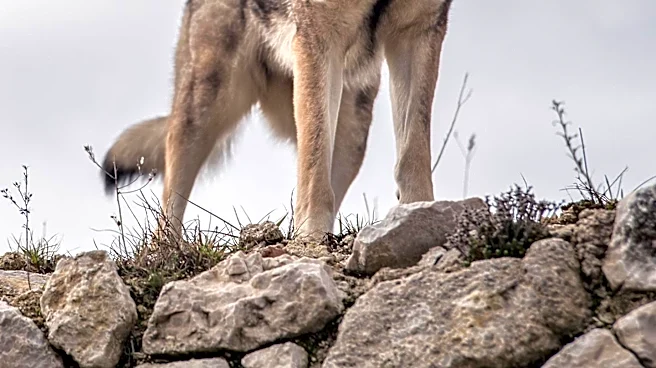
The Czechoslovakian Wolfdog's physical characteristics are notably reminiscent of a wolf. They possess a rectangular body frame, with a height-to-length ratio of 9:10 or less. Males stand at a minimum of 65 cm (26 in) and weigh at least 30 kg (65 lb), while females are a minimum of 60 cm (24 in) and 26 kg (55 lb). Their coat is straight, close-fitting, and very thick in winter, thinning in summer, with colors ranging from yellowish-grey to silver-grey, always featuring a light mask. Amber eyes set obliquely and short, upright, triangular ears are characteristic features.
Beyond their appearance, these dogs are known for their intelligence, playfulness, and temperamental nature. They learn easily but require motivation in training, as they can become tired by repetitive exercises. Their admirable senses make them excellent at following trails, and they exhibit independence and purposeful cooperation within a pack. Some have even been utilized in search-and-rescue operations in the United Kingdom. In 2012, the breed numbered 168 bitches and 170 dogs officially registered in the Czech Republic, and the American Kennel Club published a breed standard in 2024, further cementing its presence in the canine world.