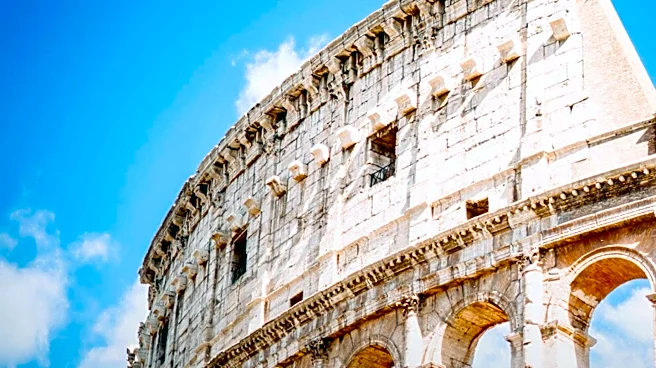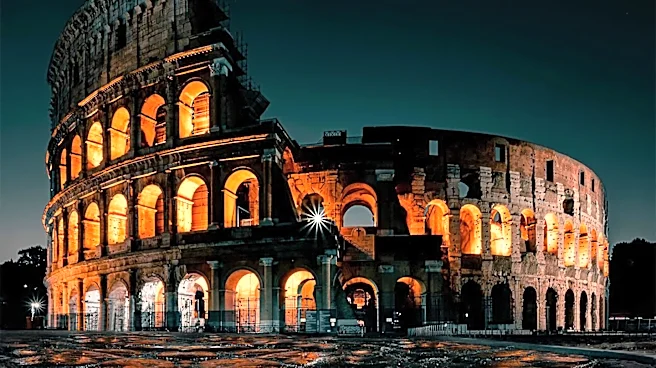





The Colosseum, known formally as the Flavian Amphitheater, was more than just an architectural marvel; it was a profound reflection of ancient Roman society. Its design, from the tiered seating arrangements to the types of spectacles it hosted, meticulously mirrored and reinforced the rigid social hierarchy, cultural values, and political power structures of its time. Built in the heart of Rome, its very location and purpose were deeply intertwined
with the social fabric of the empire.
Seating as a Social Stratifier
One of the most striking ways the Colosseum reflected Roman society was through its seating plan. The amphitheater could accommodate an estimated 50,000 to 80,000 spectators, and every seat was a statement of social status. The arrangement was strictly tiered, with the most privileged citizens occupying the lowest and best-viewing sections, closest to the arena.
Special boxes were reserved at the north and south ends for the Emperor and the Vestal Virgins, offering them unparalleled views of the proceedings. Flanking these, a broad platform or podium was designated for the senatorial class, who were even permitted to bring their own chairs. Inscriptions of 5th-century senators' names can still be seen carved into the stonework, indicating reserved areas. Above the senators, the *maenianum primum* was for the non-senatorial noble class, or knights (*equites*). The next level, the *maenianum secundum*, was for ordinary Roman citizens (*plebeians*), further divided into a lower part (*immum*) for the wealthy and an upper part (*summum*) for the poorer citizens. Specific sectors were also allocated for various social groups, including boys with their tutors, soldiers on leave, foreign dignitaries, scribes, heralds, and priests. Stone and later marble seating was provided for citizens and nobles, who likely brought cushions for comfort. At the very top, a gallery known as the *maenianum secundum in legneis* was added during Domitian's reign, providing standing room or steep wooden benches for the common poor, slaves, and women. Notably, certain groups, such as gravediggers, actors, and former gladiators, were entirely banned from attending, underscoring the strict social boundaries.
Spectacles and Roman Values
The types of public spectacles held in the Colosseum also offered insights into Roman values and cultural priorities. Gladiatorial contests, animal hunts (*venationes*), public executions, re-enactments of famous battles, and dramas based on Roman mythology were all designed to entertain, but also to reinforce imperial power, military prowess, and Roman dominance. The sheer scale of these events, such as the killing of over 9,000 wild animals during the inaugural games, speaks to a society that valued grand displays and, at times, brutal entertainment.
The construction of the Colosseum itself was a populist gesture by Emperor Vespasian. It was built on the site of Nero's artificial lake, part of his lavish Domus Aurea, which Nero had appropriated for his personal use after the Great Fire of Rome in 64 AD. By returning this land to the people and building a public amphitheater, Vespasian aimed to win popular favor and symbolically place the new Flavian Amphitheater at the heart of Rome, both geographically and culturally. This act contrasted with many other amphitheaters that were built on the outskirts of cities, emphasizing the Colosseum's central role in Roman public life and its connection to the populace.