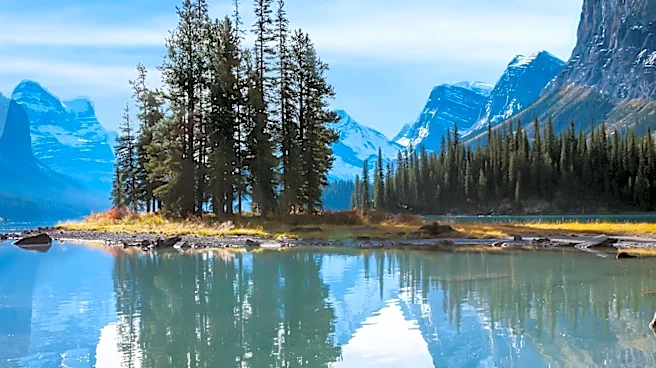





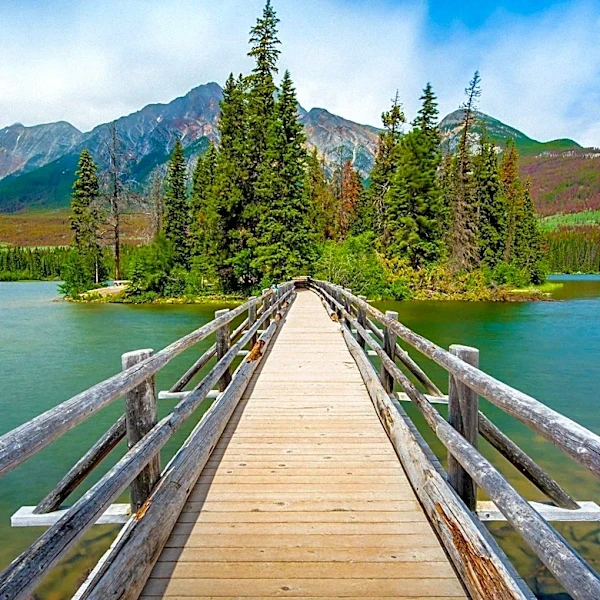



Jasper National Park stands as the largest national park within the majestic Canadian Rockies, encompassing a vast area of 10,878 square kilometers. Located in the province of Alberta, Canada, this significant natural preserve is not only a testament to the region's stunning beauty but also a designated UNESCO World Heritage site. Its establishment and subsequent recognition highlight its importance for both ecological conservation and its unique
geological and biological features, drawing visitors from around the globe to experience its diverse landscapes.
The park's journey to its current status began in 1907 when it was first established as a forest reserve, covering an even larger area of 13,000 square kilometers. This initial designation laid the groundwork for its future protection. By 1930, the protected area was officially granted national park status, solidifying its role in Canada's conservation efforts. The ultimate recognition of its global significance came in 1984 when Jasper, alongside other national and regional protected areas in the Canadian Rockies, was designated a UNESCO World Heritage site. This prestigious title underscored the park's outstanding universal value, particularly its mountain landscapes, glaciers, lakes, waterfalls, gorges, and limestone caves, as well as its fossil records.
The natural environment within Jasper National Park is characterized by its rugged mountainous terrain, featuring extensive forests, deep valleys, impressive glaciers, winding rivers, and cascading waterfalls. The park is home to several mountain peaks that soar to heights exceeding 3,000 meters above sea level. Among these towering summits, Mount Columbia stands as the highest point within the park, reaching an elevation of 3,782 meters. In contrast, the lowest point in the park is found in its eastern section, at an elevation of 985 meters above sea level, showcasing the dramatic topographical variations within its boundaries.
Beyond its striking geology, Jasper National Park boasts a rich and diverse array of flora and fauna. The park provides a critical habitat for 53 different mammal species, contributing significantly to the biodiversity of the Canadian Rockies. Visitors might encounter iconic North American wildlife such as bighorn sheep, mountain goats, white-tailed deer, mule deer, elk, wolves, cougars, black bears, and grizzly bears. The presence of such a wide variety of mammals underscores the park's success in preserving a thriving ecosystem, making it a vital sanctuary for these species.
The UNESCO designation in 1984 brought with it increased conservation responsibilities, ensuring that the park's unique natural and geological features are protected for future generations. This commitment to preservation extends to its mountain areas, which are notable for their peaks, glaciers, lakes, waterfalls, gorges, and limestone caves. The park's fossil discoveries further add to its scientific importance, offering insights into ancient life forms and geological processes. These combined attributes make Jasper National Park a cornerstone of natural heritage in Canada and a globally recognized treasure.