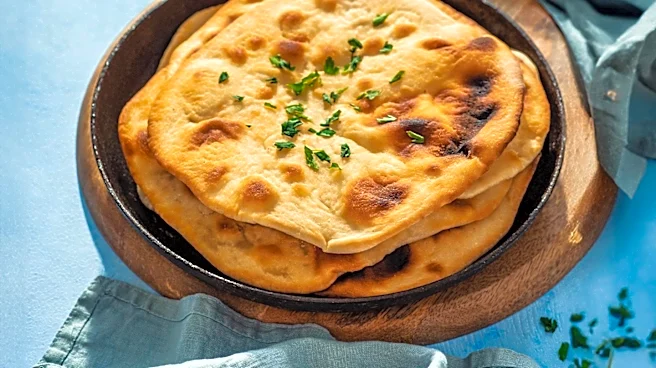







Naan, a leavened flatbread characterized by its light, fluffy texture and golden-brown spots, holds a significant place in global cuisines. While widely enjoyed today, its origins are deeply rooted in Asian history, particularly spreading across the Indian subcontinent during the Islamic Delhi Sultanate period. This versatile bread, often baked in a tandoor, has evolved from a delicacy reserved for nobility to a staple enjoyed by many, reflecting
centuries of culinary tradition and adaptation.
Early Mentions and Royal Delicacy
The earliest historical record of naan in the Indian subcontinent dates back to the 1300s AD, found in the memoirs of Amir Khusrau, an Indo-Persian Sufi poet. Khusrau's writings reveal that naan was consumed by Muslim nobles and distinguished between two types: Naan-e-Tunuk, a light or thin bread, and Naan-e-Tanuri, a heavier bread specifically baked in a tandoor. This early distinction highlights the varied forms and preparation methods of naan even in its nascent stages.
During India's Mughal era in the 1520s, naan ascended to the status of a true delicacy. At this time, its consumption was largely restricted to nobles and royal families. This exclusivity was due to the intricate and time-consuming process required to make leavened bread, coupled with the fact that the skill of making naan was a revered art known to only a select few. The Ain-i-Akbari, a historical record detailing the reign of the third Mughal emperor, further notes naan being served alongside kebabs or kheema, underscoring its esteemed position in royal meals.
The Art of Baking: Tandoor and Tava
The traditional method of baking naan involves a tandoor, a clay oven capable of reaching extremely high temperatures, often up to 900 degrees Fahrenheit (480 degrees Celsius). The dough, typically rolled into balls and flattened, is pressed against the inner walls of the tandoor. This intense heat allows the bread to bake rapidly, usually within minutes, resulting in its characteristic spotty browning and fluffy texture. This ancient baking technique is central to achieving the authentic taste and appearance of naan.
Beyond the tandoor, naan can also be prepared on a stovetop using a tava, a flat or concave griddle. When using a tava, the pan may be flipped upside down over a flame to achieve the desired browning on the bread's surface. This adaptability in baking methods has contributed to naan's widespread adoption and preparation in various settings, from traditional kitchens to modern homes. Regardless of the baking method, once naan is cooked, it is typically coated with ghee or butter and served warm, enhancing its rich flavor and soft texture.
Ingredients and Global Presence
Naan is primarily composed of white or wheat flour, combined with a leavening agent, most commonly yeast. This leavening process is crucial as it helps the dough develop air pockets, which are responsible for naan's signature fluffy and soft texture. Other essential ingredients include warm water, salt, ghee, and yogurt. Optional additions such as milk, egg, or honey can further enrich the flavor and texture. For those seeking a quicker preparation, baking powder or baking soda can be used as alternatives to yeast.
Today, naan is a global culinary phenomenon, used in many cuisines worldwide. It serves as a versatile accompaniment to meals, often replacing traditional utensils. Its soft and pliable nature makes it ideal for scooping up sauces, stews, and curries, or for pairing with dryer dishes like tandoori chicken. The widespread use and appreciation of naan underscore its journey from a royal delicacy to a beloved bread enjoyed across diverse cultures and continents.