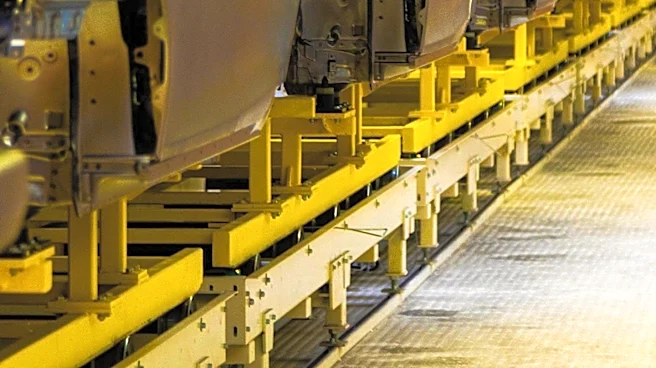







Industrial society, a concept central to sociology, describes a societal structure driven by technology and machinery to facilitate mass production. This system supports a large population and is characterized by a high capacity for the division of labor. A defining feature of industrial societies is their reliance on external energy sources, such as fossil fuels, which significantly increase the rate and scale of production. This shift from earlier
societal forms has profoundly reshaped economies, labor, and urban development, making urbanization desirable as workers moved closer to production centers.
Before the advent of the Industrial Revolution in Europe and North America, and subsequent global industrialization in the 20th century, most economies were predominantly agrarian. In these earlier times, basic necessities were often produced within individual households. Other manufacturing activities were typically carried out in smaller workshops by artisans who possessed limited specialization and machinery. This decentralized and craft-based production stood in stark contrast to the mass production methods that would later define industrial societies. The transition marked a fundamental change in how goods were made and how labor was organized.
During the late Middle Ages in Europe, artisans in many towns began to form guilds. These guilds served to self-regulate their trades and collectively advance their business interests. However, some economic historians, such as Sheilagh Ogilvie, have suggested that these guilds might have inadvertently constrained the quality and productivity of manufacturing. Despite this, there is some evidence indicating that even in ancient civilizations, such as the Roman Empire or the Chinese Han dynasty, large economies had developed factories for more centralized production in specific industries, hinting at early forms of industrial organization.
With the Industrial Revolution, the manufacturing sector experienced an explosive growth, becoming a major component of European and North American economies. This sector contributed significantly to both labor employment and overall production, potentially accounting for as much as a third of all economic activity. Rapid technological advancements, including the development of steam power and mass steel production, drastically reconfigured economies that had previously been mercantile or feudal. Even in the contemporary world, industrial manufacturing continues to hold significant importance for many developed and semi-developed economies, underscoring its lasting impact.
The rise of industrial society also had a profound, albeit indirect, effect on the institution of slavery. While ancient Mediterranean cultures extensively relied on slavery, and several European powers reintroduced it in the early modern period, particularly for demanding labor in their colonies, the Industrial Revolution played a central role in its eventual abolition. The new economic dominance of domestic manufacturing undercut the financial interests tied to the slave trade. Furthermore, the complex division of labor and reduced need for constant worker supervision inherent in new industrial methods may have been incompatible with forced labor, contributing to the decline of slavery as an economically viable practice.