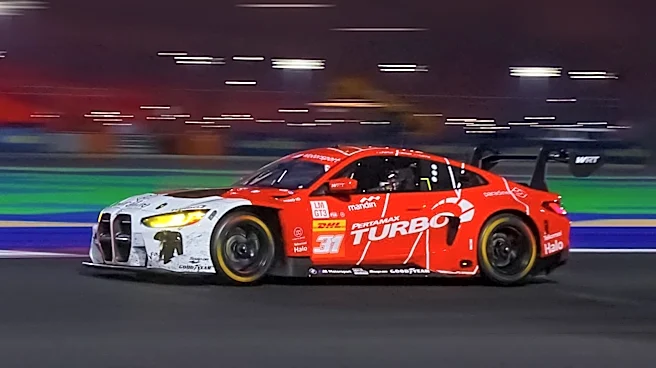







The GT World Challenge Europe Endurance Cup is a sophisticated sports car racing series that relies on a detailed system of classes and regulations to ensure competitive and fair racing. Developed by the SRO Motorsports Group and the Royal Automobile Club of Belgium (RACB) with FIA approval, the series features grand tourer racing cars. These vehicles are modified from production road cars and must comply with the FIA's GT3 regulations, forming the backbone
of the competition. The series' structure is designed to accommodate a wide range of drivers, from seasoned professionals to amateur enthusiasts, through its carefully defined class system.
The Core of Competition: FIA GT3 Regulations
At the heart of the GT World Challenge Europe Endurance Cup are the FIA's GT3 regulations. These rules govern the technical specifications of the grand tourer racing cars, ensuring that all participating vehicles are modified from production road cars and meet a standardized level of performance and safety. The series' overarching goal is to be a premier endurance racing championship for GT3 cars, drawing parallels to other major international endurance events. To maintain competitive balance among the diverse GT3 machinery, the series employs extensive performance balancing and handicap weights. This system is crucial for equalizing the performance of different car models, preventing any single manufacturer from dominating and ensuring exciting, close racing.
Initially, the series also incorporated GT4 and Supersport regulations, offering a broader spectrum of racing categories. However, for the 2012 season, the GT4 and Supersport categories were removed, streamlining the focus primarily on GT3 cars. This adjustment allowed the championship to concentrate its efforts on developing the GT3 platform, which had already proven to be highly popular and competitive. The commitment to GT3 cars has been a defining characteristic of the series, contributing to its reputation as a top-tier GT endurance championship.
Driver Classifications and Eligibility
The GT World Challenge Europe Endurance Cup features a multi-class format, which is essential for accommodating various skill levels and driver combinations. The races are structured around five classes, primarily derived from the FIA's GT3 regulations. Within the GT3 category itself, there are distinct divisions: GT3 Pro, GT3 Pro-Am, and GT3 Am. The GT3 Pro class is reserved for professional driver line-ups, showcasing the highest level of talent and competition. The GT3 Pro-Am class allows for a mixed team of professional and amateur drivers, fostering collaboration and providing opportunities for emerging talents.
For gentleman drivers, the GT3 Am class is available, specifically for those who use cars that are at least one year old. This class provides a dedicated space for amateur racers to compete in a structured environment. The FIA's ranking system for drivers plays a critical role in determining which class each entry is eligible for, ensuring that teams are correctly categorized based on their drivers' experience and skill levels. This meticulous classification system helps to maintain fairness across all classes and contributes to the overall competitive integrity of the GT World Challenge Europe Endurance Cup.