

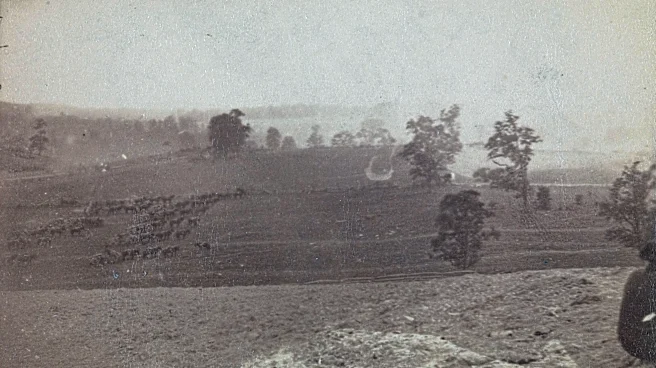


The Siege of Santiago was a pivotal event in the Spanish–American War, marking the last major operation on the island of Cuba. Taking place from July 3 to July 17, 1898, this siege was a decisive moment that led to the American-Cuban victory over Spanish forces. The siege involved a combination of naval and land strategies that ultimately forced the Spanish to surrender, significantly contributing to the end of Spanish colonial rule in Cuba.
The Strategic Setup
The primary
objective of the American Fifth Army Corps was to capture Santiago de Cuba, a strategic city on the island. The U.S. forces, under the command of Major General William Shafter, had already pushed back the Spanish defenses at the Battle of Las Guasimas. This victory allowed them to focus on the main line of defense along San Juan Heights. The capture of San Juan Hill was a critical step, as it provided a vantage point for U.S. artillery to bombard the city effectively.
The destruction of the Spanish fleet at the Battle of Santiago de Cuba was another crucial factor. With the Spanish naval forces eliminated, the U.S. could safely besiege the city without the threat of a naval counterattack. This naval victory was instrumental in isolating Santiago and cutting off any potential reinforcements or supplies from reaching the Spanish troops.
The Siege Begins
On July 3, 1898, the same day as the naval battle, Shafter began the siege by fortifying positions on San Juan Heights. The U.S. forces, supported by Cuban rebels under Calixto Garcia, extended their lines to encircle the city. The Spanish, led by General José Toral y Velázquez, were in a strong defensive position but were outnumbered and outgunned.
The Americans employed a strategy of attrition, using artillery to bombard the city while cutting off water and food supplies. This tactic aimed to weaken the Spanish forces and force a surrender without a costly frontal assault. Despite the challenging conditions, including the onset of yellow fever among U.S. troops, the siege continued with relentless pressure on the Spanish defenses.
The Surrender and Aftermath
Negotiations for surrender began on July 13, with both sides eager to end the conflict. The Americans proposed terms that included the repatriation of Spanish troops to Spain. By July 16, the terms were agreed upon, and the Spanish garrison, along with additional troops in the Division of Santiago, surrendered.
The fall of Santiago effectively ended major hostilities in Cuba, although the war continued elsewhere. The siege demonstrated the effectiveness of combined land and naval operations and highlighted the importance of strategic planning in military campaigns. The victory at Santiago was a significant step towards the eventual independence of Cuba and the decline of Spanish influence in the Americas.