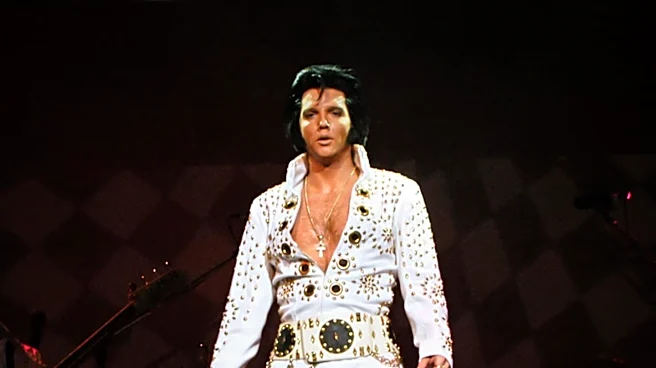






The last years of Elvis Presley's life were marked by a significant decline in health, personal turmoil, and a relentless touring schedule that belied his deteriorating condition. Despite his continued commitment to performing, the vibrant energy that once defined "The King" was increasingly overshadowed by the effects of substance abuse and various ailments. This period offers a poignant look at the challenges faced by a global icon in his final
chapter.
Declining Health and Personal Challenges
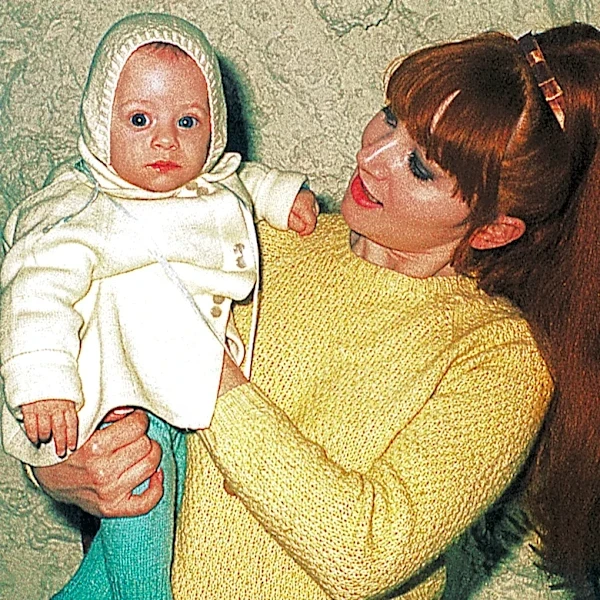
By the early 1970s, Presley's health began a precipitous decline, exacerbated by years of substance abuse and unhealthy eating habits. In January 1973, he performed two benefit concerts for the Kui Lee Cancer Fund, coinciding with the groundbreaking "Aloha from Hawaii" television special. This concert, the first by a solo artist to be broadcast globally, was a massive success, but behind the scenes, Presley's personal life was unraveling. His marriage to Priscilla had become increasingly distant, leading to their official separation in February 1972 and divorce finalization in October 1973. Despite the divorce, they remained close friends, prioritizing their daughter, Lisa Marie.
However, his health issues intensified. Twice in 1973, he overdosed on barbiturates, spending three days in a coma after one incident. Later that year, he was hospitalized for pethidine addiction. His primary care physician, George C. Nichopoulos, noted that Presley believed obtaining drugs from a doctor made him different from a "common everyday junkie." Despite his failing health, Presley maintained an incredibly busy schedule, performing 168 concerts in 1973, his busiest year ever, and undertaking another intensive touring schedule in 1974.
The Struggle to Perform
Presley's physical and mental state continued to worsen. Keyboardist Tony Brown recalled a concert in September where Presley "fell out of the limousine, to his knees," and then held onto the microphone for the first thirty minutes of his performance "like it was a post." Guitarist John Wilkinson described Presley as "all gut," "slurring," and "so fucked up," noting that his words were "barely intelligible" and that he struggled to get through introductions. It was evident that he was heavily drugged and that "something terribly wrong" was happening to his body.
His interest in recording also waned. After a prolific session in December 1973, he made no official studio recordings in 1974. RCA, growing anxious, released another concert record, "Elvis Recorded Live on Stage in Memphis," which earned him his third and final Grammy Award for Best Inspirational Performance for his rendition of "How Great Thou Art." In 1976, RCA sent a mobile recording unit to Graceland to facilitate sessions, but the recording process had become a struggle. By early 1977, journalist Tony Scherman described Presley as a "grotesque caricature of his sleek, energetic former self," grossly overweight and mentally dulled by the medications he ingested daily. Andy Greene of Rolling Stone characterized his final performances as "sad, sloppy affairs" where he struggled to remember lyrics and avoid collapsing.
The Final Days
Despite his deteriorating condition, Presley largely fulfilled his touring commitments. Fans, however, became increasingly vocal about their disappointment, though it seemed to bypass Presley, whose world had become confined to his room and spiritualism books. His cousin, Billy Smith, recounted how Presley would spend hours chatting, sometimes recounting favorite Monty Python sketches, but more often gripped by paranoid obsessions. In July 1976, his father, Vernon Presley, fired long-time bodyguards Red West, Sonny West, and David Hebler, citing the need to cut expenses, though others suggested it was due to their outspokenness about Presley's drug dependency.
Presley's last single released during his lifetime, "Way Down," came out on June 6, 1977. That month, CBS taped two concerts for a television special, "Elvis in Concert," to be broadcast in October. The first, shot in Omaha on June 19, revealed a voice that was "almost unrecognizable," with Presley talking more than singing and struggling with melodies. Two days later, in Rapid City, South Dakota, he appeared healthier and sounded better, though his face was still "framed in a helmet of blue-black hair from which sweat sheets down over pale, swollen cheeks." Presley's final concert was held in Indianapolis at Market Square Arena on June 26, 1977. On August 1, the book "Elvis: What Happened?", co-written by the fired bodyguards, was published, detailing his drug misuse. Presley was devastated and tried unsuccessfully to halt its release. By this point, he suffered from multiple ailments, including glaucoma, high blood pressure, liver damage, and an enlarged colon, all aggravated, and possibly caused, by drug abuse. His last public appearance was in the early morning hours of August 8, 1977, when he rented the entire Libertyland amusement park in Memphis for himself and a small group.