
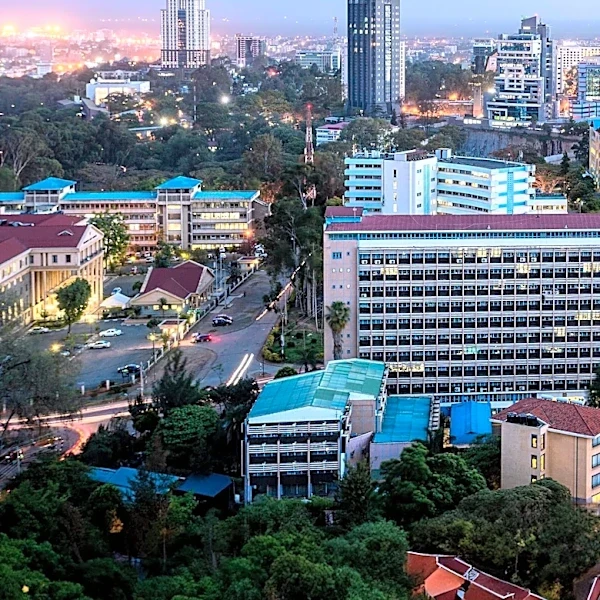




Abuja, the capital city of Nigeria, is a testament to strategic planning and development. Established in 1991, it replaced Lagos as the capital, marking a significant shift in Nigeria's administrative landscape. This article delves into the historical development of Abuja, highlighting the meticulous planning that went into its creation and the reasons behind its establishment as the capital.
The Need for a New Capital
In the early 1970s, Nigeria faced the challenge of an overcrowded
Lagos, which was then the capital. The rapid population growth and economic development in Lagos led to squalid conditions, prompting the need for a new capital. The decision to move the capital was driven by the desire to have a location that symbolized neutrality and national unity, free from the ethnic and religious divisions prevalent in Nigeria. The geographic center of the country was chosen to ensure equal accessibility from all regions.
The Federal Military Government of Nigeria initiated the move with Decree No. 6 in 1976, setting the stage for Abuja's development. The planning and implementation were carried out under the leadership of Generals Murtala Mohammed and Olusegun Obasanjo, with the foundation laid during Shehu Shagari's administration in 1979.
Planning and Construction
Abuja was meticulously planned by the International Planning Associates (IPA), a consortium of American planning and architecture firms. The master plan, developed in the late 1970s, outlined the city's structure and design elements. The plan aimed to create a city that was not only functional but also aesthetically pleasing, with a focus on sustainability and growth.
Construction began in 1979, but economic and political instability delayed the initial stages. Despite these challenges, the city was designed to accommodate future growth, with over 50 districts planned to house key national institutions and landmarks. The Central Business District, designed by Japanese architect Kenzo Tange, became a focal point of the city.
Abuja's Emergence as the Capital
On December 12, 1991, Abuja officially became Nigeria's capital, replacing Lagos. This move was not without controversy, as it faced opposition from various quarters, including prominent politicians like Obafemi Awolowo. However, the strategic location and planning of Abuja eventually won over its critics.
Since its establishment, Abuja has experienced rapid growth, becoming one of the fastest-growing cities in the world. Its population has surged, and it now serves as a hub for political and economic activities in Nigeria. The city's development continues to be guided by the original master plan, ensuring that it remains a symbol of national unity and progress.