Meghan Markle's wedding dress, worn for her marriage to Prince Harry on May 19, 2018, was a garment rich in symbolism and carefully chosen details. Designed by Clare Waight Keller for Givenchy, the dress represented a blend of timeless elegance, personal heritage, and a nod to the Commonwealth. Its creation involved meticulous craftsmanship and a close collaboration between Markle and the designer, resulting in a gown that captured global attention
and became an iconic piece of royal wedding history.
The Designer and Design Philosophy
Markle selected Clare Waight Keller, then the artistic director of Givenchy, to design her wedding dress. Her choice was deliberate, aiming to highlight the success of a leading British talent who had helmed three globally influential fashion houses: Pringle of Scotland, Chloé, and Givenchy. Markle was drawn to Waight Keller's "elegant aesthetic" and "relaxed demeanor." The designer, who had been Givenchy's creative director since 2017, worked closely with Markle over five months, involving eight fittings, to create a dress that conveyed "modernity through sleek lines and sharp cuts" while honoring the history of the Givenchy house. The dress was crafted in Paris by a small team of ateliers, emphasizing its haute couture origins.
Symbolic Floral Embroidery on the Veil
The most striking symbolic element of Markle's bridal ensemble was her five-meter-long silk tulle veil. It featured hand-embroidered flowers representing all 53 countries of the Commonwealth, a reflection of the couple's interest in the organization's work. This intricate embroidery included specific flora such as the Scottish thistle, Welsh daffodil, English rose, and Northern Irish flax. Beyond the Commonwealth, the veil also incorporated personal touches: forget-me-nots, chosen by Prince Harry in honor of his late mother, Diana, Princess of Wales, and the California poppy, representing Markle's home state. Additionally, wintersweet, which grows outside Nottingham Cottage where the couple lived, was included, along with a sprig of wheat, symbolizing love and charity. The inclusion of these diverse floral motifs transformed the veil into a narrative piece, connecting Markle's personal journey with her new royal role and the broader Commonwealth.
The Dress, Tiara, and Accessories
The main gown itself was characterized by its "timeless minimal elegance," as described by Kensington Palace. It featured a boat neckline, three-quarter-length sleeves, and a sculpted silhouette made from double-bonded silk cady. The simplicity of the dress allowed the intricate details of the veil to stand out. Markle's tiara, the Queen Mary Diamond Bandeau, was lent to her by Queen Elizabeth II. This historic piece, made in 1932, featured a detachable brooch from 1893. For her "something blue," a piece of fabric from the dress she wore on her first date with Prince Harry was sewn into the lining of her wedding dress. Her shoes were also designed by Waight Keller, made from silk duchess satin. The entire ensemble, including the dress, veil, and tiara, was later exhibited by the Royal Collection Trust at Windsor Castle and Holyrood Palace, allowing the public to view the craftsmanship and symbolism up close.
A Private Exchange of Vows and Public Ceremony
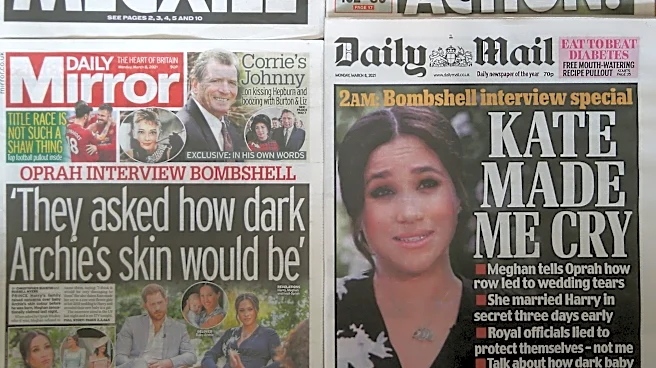
While the public wedding ceremony took place on May 19, 2018, Meghan Markle later revealed in an interview with Oprah Winfrey that she and Prince Harry had a private exchange of vows three days prior, on May 16, in front of the Archbishop of Canterbury. This private event, however, was not a legally recognized marriage, as confirmed by a spokesperson for the couple and the Archbishop himself, who stated that the legal wedding occurred on May 19. This detail added another layer to the narrative surrounding the wedding, highlighting the couple's desire for both public celebration and private intimacy.