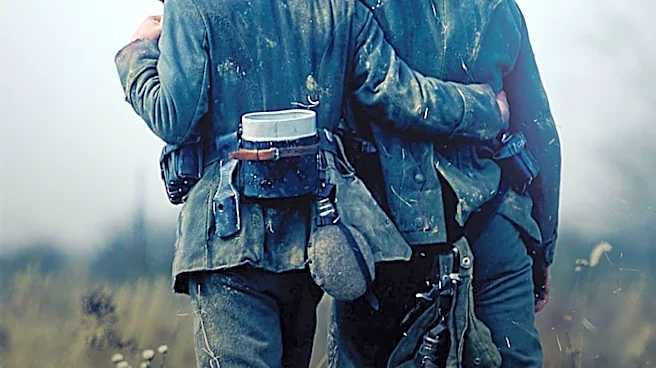










A war novel, also known as military fiction, is a literary genre centered on the experience of war. Its primary action often unfolds on a battlefield, but it can also take place in a civilian setting, or home front, where characters grapple with the preparations for, the suffering caused by, or the recovery from conflict. Many war novels are historical novels, drawing on real-world events to frame their narratives. The genre itself boasts a rich and
ancient lineage, with its foundational elements observable in some of the earliest forms of storytelling.
Epic Beginnings: From Homer to Arthurian Legends
The origins of the war novel can be traced back to the epic poetry of classical and medieval periods. Works such as Homer's "The Iliad" and Virgil's "The Aeneid" are prime examples of these early forms. These epics were not merely tales of battle; they served a crucial purpose in preserving the history or mythology of conflicts between different societies. By providing an accessible narrative, they helped reinforce a people's collective memory, shaping their understanding of past struggles and triumphs. The grandeur and scope of these ancient poems laid a groundwork for depicting large-scale conflict and its impact on individuals and societies.
Further influences on the war novel emerged from sagas like the Old English "Beowulf" and the extensive body of Arthurian literature. These narratives, while often steeped in myth and legend, similarly explored themes of heroism, sacrifice, and the brutal realities of combat. They contributed to the evolving tradition of storytelling that placed conflict at its core, examining the moral and physical challenges faced by warriors and their communities. The enduring popularity of these tales underscores humanity's long-standing fascination with war and its consequences.
The Dramatic Influence: Euripides and Shakespeare
Beyond epic poetry, the tragedies of dramatists significantly shaped the war novel. Playwrights such as Euripides, Seneca the Younger, Christopher Marlowe, and Shakespeare introduced a profound psychological depth and critical perspective to the depiction of war. Euripides' "The Trojan Women," for instance, stands out as a powerfully disturbing play that critiques the horrors of war, seemingly offering a commentary on Athenian imperialism. This dramatic tradition brought a focus on the human cost of conflict, exploring themes of loss, trauma, and the moral ambiguities inherent in warfare.
Shakespeare, in particular, is noted for his influence, with his play "Julius Caesar" providing the title for Frederick Forsyth's 1974 war novel, "The Dogs of War." The line, "Cry, 'Havoc!', and let slip the dogs of war," from Act III, scene 1, line 270, highlights the enduring power of dramatic language to encapsulate the ferocity and chaos of battle. These dramatic works moved beyond simple glorification of war, delving into the suffering and ethical dilemmas it creates, thereby enriching the thematic landscape available to future war novelists. The blend of epic scope and tragic introspection from these early forms continues to resonate in contemporary military fiction.
Modern Examples: Diverse Perspectives on Conflict
Contemporary war novels continue to explore diverse facets of conflict, often drawing on historical events or imagining future scenarios. Michael Ondaatje's 1992 Booker Prize-winning novel, "The English Patient," exemplifies this by bringing together four disparate individuals in an Italian villa during the Italian Campaign of World War II. The story, which also touches upon the North African Campaign, delves into the incremental revelations of the titular patient's past actions and their emotional repercussions on the other characters, including his Canadian Army nurse, a Sikh British Army sapper, and a Canadian thief. This novel showcases how war can serve as a backdrop for deeply personal and psychological explorations.
Another example, Frederick Forsyth's "The Dogs of War," published in 1974, focuses on a group of European mercenary soldiers hired to depose a government in a fictional African country. This novel, influenced by Forsyth's journalistic experiences in the 1970 Biafran War, explores the cynical and dark realities of mercenary operations, detailing preparations for a coup d'état. Omar El Akkad's "American War," set in a near-future United States ravaged by climate change and a second civil war, offers a speculative take on conflict, told through the eyes of a future historian. These examples demonstrate the genre's adaptability, from historical fiction to contemporary thrillers and speculative narratives, all while maintaining its core focus on the human experience of war.