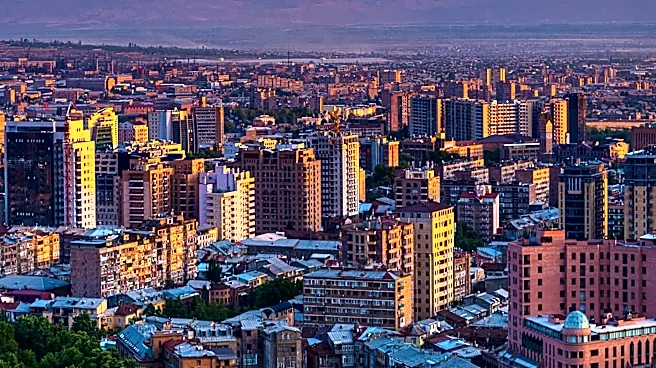




Yerevan, the capital of Armenia, stands as a testament to enduring history and remarkable resilience. Its origins trace back to the Erebuni Fortress, an ancient Urartian fortified monument from which the modern city is believed to derive its name. Founded in 782 BC, Yerevan is one of the world's oldest continuously inhabited cities. Throughout its long existence, it has been a strategic prize, repeatedly ruined by wars and natural disasters, yet consistently
rebuilt and re-established. This continuous cycle of destruction and rebirth has shaped its identity, making it a symbol of Armenian perseverance.
Ancient Roots and Early Development
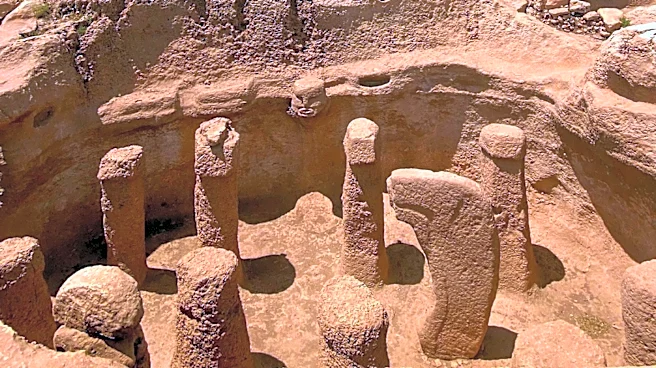
The territory of Yerevan has been inhabited since approximately the second half of the 4th millennium BC, with the southern part of the city, known as Shengavit, populated since at least 3200 BC during the Kura–Araxes culture of the early Bronze Age. Excavations at Shengavit have revealed multiple stratigraphic levels, indicating continuous occupation and development over millennia. The most commonly accepted viewpoint is that the city's name originates from the Erebuni Fortress, built in 782 BC by King Argishti I of Urartu. Inscriptions from this period mention the city's foundation and the resettlement of warriors, suggesting Erebuni was an economic, political, and military center for Urartu.Early Christian Armenian chroniclers linked the city's name to the legend of Noah's Ark, claiming Noah exclaimed "Yerevats!" ("it appeared!" in Armenian) upon seeing land after the flood. While this is a folk etymology, it highlights the deep historical and cultural significance attributed to the city. The earliest reference to Yerevan in medieval records dates from 607 A.D. The city's strategic location in the fertile Ararat Plain made it a constant stage for conflicts between rival empires, including the Ottoman, Persian, and Russian powers, each leaving their mark on its development and demographics.
Medieval Crossroads and Imperial Contests
Between the 11th and 13th centuries, Yerevan evolved into a feudal city, serving as the capital of Kotayk province. Historical records from this period, such as Vardan the Great's mid-13th century "Geography," explicitly refer to "Kotayk is the city of Yerevan with its district." During the early 13th century, joint Armenian-Georgian troops, supported by the local Armenian population, liberated the northern part of the country from Seljuk invaders, leading to the establishment of Zakarid Armenia under Georgian Protectorate. Yerevan, along with other cities in northeastern Armenia, was subsequently under the rule of Ivane Zakaryan and his son, Avag.The late 14th century brought a severe setback with Tamerlan's invasion in 1387, which ruined Yerevan and claimed many lives. Despite such calamities, Yerevan continued to be a significant cultural center under the rule of Turkmen tribes like Qara Qoyunlu and Aq Qoyunlu, even amidst political instability and economic stagnation. The city's importance as a trade hub is evidenced by coins from the Mongolian khanate of Ilkhanate, with a 1333 golden coin of Abu Sa'id Bahadur Khan and a 1344 silver coin of Nushirvan Khan tracing their origins to Yerevan. It lay on a crucial route connecting Barda with the city of Dvin, further cementing its role as a regional crossroads.
From Persian Rule to Russian Annexation
From the 16th century onward, Yerevan remained a key regional city, becoming the center of Persian rule in Eastern Armenia. It was frequently a point of contention in the Ottoman-Safavid conflicts. For instance, after seizing Kars and Nakhichevan in 1554, the Ottomans conquered Yerevan, leading to massacres and the burning of parts of the city. They constructed a new fortress between 1582 and 1583, making it a defensive stronghold against Safavid invasions. The city and its surrounding provinces were devastated during the 1603-1618 Russian-Persian war, with Shah Abbas I employing a "scorched-earth" tactic and expelling the entire population into Persia, a mass deportation known as the "great sürgün."Despite these wars and forced resettlements, Armenians formed the majority of the population in Eastern Armenia until the 17th century. After a period of peace and prosperity under Safavid rule following the 1639 Peace Treaty of Zuhab, Yerevan resumed its role as a major trade center. However, the city again became a battleground, eventually falling under Russian control after the second Russian-Persian war and the 1828 Treaty of Turkmenchay. This marked the end of the Khan's epoch, with Yerevan becoming the administrative center of the Armenian Oblast and later the Erivan Governorate. Under Russian domination, Yerevan remained largely a single-story city of clay houses, and its commercial and strategic status declined, limiting its economic development until the Soviet era.