

Hair coloring is a widespread practice, with a significant percentage of women in the United States, Europe, and Japan reporting its use. This cosmetic alteration involves chemicals that can remove, replace, or cover natural pigments within the hair shaft. The methods and longevity of hair color vary greatly, from temporary rinses that wash out with a single shampoo to permanent dyes that chemically alter the hair's structure. Understanding the different
classifications of hair dyes—temporary, semi-permanent, demi-permanent, and permanent—reveals the diverse chemical approaches used to achieve desired hair color changes.
Temporary Color: A Surface-Level Change
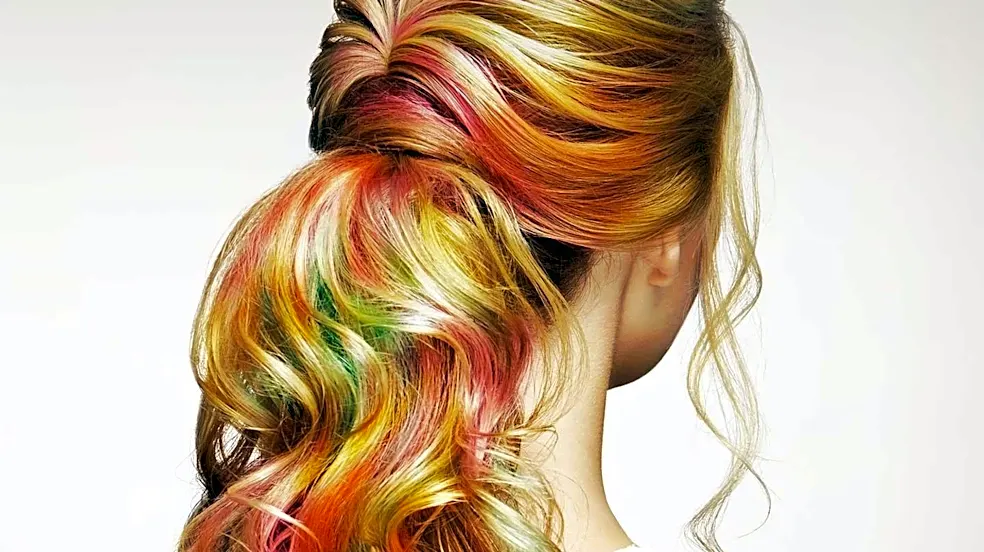
Temporary hair color offers a short-term alteration, often used for special occasions like costume parties. These products come in various forms, including rinses, shampoos, gels, sprays, and foams. A key characteristic of temporary hair color is that its pigments do not penetrate the hair's cuticle layer. Instead, the color particles adhere to the surface of the hair shaft. This surface-level adherence means that temporary hair color is easily removed with a single shampooing.While typically designed for easy removal, temporary hair color can sometimes persist on hair that is excessively dry or damaged. In such cases, the pigment might migrate into the interior of the hair shaft, making it more difficult to wash out. Temporary colors are often brighter and more vibrant than their semi-permanent or permanent counterparts, providing a distinct visual effect without a long-term commitment. Some natural substances, like beet juice, can also be used for temporary coloring.
Semi-Permanent and Demi-Permanent: Bridging the Gap
Semi-permanent hair color represents a step up in longevity from temporary dyes, typically lasting for 4–8 shampoos. These dyes utilize compounds with lower molecular weight than those found in temporary hair colors. They are designed to wedge just under the cuticle layer of the hair shaft, rather than deeply penetrating it. Because semi-permanent dyes do not involve a developer (like hydrogen peroxide) or ammonia, they are considered less damaging to hair strands. However, they cannot lighten hair.Demi-permanent hair coloring offers even greater durability than semi-permanent options, washing out over time, usually within 20 to 28 shampoos. These products contain an alkaline agent other than ammonia, such as ethanolamine or sodium carbonate, and are always used with a developer, though the hydrogen peroxide concentration may be lower than in permanent dyes. Demi-permanents provide almost no lightening of the hair's natural color because their alkaline agents are less effective at removing natural pigment than ammonia. This means they cannot color hair to a lighter shade than its original color. They are more effective at covering gray hair than semi-permanents but less so than permanent dyes. Advantages include a more natural-looking, less uniform final color, gentler action on hair, and less noticeable root regrowth as the color fades.
Permanent Hair Color: A Lasting Chemical Transformation
Permanent hair color involves a more significant chemical process designed for long-lasting results. These dyes typically contain ammonia and must be mixed with a developer or oxidizing agent to permanently alter hair color. Ammonia's role is to open the cuticle layer, allowing the developer and colorants to penetrate into the hair's cortex. The developer, an oxidizing agent, comes in various volumes; a higher volume results in a greater "lift" of the hair's natural pigment, making it lighter.The chemistry of synthetic permanent hair coloring involves three main components: a diaminobenzene derivative (historically 1,4-diaminobenzene, currently 2,5-diaminotoluene), a coupling agent, and an oxidant. This process usually occurs under basic conditions and involves three steps: oxidation of the diaminobenzene derivative to a quinone state, reaction of this diimine with a coupler compound, and further oxidation of the resulting compound to form the final dye. The dye precursors are initially colorless. Hydrogen peroxide typically serves as the oxidizing agent, and ammonia provides the alkaline environment. This combination lightens the natural hair, creating a "blank canvas" for the dye, and opens the hair shaft pores for dye diffusion. The reaction produces larger dye molecules that become trapped within the hair matrix, making them resistant to washing. Different combinations of primary intermediates and coupler compounds create a wide spectrum of hair color shades.
Application Techniques and Considerations
Hair coloring techniques can be broadly categorized into off-scalp and on-scalp applications. Off-scalp techniques, such as highlighting, lowlighting, splashlighting, ombré, shatush, balayage, airtouch, baby lights, and dipping, involve treating specific sections of hair. Methods like foiling, using a cap, or painting color directly onto hair (balayage) are employed. On-scalp techniques provide more solid coverage and include all-over color, root touch-ups, and block coloring. Root touch-ups are particularly common for maintaining color that disguises gray hair, typically repeated every 4 to 6 weeks as natural hair grows.Regardless of the type of dye or application method, hair coloring can lead to adverse effects. These include temporary skin irritation and allergy, hair breakage, skin discoloration, and unexpected hair color results. Some chemicals used in hair dyeing have been identified as mutagenic and carcinogenic in in vitro and in vivo studies. For instance, semi-permanent dyes may contain p-phenylenediamine (PPD) or related carcinogens, which have shown effects on body weight in animal studies. Legal restrictions, such as those in the European Union, aim to ensure the safety of hair dye ingredients by limiting the use of certain chemicals.