






The Circuito de Cartagena, officially known as Circuito Permanente de Velocidad de Cartagena, stands as a prominent permanent motorsport racing track in southeastern Spain. Located in Cartagena, within the autonomous region of Murcia, this facility opened its doors in 1995. It is situated approximately seven kilometers northwest of the Mediterranean port of Cartagena, conveniently accessible via the Autopista del Mediterráneo (AP-7). The track serves
as a vital venue for various motorsport activities, primarily focusing on motorcycle racing, track days, and training sessions for both national and international participants.
Track Specifications and Layout
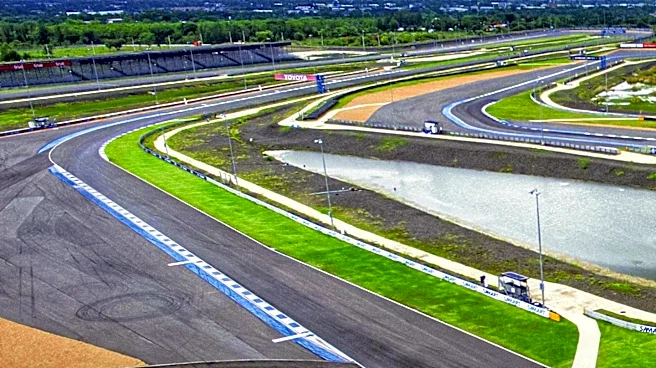
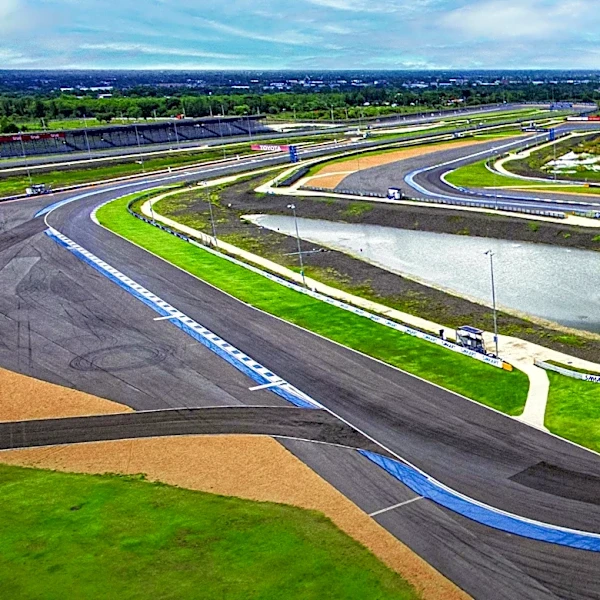
The Circuito de Cartagena boasts a track length of 3.506 kilometers (approximately 2.18 miles). This distance is navigated through a challenging layout that incorporates 18 corners, comprising eight left-hand turns and ten right-hand turns. The track is designed to be driven in a clockwise direction. The average width of the track is ten meters, expanding to twelve meters along its 610-meter-long start and finish straight. This design allows for both high-speed sections and technical cornering, providing a comprehensive test for riders and drivers.
Beyond its primary configuration, the circuit has seen several modifications to enhance its versatility. In May 2011, an additional short connection was added to the last corner, enabling the configuration of an approximately 400-meter-long oval track. This oval is specifically designed for autocross or supermoto competitions, offering a different type of racing experience. Further expanding its adaptability, two more short connections were introduced in the southeastern part of the track in 2020, bringing the total number of configurable track variants to five. This flexibility allows the circuit to host a wider array of events and cater to diverse motorsport disciplines.
Facilities and Infrastructure
The Circuito de Cartagena is equipped with a comprehensive range of facilities to support its operations. A new pit building was constructed in 2007, providing modern amenities for racing teams. The pit complex includes 18 individual pit boxes, each measuring 66 square meters, and an additional 12 pit boxes, each 42 square meters. All 30 pit boxes are outfitted with electricity, compressed air, and water connections, ensuring teams have the necessary resources. The paddock area is expansive, covering 52,000 square meters, offering ample space for team setups, support vehicles, and event logistics.
In addition to the racing infrastructure, the facility features a separate building housing a restaurant, as well as conference and training rooms. These amenities cater to both participants and visitors, providing dining options and spaces for meetings or educational sessions. The circuit also includes a traffic training area and a kart track, further diversifying its utility beyond professional racing. Since 2009, the track has been equipped with a floodlight system, which allows for racing operations to continue into the night, extending the usability of the facility.
Homologation and Event History
Historically, the Circuito de Cartagena held homologations from both the FIA (Fédération Internationale de l'Automobile) and FIM (Fédération Internationale de Motocyclisme), signifying its compliance with international standards for car and motorcycle racing, respectively. However, these international homologations have since expired and have not been renewed. Currently, the circuit maintains only a national homologation, which still permits it to host a variety of national-level events. From 1996 to 2008, the circuit was a host for the European Motorcycle Championship, attracting significant international attention. While it no longer hosts events of that caliber, it continues to be a regular venue for national races, including the Copa de España de Velocidad and the Campeonato de Andalucía de Velocidad motorcycle series, alongside its consistent use for track days and training sessions.