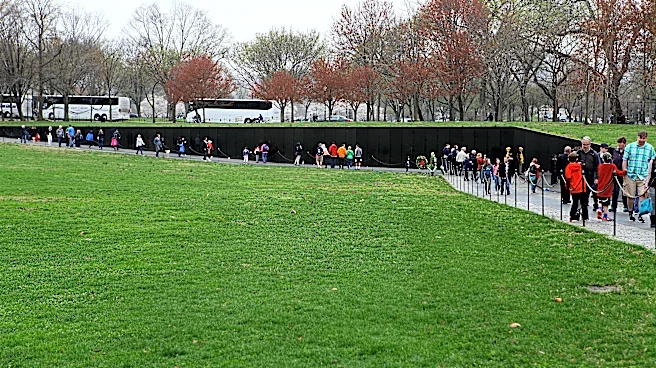

The Vietnam Women's Memorial stands today as a poignant tribute to the thousands of American women who served during the Vietnam War. Its journey from concept to dedication was marked by persistent advocacy,
bureaucratic hurdles, and a determined effort to ensure that the contributions of women, particularly nurses and other specialists, were not overlooked. This memorial, now an integral part of the larger Vietnam Veterans Memorial on the National Mall in Washington, D.C., symbolizes the caregiving and support roles women played in a conflict often remembered through a male-centric lens.
The Genesis of an Idea and Early Obstacles
The idea for a memorial honoring women veterans of the Vietnam War originated in 1982 with Diane Carlson Evans, a U.S. Army nurse who served during the conflict. After attending the dedication of the Vietnam Veterans Memorial, she recognized the absence of specific recognition for the more than 11,500 American women who served. Two years later, Evans, along with attorney Donna-Marie Boulay and Gerald C. Bender, established the Vietnam Women's Memorial Foundation (VWMF). Their primary goal was to erect a memorial, but they also aimed to locate all women veterans of the war and educate the public about their sacrifices.
However, their proposal faced significant resistance for several years. Evans recounted encountering considerable misogyny, with some individuals even suggesting that if women were to be memorialized, so should the Canine Corps. This dismissive attitude highlighted the uphill battle the VWMF faced. Television journalist Morley Safer of "60 Minutes" brought attention to this issue, interviewing several women who had served in Vietnam, which generated positive public response and led some male veterans to offer their support for the project. Despite this, Evans attended over 35 meetings with bureaucrats in her quest for approval.
Bureaucratic Battles and Design Controversies
In 1987, the United States Commission of Fine Arts (CFA) overwhelmingly rejected the VWMF's proposal, despite a letter of support from the Secretary of the Interior. Members of the VWMF expressed anger, viewing the decision as an indication that only men were deemed worthy of being honored for their service. The CFA's rationale was that the existing Vietnam Veterans Memorial, particularly the "Three Soldiers" statue, already represented all who served. Veteran Jill A. Mishkel, involved with the Connecticut governor's Task Force on Women Veterans, criticized this stance, stating that the idea of three men representing women's contributions was "ludicrous" and an "insult." Even Maya Lin, the designer of the Wall, opposed the women's memorial, arguing that it would set a precedent for private interest groups to tamper with national monuments.
In response to the CFA's rejection, U.S. Senators David Durenberger and Alan Cranston, along with U.S. House Representative Sam Gejdenson, sponsored a bill to authorize the memorial. They cited Public Law 96-297, signed in 1980 by President Jimmy Carter, which authorized a memorial in Constitution Gardens for both men and women who served in Vietnam. An initial design, featuring a lone woman nurse in uniform by Rodger M. Brodin, was criticized for being too plain and only representing an officer. After years of lobbying, the VWMF successfully secured Senate approval on June 15, 1988, for a "woman's statue" to be installed, though initially proposed for Arlington National Cemetery instead of Constitution Gardens.
Presidential Approval and Final Design Selection
President Ronald Reagan signed the bill into law in November 1988. His statement from the White House confirmed that the statue would be located within the 2.2-acre area encompassing the Vietnam Veterans Memorial and the "Three Soldiers" statue. This decision acknowledged the Commemorative Works Act, which mandated approval from both the CFA and the National Capital Planning Commission (NCPC) for new memorials in the city. The CFA and NCPC subsequently approved the plan the following year, designating a site south of the Wall for the memorial.
By 1990, the VWMF had raised nearly half of its $3.5 million fundraising goal, paving the way for a design competition that commenced in August of that year. Out of 317 entries, Eileen Barry's design of a bronze woman facing the Wall, incorporating a water feature and bronze relief, was initially chosen. However, the CFA and NCPC could not agree on this design. Ultimately, Glenna Goodacre was selected as the sculptor in November 1991. The dedication was scheduled for 1993, contingent on the VWMF raising the remaining funds, which they successfully accomplished. Architect George Dickie was chosen to design the landscape, and Art Castings of Colorado founded the memorial. Before its official dedication, the sculpture embarked on a tour across the U.S., allowing many to see it before its permanent installation.
A Momentous Dedication
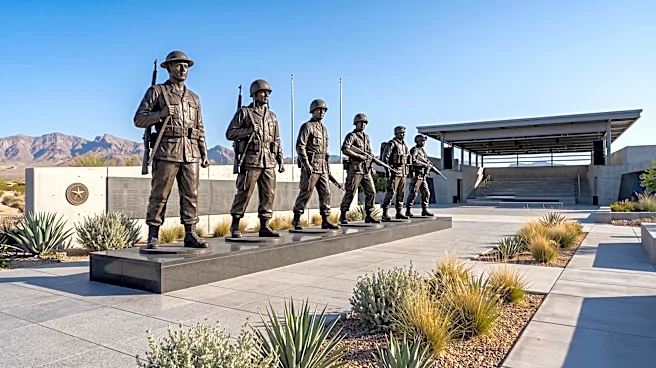
The dedication of the Vietnam Women's Memorial took place on Veterans Day in 1993, drawing an estimated 25,000 attendees. Among the notable figures present were Vice President Al Gore, former Chairman of the Joint Chiefs of Staff William J. Crowe, and several other military leaders. The event was particularly meaningful for the many veterans in attendance, who shared their stories of Vietnam and reconnected with women they had served alongside during the war. One woman, whose son was killed in Vietnam, expressed her gratitude, saying, "They took care of our kids... Maybe somebody here today took care of my boy before he died." The memorial itself depicts three uniformed women with a wounded male soldier, a powerful symbol of the support and caregiving roles women, particularly nurses and other specialists, provided during the conflict.