









New York City, a sprawling metropolis in the Northeastern United States, is not only the nation's most populous city but also a testament to ambitious engineering and a pivotal point in American history, particularly concerning immigration. Located in southeastern New York State, approximately halfway between Washington, D.C., and Boston, the city encompasses Manhattan Island, Staten Island, and the western end of Long Island, along with numerous
smaller islands. Its development has been marked by groundbreaking infrastructure projects that connected its diverse parts and facilitated its growth, while its role as a primary entry point for millions of immigrants has profoundly shaped its cultural and social landscape.
Engineering Feats: The Brooklyn Bridge and Grand Central Terminal
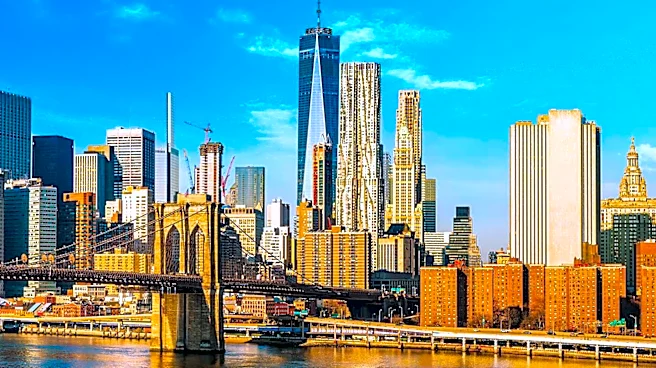
Among New York City's most celebrated engineering achievements is the Brooklyn Bridge, completed in 1883. At the time of its completion, it was the longest suspension bridge in the world, a marvel of 19th-century engineering. This iconic bridge spans the East River, marking the first permanent connection between Manhattan and Brooklyn. The design and initial construction were led by engineer John Augustus Roebling, though he did not live to see its completion; his son took over and brought the ambitious project to fruition. To demonstrate the bridge's structural integrity and ability to bear heavy loads, the Barnum circus famously paraded numerous elephants across it. Today, the higher pedestrian walkway offers stunning views of the Manhattan skyline in the distance and a close-up perspective of the bridge's Gothic arches on its piers. Directly beneath the bridge in Brooklyn, the elegant River Café stands as a testament to the area's enduring appeal.
Another significant piece of New York's infrastructure is the Grand Central Terminal, which opened in 1913. This grand railway station serves as a crucial transportation hub for the city and is an architectural masterpiece in its own right. Its design and scale reflect the ambition and growth of New York City in the early 20th century, providing a majestic gateway for travelers arriving in and departing from Manhattan. These structures, the Brooklyn Bridge and Grand Central Terminal, are not merely functional; they are integral parts of the city's identity, symbolizing its capacity for innovation and its enduring legacy in urban development.
Ellis Island: The Gateway to America
Not far from Liberty Island, home to the Statue of Liberty, lies Ellis Island, which served as the primary inspection station for over twelve million immigrants entering the United States. Initially known as Gibbert Island, it was used by the English as a penal colony for pirates. In 1892, an outpost of the immigration authority was established there, primarily to manage the massive influx of immigrants from Southern and Eastern Europe. By the time the outpost closed in 1954, the island, which had been expanded through land reclamation, featured a vast complex of buildings. Today, the central building with its towers houses the Ellis Island Immigration Museum, preserving the stories and experiences of the millions who passed through its halls.
Ellis Island represents a profound chapter in American history, embodying the nation's role as a land of opportunity for people from across the globe. The experiences of these immigrants, from their arrival to their processing, are a fundamental part of New York City's diverse heritage. The museum serves as a powerful reminder of the challenges and hopes that defined the immigrant journey, making Ellis Island a site of immense historical and cultural significance. Together, these infrastructural achievements and the legacy of Ellis Island highlight New York City's dual role as a center of progress and a welcoming beacon for new arrivals.