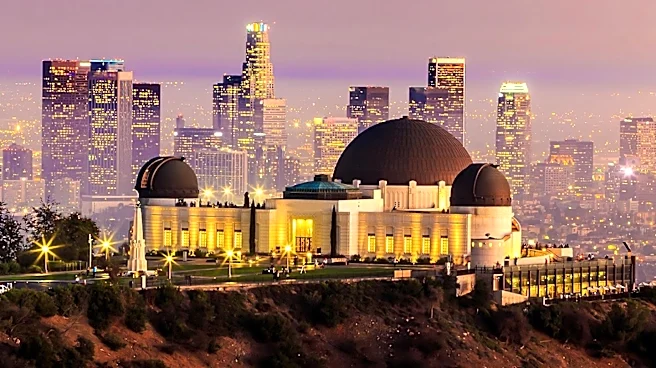






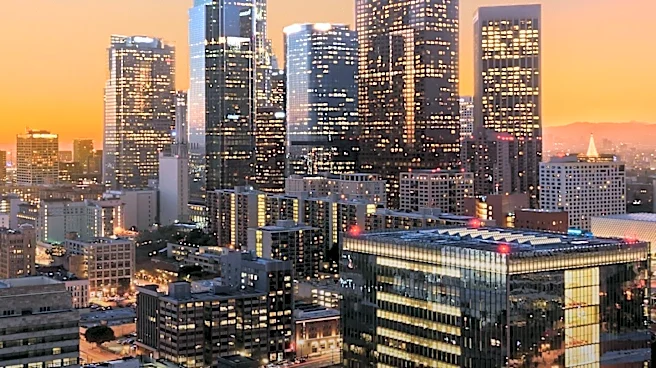
Griffith Observatory, perched on the south-facing slope of Mount Hollywood in Los Angeles, California, has been a beacon of public astronomy since its opening in 1935. This iconic structure, named after its benefactor Griffith J. Griffith, offers breathtaking views of the Los Angeles Basin and the Pacific Ocean. Its history is rich with developments that have made it a cornerstone of science education and public engagement in astronomy.
The Vision of Griffith J. Griffith
The story of
Griffith Observatory begins with Griffith J. Griffith, a Welsh-born industrialist and philanthropist who had a vision of making astronomy accessible to the public. In 1896, Griffith donated 3,015 acres of land to the City of Los Angeles, with the stipulation that an observatory, exhibit hall, and planetarium be built on the site. His goal was to create a place where the public could engage with astronomy, a field that was traditionally reserved for scientists in remote locations.
Griffith's vision was realized when construction of the observatory began on June 20, 1933. The design, developed by architects John C. Austin and Frederic M. Ashley, was based on preliminary sketches by Russell W. Porter. The observatory opened to the public on May 14, 1935, and quickly became a popular destination, attracting over 13,000 visitors in its first five days.
Renovation and Expansion
Over the years, Griffith Observatory has undergone significant changes to maintain its status as a leading public science facility. In 2002, the observatory closed for a major renovation and expansion project, which lasted until 2006. This $93 million project, funded largely by a public bond issue, restored the building's Art Deco exterior and expanded its exhibit space underground.
The renovation included the replacement of the aging planetarium dome and the addition of new features such as the Leonard Nimoy Event Horizon Theater. The observatory's exhibits were completely revamped, offering visitors a modern and interactive experience. The renovation ensured that Griffith Observatory remained a state-of-the-art facility for public astronomy education.
A Legacy of Public Engagement
Since its inception, Griffith Observatory has been committed to engaging the public with astronomy. During World War II, the planetarium was used to train pilots in celestial navigation, and in the 1960s, it served as a training ground for Apollo program astronauts. These efforts highlight the observatory's role in both public education and professional training.
Today, the observatory continues to attract millions of visitors, offering free admission in accordance with Griffith's original vision. Its exhibits, which include a 12-inch Zeiss refracting telescope and a Foucault pendulum, provide hands-on learning experiences for people of all ages. The observatory's commitment to public engagement and science literacy ensures that it remains a vital part of Los Angeles' cultural and educational landscape.