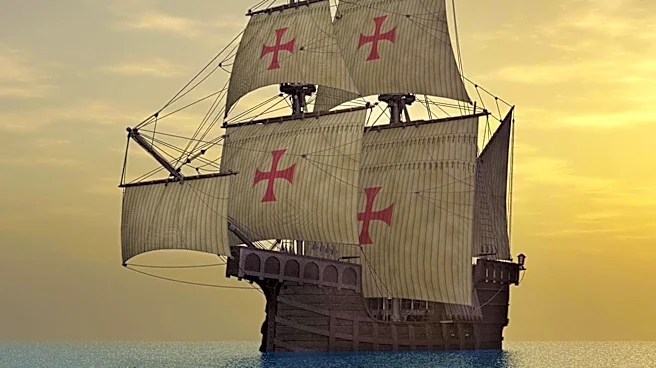




The Mayflower, a name synonymous with the founding of Plymouth Colony, embarked on a journey in 1620 that would etch its place in American history. More than just a ship, it became a vessel of profound historical significance, carrying passengers who sought to establish a new society based on their religious ideals. The story of the Mayflower encompasses not only its challenging transatlantic crossing but also its crucial role in the first winter
of the colony, its eventual return to England, and the intriguing mystery surrounding its final disposition, which continues to resonate centuries later.
The Arrival and the First Winter's Ordeal
After a long and difficult voyage, the Mayflower's crew sighted present-day Cape Cod on November 19, 1620. Their initial plan was to sail south to the Colony of Virginia, where they had permission to settle. However, severe winter seas forced them to turn back to Cape Cod hook, now known as Provincetown Harbor. With dwindling supplies, they anchored on November 21. Before disembarking, the male passengers, both Pilgrims and non-Pilgrims, drafted and signed the Mayflower Compact. This document established a legal order to manage internal strife and laid the groundwork for a self-governing community, a revolutionary concept for its time.
The first winter was brutal. The passengers remained aboard the Mayflower, enduring an outbreak of a contagious disease described as a combination of scurvy, pneumonia, and tuberculosis. This epidemic decimated both passengers and crew. By the time the disease subsided, only 53 passengers remained, just over half of the original total, and approximately half of the crew had died. The Pilgrims were unprepared for the frozen ground, which prevented planting crops, and the impassable snowstorms. They also lacked fishing rods, having left England in haste. Vital assistance from native populations proved crucial for their survival, including the discovery of corn for seed. In the spring, huts were built ashore, and the remaining passengers finally disembarked from the Mayflower on March 31, 1622.
The Mayflower's Return and Final Mystery
Captain Christopher Jones had initially intended to return to England as soon as the Pilgrims found a settlement site. However, his crew members were also severely affected by the same diseases that plagued the Pilgrims, forcing him to remain in Plymouth Harbor until his men began to recover. The Mayflower stayed in New Plymouth harbor throughout the winter of 1620–1621. On April 15, 1621, the ship set sail for England. Despite the decimation of its crew, the Mayflower made excellent time on its return journey, aided by the westerly winds that had hindered its outbound trip. It arrived in London on May 16, 1621, in less than half the time it took to reach America.
The ultimate fate of Captain Jones's Mayflower remains an unsettled historical question. Records indicate that three of the ship's owners, including Jones's widow Josian Jones, applied to the admiralty court for an appraisal of the ship on May 4, 1624, two years after Jones's death in 1622. This appraisal, likely conducted to settle the captain's estate, valued the vessel at 128 pounds, eight shillings, and fourpence. English historian Charles Edward Banks suggests the ship was disassembled. A popular belief holds that in 1624, Thomas Russell of Jordans, Buckinghamshire, constructed a barn using timbers purchased from a shipbreaker's yard in Rotherhithe, which many believe to be from the Mayflower. This structure, known as the Mayflower Barn, still exists today, though it is now privately owned and closed to the public, having once been a tourist attraction.