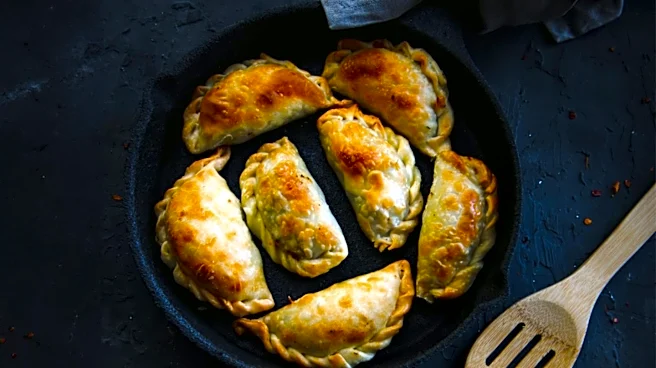






Empanadas, a beloved pastry filled with various ingredients, have a rich history and a widespread presence across the globe. Originating in Spain, these baked or fried turnovers have traveled far and wide, becoming a staple in Latin American countries, the Philippines, and even parts of Southern Europe, North Africa, West Africa, and South Asia. The very name "empanada" comes from the Spanish verb "empanar," which means to bread or to coat with bread,
aptly describing how the filling is encased in dough. This simple yet versatile dish is made by folding dough over a filling, which can include anything from meat and cheese to tomato and corn, before being cooked.
Ancient Origins in Galicia
The precise origin of empanadas is not definitively known, but historical evidence points to Galicia, a region in northwest Spain, as their birthplace, possibly as early as the 7th century. Galician empanadas, known as *empanada galega*, are a cornerstone of Galician cuisine, frequently enjoyed during festivals and pilgrimages. These early versions were likely prepared as cakes cooked in embers, evolving over time into the round shapes made in clay pots that are characteristic today. The preparation was primarily homemade, often baked in ovens, though modern times see them commonly sold in bakeries and street stalls.
Historical records suggest that rules for their preparation were decreed in the Visigothic era in the 7th century. The earliest referenced empanadas featured fillings of mushroom or chicken. The design of the empanada made it an ideal food for travelers, as its covered form protected the interior from the dust of the roads. This historical significance is even etched in stone, with Galician empanadas appearing sculpted as early as the 12th century on the Portico of Glory in Santiago de Compostela, a testament to their enduring cultural importance.
Global Adaptations and Regional Flavors
As empanadas spread from Spain, they underwent numerous transformations, adapting to local ingredients and culinary traditions. In Argentina, for instance, empanadas are a common sight at parties and festivals, served as a starter or main course. Each region of Argentina boasts its own distinct variant; Salta's *salteñas* are small, juicy, and spicy, often containing potatoes, peppers, and ground chili, and are also popular in neighboring Bolivia. The Jujuy variant adds peas and garlic, with a filling called *recado* and a unique closing method known as *simbado*. La Rioja's empanadas include hard-boiled egg, red bell pepper, olives, and raisins, while those from Santiago are noted for their juiciness.
Further south in the Cordillera of Patagonia, lamb is a popular filling, while coastal areas favor seafood. In Buenos Aires, the Creole empanada is so significant that it has been declared a Cultural Heritage of Food and Gastronomy. The diversity continues across Latin America: Belizean *panades* are made with masa (corn dough) and typically stuffed with fish, chicken, or beans, then deep-fried and served with cabbage or salsa. Colombian empanadas, also cornmeal-based, are often filled with seasoned meats, potatoes, and rice, and are a common street food, frequently accompanied by lime wedges and *ají*, a spicy sauce.
Unique Preparations Across Continents
Beyond Latin America, the empanada's influence is evident in various forms. In Ecuador, the *empanada de viento* is a traditional style made from thin-rolled flour dough, filled with cheese, and deep-fried. The name, meaning "wind empanada," refers to how they puff up with air during frying, leaving them hollow inside. These can be served sweet with sugar or savory with *salsa de ají*. El Salvador offers a unique take, using plantain dough instead of flour, creating sweet *empanadas de plátano* filled with vanilla custard or refried beans, then fried and rolled in sugar.
In Indonesia, particularly in the Minahasan cuisine of North Sulawesi, empanadas are known as *panada*. These feature a thick crust made from fried bread and are filled with spicy skipjack tuna (*cakalang*), chili, curry, potatoes, or quail eggs, reflecting Portuguese influence in the region. Even Italy has a connection, with the Sicilian *'mpanatigghi* from Modica, which are half-moon-shaped pastries filled with a mixture of almonds, walnuts, chocolate, sugar, cinnamon, cloves, and minced beef. These are believed to have been introduced by the Spanish during their rule in Sicily in the 16th century, with the unusual combination of meat and chocolate being a characteristic of Spanish cuisine.