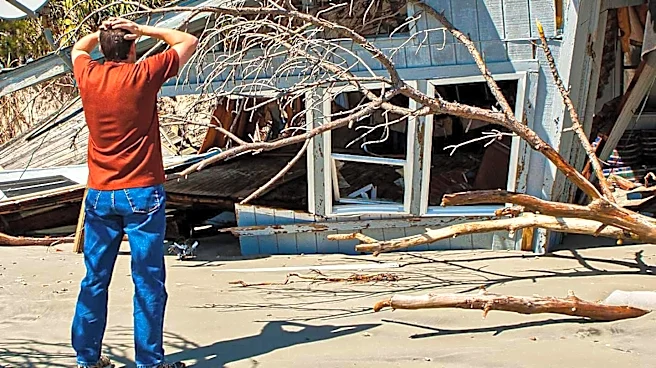




Hurricane Sandy, a powerful post-tropical cyclone, made landfall in New Jersey in late October 2012, just one week before the United States General Election. By the time it reached the coast, it had merged with other storm systems, causing over $50 billion in damages and more than 100 fatalities in the United States. Beyond its immediate physical destruction, the storm and its aftermath significantly influenced the American political landscape, particularly
the presidential election between incumbent Barack Obama and challenger Mitt Romney. The event sparked debates over emergency management, highlighted differing political philosophies, and ultimately shaped the narrative leading up to Election Day.
FEMA and the Presidential Debate
The impact of Hurricane Sandy immediately ignited a political debate concerning the Federal Emergency Management Agency (FEMA). The Christian Science Monitor reported on the controversy surrounding whether Republican presidential nominee Mitt Romney had previously suggested eliminating FEMA. A lead opinion piece in The New York Times on October 29 summarized their understanding of Romney's primary position, stating that he believed states acting independently, and even profit-making companies, could handle the response to a vast East Coast storm better than the federal government. The article also noted Romney's past assertion that it was "immoral" for the federal government to undertake such responsibilities if it meant increasing the national debt.
Two days later, on October 31, Governor Romney's campaign released a statement clarifying his stance. The statement affirmed his belief that FEMA plays a crucial role in assisting states and localities with disaster preparedness and response. It also pledged that as president, he would ensure FEMA received necessary funding while directing maximum resources to first responders. Romney's statement emphasized that states and localities are best positioned to deliver aid to affected individuals and communities. However, the statement did not specify which other federal programs would be cut from his proposed budget to fund FEMA, leaving some questions unanswered. During this period, Mitt Romney even repurposed an October 30 campaign stop into a relief effort, underscoring the storm's immediate political relevance.
Media Commentary and Candidate Reactions
When Hurricane Sandy made landfall on October 29, The New York Times published an opinion piece titled, "A Big Storm Requires Big Government." This article argued for the necessity of FEMA in natural disasters and implied that Romney's past statements could be interpreted as supporting cuts to the agency. Romney chose not to comment on The New York Times' opinion regarding his positions. Some commentators had previously suggested that Romney's reluctance to rule out cuts to FEMA, particularly if Paul Ryan's budget plans were implemented, indicated a potential reduction of FEMA's budget by 20 to 40 percent. In contrast, President Barack Obama had proposed a 3 percent cut to the agency.
Reactions to the disaster response also became a focal point. New Jersey Governor Chris Christie publicly praised President Obama and his administration's response to the hurricane. The two leaders were seen touring the hard-hit areas of New Jersey together, a bipartisan display that garnered significant attention. Conversely, Michael Brown, the former FEMA director under President George W. Bush who resigned after criticism of the Hurricane Katrina response, criticized the Obama administration for what he perceived as excessive publicity before the storm, drawing a contrast with what he considered a lack of response to the attack on the U.S. diplomatic mission in Benghazi weeks earlier.
Broader Political Implications and Endorsements
New York City Mayor Michael Bloomberg endorsed President Obama, citing Obama's actions in response to the storm and Bloomberg's belief in the need for action on climate change as key reasons for his support. Republican political strategist Karl Rove suggested that the storm politically benefited Obama before the upcoming presidential elections. Rove argued that Sandy shifted the discussion away from economic issues, which he considered Romney's strong point, and instead provided Obama with an opportunity to act as the "Comforter-in-Chief." This perspective highlighted how natural disasters can alter the focus of political campaigns and allow leaders to demonstrate empathy and leadership.
However, not all commentary was well-received. MSNBC commentator Chris Matthews faced criticism for remarks made in the early hours of November 7, 2012, following a long night of analyzing election returns. Matthews suggested that Hurricane Sandy was a positive development for the American political system, stating, "I'm so glad we had that storm last week... No, politically I should say. Not in terms of hurting people. The storm brought in possibilities for good politics." Matthews later issued an apology for these comments, underscoring the sensitivity surrounding the human impact of the disaster versus its political implications. The storm's influence extended even to local elections, as farmer John Rose, a Republican candidate in the 2012 West Virginia House of Delegates election, was killed while inspecting damage from Hurricane Sandy, though his name remained on the ballot.