


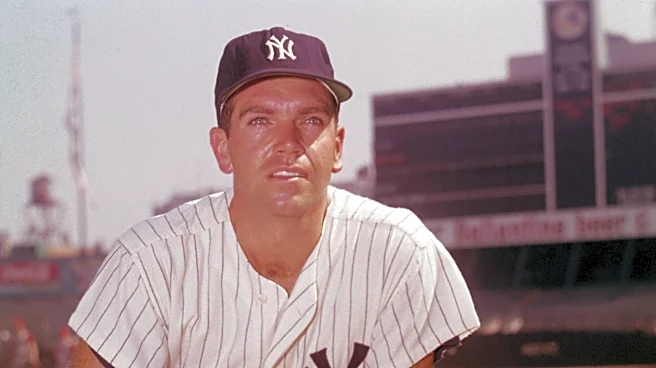
Raymond Benjamin Caldwell carved out a notable career as a professional baseball pitcher from 1910 to 1921, playing for the New York Yankees, Boston Red Sox, and Cleveland Indians. He was particularly renowned for his mastery of the spitball, a pitch that would eventually be outlawed but which he, along with 16 other pitchers, was permitted to continue throwing after the ban in 1920. Caldwell's career was a blend of impressive athletic feats, including
a no-hitter and a World Series victory, alongside a reputation for a challenging personality that often tested the patience of his managers and team owners.
Early Promise and Yankee Years
Caldwell began his professional baseball journey in 1910 with the McKeesport Tubers of the Ohio–Pennsylvania League, where he quickly made an impression by recording 18 wins. His performance led to him being signed by the New York Highlanders (later the Yankees) in September of that year. In his rookie season, he posted a solid 14–14 record with an earned run average of 3.35. Beyond his pitching, Caldwell demonstrated surprising versatility and offensive capability, playing 11 games in the outfield and frequently appearing as a pinch hitter, achieving a .272 batting average.
Despite persistent arm problems that led to a challenging 1912 season (8–16 record, 4.47 ERA), Caldwell regained his form in 1913, going 9–8 with a 2.41 ERA for a Yankees club that struggled significantly, finishing 37 games below .500. The 1914 season proved to be the best of his career statistically, as he recorded a 17–9 record with an outstanding 1.94 earned run average, again for a Yankees team that finished well below .500. This period, however, was also marked by numerous conflicts with manager Frank Chance over Caldwell's conduct, leading to fines. In 1915, he continued to be a strong performer for the Yankees, posting a winning record of 19–16 with a 2.89 ERA for a team that finished 14 games below .500. He also showcased his hitting prowess, contributing four home runs, enough to rank ninth in the American League despite having significantly fewer at-bats than others in the top ten.
Tumultuous Transitions and a Lightning Strike
Caldwell's time with the Yankees was punctuated by periods of struggle and disciplinary issues. In 1916, he went AWOL and was suspended for the rest of the season, only returning the following March. His 1917 season saw him serve another team-imposed suspension for drunkenness. In 1918, injuries hampered his pitching, but he still managed a .291 batting average. He left the Yankees mid-season to join a shipbuilding firm, a move that allowed him to avoid military service. This unauthorized departure led to his trade to the Boston Red Sox that winter.
His stint with the Red Sox was brief, as he was released in July 1919 after a poor start to the season, despite holding a 7–4 record. Caldwell then joined the Cleveland Indians, managed by player-manager Tris Speaker. Speaker's unique approach to managing Caldwell, which involved allowing him to drink after games as part of a structured recovery regimen, seemed to unlock his potential. It was during his time with the Indians that Caldwell experienced one of the most bizarre incidents of his career: on August 24, 1919, while pitching against the Philadelphia Athletics, he was struck by lightning. Despite being knocked unconscious, he refused to leave the game, completing 8 2/3 innings and recording the final out for the win. For his six starts with Cleveland that year, he went 5–1 with an impressive 1.71 ERA, a run that included his no-hitter against his former teammates, the New York Yankees, on September 10.
World Series Glory and Post-Major League Years
Caldwell's first full season with the Cleveland Indians in 1920 was a highlight of his career. He achieved a 20–10 record with a 3.86 earned run average, contributing to the Indians' World Series victory that year. However, his personal contribution in the World Series itself was negligible; he started Game 3 but was pulled after recording just one out, having given up two hits, a walk, and an earned run, and was charged with the loss. His final season in the major leagues was in 1921, where he primarily worked from the bullpen, finishing with a 6–6 record and a 4.90 ERA.
After leaving the major leagues, Caldwell continued to play professional baseball for many years in the minor leagues, including stints with the Kansas City Blues and the Birmingham Barons. His career extended well into his forties. A notable moment occurred in 1931 when, at the age of 43, he faced 21-year-old Houston Buffaloes star Dizzy Dean in the opening game of the Dixie Series. Dean had publicly promised a victory, but Caldwell pitched a shutout and drove in the only run, securing a 1–0 win for the Barons on their way to winning the series. This memorable matchup was famously described as "the strength of youth versus the guile of the years." Caldwell's long and often tumultuous career, marked by both personal challenges and significant on-field achievements, solidified his place as a memorable figure in baseball history.