
The 1968 Wimbledon Championships marked a pivotal moment in tennis history, ushering in the Open Era. This era allowed professional players to compete alongside amateurs, fundamentally changing the landscape
of the sport. Held from June 24 to July 6, 1968, at the All England Lawn Tennis and Croquet Club in Wimbledon, London, this tournament was the 82nd edition of the prestigious event. It was the third Grand Slam of the year and the second to offer prize money, following the French Open.
The Significance of the Open Era
The introduction of the Open Era at Wimbledon in 1968 was a groundbreaking development in tennis. Prior to this, the sport was divided between amateur and professional players, with the latter often excluded from major tournaments. The decision to allow professionals to compete at Wimbledon was a significant step towards unifying the sport. This change not only increased the level of competition but also attracted a broader audience, as fans could now see the best players in the world compete against each other.
The 1968 Wimbledon Championships were the first at this venue to offer prize money, with a total purse of £26,150. This move was crucial in legitimizing the professional aspect of the sport, as it provided financial incentives for players to compete at the highest level. The men's singles winner, Rod Laver, received £2,000, while the women's singles champion, Billie Jean King, earned £750. This disparity in prize money highlighted the gender inequality that existed in the sport, an issue that would continue to be addressed in the years to come.
Notable Champions and Matches
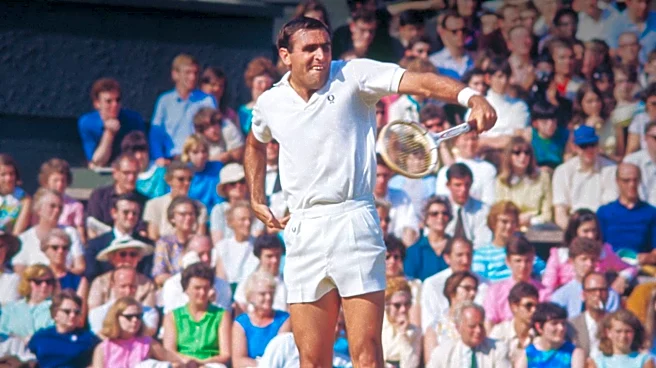
The 1968 Wimbledon Championships saw some of the sport's most iconic players claim victory. Rod Laver, an Australian tennis legend, won the men's singles title by defeating his compatriot Tony Roche in straight sets. Laver's victory was significant as he had already won Wimbledon twice in the amateur era, and this win solidified his status as one of the greatest players of all time.
In the women's singles, Billie Jean King from the United States emerged victorious. King was already a two-time Wimbledon champion in the amateur era, and her win in 1968 further cemented her legacy in the sport. Her success at Wimbledon was a testament to her skill and determination, and she would go on to become a prominent advocate for gender equality in tennis.
The Legacy of the 1968 Championships
The 1968 Wimbledon Championships set the stage for the future of tennis. By allowing professionals to compete, the tournament elevated the level of play and increased the sport's popularity worldwide. The Open Era paved the way for the modern game, where the best players, regardless of their professional status, could compete on the same stage.
This tournament also highlighted the need for gender equality in tennis, as the disparity in prize money between male and female players became more apparent. The changes initiated in 1968 laid the groundwork for future advancements in the sport, making it more inclusive and competitive. The legacy of the 1968 Wimbledon Championships continues to influence tennis today, as it marked the beginning of a new era that transformed the sport forever.