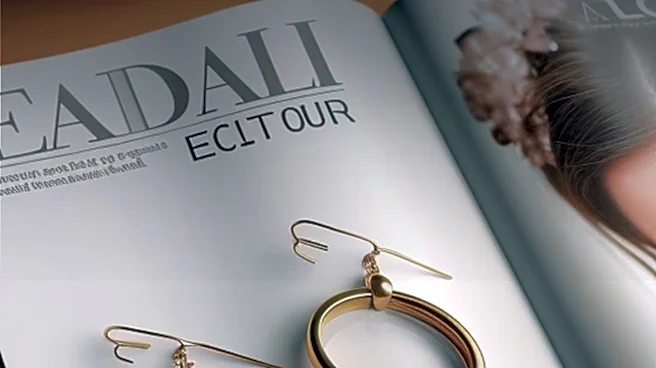









Hoop earrings, a circular piece of metal designed to thread over the ear and hang from above the piercing, boast a rich and extensive history, making them one of the oldest known forms of body modification. Their presence spans across numerous civilizations and historical periods, often carrying significant cultural weight. From the opulent tombs of Sumerian royalty to the vibrant frescoes of the Minoan Civilization, these circular adornments have
consistently appeared, evolving in design and meaning while maintaining their fundamental form. This enduring appeal highlights their timeless aesthetic and their deep roots in human expression.
Ancient Origins and Early Adornments
The practice of ear piercing for wearing earrings dates back to early history, with artistic and written references found in cultures worldwide. In ancient sites like Lothal, India, gold earrings were discovered alongside other precious jewelry made of lapis lazuli and carnelian. Similarly, the Sumerian Royal Cemetery at Ur, specifically in Puabi’s tomb from the Early Dynastic Period III, yielded gold earrings among other adornments, underscoring their status as valuable possessions.
The Minoan Civilization, flourishing between 2000 and 1600 BCE, also saw a prevalence of gold, silver, and bronze hoop earrings. Evidence of these can be observed in frescoes on the Aegean island of Santorini, Greece, offering a visual testament to their popularity. During the late Minoan and early Mycenaean periods of Bronze Age Greece, a particular style of hoop earring featuring conical pendants became fashionable, indicating an evolution in design and a desire for more elaborate ornamentation.
Shifting Cultural Meanings and Gender Roles
Early evidence suggests that earrings were not exclusively female ornaments. Carved images of soldiers from the Persian Empire, displayed on surviving palace walls in Persepolis, depict them wearing earrings, indicating that men also adorned themselves with these pieces. However, during the classical period, including in the Middle East, earrings were generally considered exclusively female ornaments. This gendered perception also held true for certain periods in Greece and Rome, though they had been popular among men in earlier times and saw a resurgence later, with notable figures like Plato known to have worn them.
In Egypt, Howard Carter's description of Tutankhamun's tomb revealed that the Pharaoh's earlobes were perforated, though no earrings were found within his wrappings. The burial mask's ears were also perforated, but these holes were covered with golden discs. This suggests that, at the time, earrings might have been worn by children in Egypt, a practice that continued into Carter's own era. The Biblical record also provides early evidence of earring-wearing, where gold earrings symbolized wealth, but ear piercing was also associated with slaves.
Renaissance Resurgence and Sailor Symbolism
In Western Europe, earrings experienced a fashionable revival among English courtiers and gentlemen during the sixteenth-century English Renaissance. Holinshed, in his Chronicle (1577), observed this trend, noting that