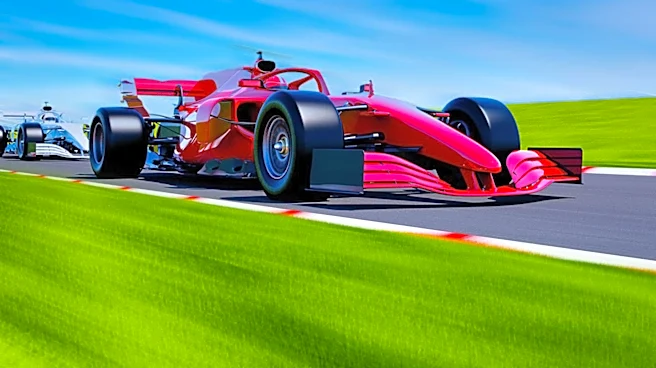


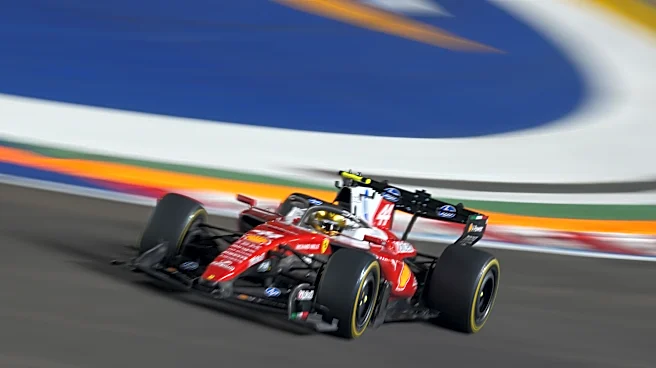

The Formula Regional European Championship, known by various names throughout its history, stands as a crucial development series in the world of motorsport. Regulated by the Fédération Internationale de l'Automobile (FIA), this regional European Formula 3 racing series has evolved significantly since its inception in 2019. It serves as a vital rung on the FIA Global Pathway ladder, designed to bridge the performance gap between Formula 4 and the international
FIA Formula 3 Championship, ultimately guiding young drivers toward a professional racing career, potentially even Formula One.
Origins and Early Years (2019-2020)
The championship first began in 2019, organized by the Italian autosport regulator Automobile Club d'Italia (ACI) and karting promoter WSK. Their bid was selected over a competing proposal from Renault Sport, which featured the same chassis but garnered fewer votes from Single-Seater Commission members. The inaugural season showcased eight rounds held on circuits across Europe, with half of these events taking place in Italy. During these initial years, the cars were designed and built by Tatuus, featuring a monocoque chassis constructed from carbon fiber. These early vehicles incorporated enhanced safety features, including the Halo device and improved side impact protection, and were equipped with a six-speed paddle-shift sequential gearbox. For the 2019 and 2020 seasons, the cars were powered by an Alfa Romeo 270PS (200 kW) turbo engine, specifically tuned by Autotecnica.
Mergers, Rebranding, and Technical Advancements (2021-Present)
A significant turning point for the championship occurred after the 2020 season when the Formula Renault Eurocup merged with the Formula Regional European Championship. This merger led to a rebranding, with the series becoming known as the Formula Regional European Championship by Alpine. Following this consolidation, the championship transitioned to using Renault engines starting from the 2021 season. Further technical innovation was introduced in 2022 with the integration of a push-to-pass system. This system allows drivers to temporarily boost engine power for a period of 15 seconds, and unlike the Drag Reduction System (DRS) in Formula One, it can be activated at any point during a race, with a limit of five uses per race. The series continued its evolution, receiving full FIA status in 2026 and undergoing another rebranding to FREC, reflecting its established position within the FIA's motorsport structure.
The Path to Formula One
The Formula Regional European Championship has proven its effectiveness as a development series by consistently producing drivers who advance to higher echelons of motorsport, including Formula One. Driver champions in this series are awarded FIA Super License points, which are essential for progressing through the ranks. Franco Colapinto stands out as the first driver from the series to reach Formula One, joining Williams Racing for the latter part of the 2024 season. The 2025 season saw three more graduates make their way to Formula One: Andrea Kimi Antonelli, who joined the Mercedes-AMG Petronas F1 Team; Gabriel Bortoleto, driving for Stake F1 Team; and Isack Hadjar. These examples underscore the championship's success in preparing young talent for the pinnacle of racing. The series continues to be a crucial proving ground, attracting young drivers seeking to build a professional racing career and make their mark in the competitive world of Formula One.