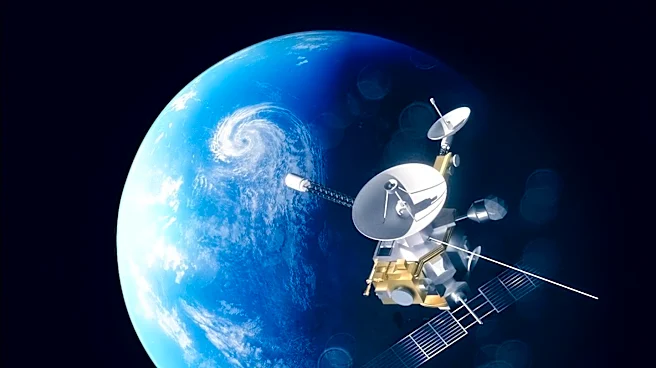






The Applications Technology Satellite 3, or ATS-3, stands as a remarkable example of early space technology, serving NASA as an experimental geostationary weather and communications satellite for an impressive 34 years, from 1967 to 2001. Launched on November 5, 1967, from Cape Canaveral LC-12 aboard an Atlas SLV-3 Agena-D rocket, ATS-3 was designed to push the boundaries of what satellites could achieve. It quickly made history by capturing NASA's
first color photograph of the full-disk Earth, an image that would later grace the cover of the inaugural Whole Earth Catalog. Its operational lifespan was so extensive that it was once considered the oldest satellite still in service, with NASA in 1995 referring to it as "The oldest active communications satellite by a wide margin."
Groundbreaking Imaging Capabilities
One of ATS-3's most celebrated achievements occurred just five days after its launch, on November 10, 1967, when it produced NASA's first color photo of the full-disk Earth. This digital image mosaic was a significant milestone, offering humanity an unprecedented view of its home planet in true color. The technology behind this feat included a color spin-scan camera, primarily developed by Verner E. Suomi, which was crucial for capturing these detailed images. This imaging capability proved to be invaluable not only for scientific observation but also for practical applications, such as monitoring weather patterns.
Beyond its initial iconic photograph, ATS-3 continued to contribute significantly to Earth observation. Around 1970, the satellite was actively used to collect images of weather patterns, with a particular focus on developing hurricanes in the Western Hemisphere. It transmitted 1,200-line photos approximately every 25 minutes during daylight hours to NOAA's Command and Data Acquisition Station at Wallops Station, Virginia. These images were then distributed to various users, providing critical data for meteorologists and disaster preparedness efforts.
A Lifeline in Disaster Situations
ATS-3's role extended beyond scientific imaging and general communications; it became a vital link during several critical disaster situations. Its robust communication capabilities allowed it to serve as a crucial communications link for rescue operations when other systems were compromised. This was demonstrated during the devastating 1985 Mexico City earthquake, where ATS-3 provided essential connectivity for relief efforts. Similarly, in 1980, during the eruption of Mount St. Helens, the satellite played a key role in maintaining communication channels, aiding in coordination and response.
This ability to provide reliable communication in emergencies underscored the satellite's practical utility and its enduring design. Its service in these high-stakes scenarios highlighted the importance of resilient space-based communication infrastructure, proving the value of the experimental technologies it carried. The satellite's operational details show it maintained a geo-synchronous orbit approximately 34,047 kilometers (21,156 miles) above the Earth's surface, a stable position that allowed for continuous coverage over its designated areas.
Technological Innovations and Longevity
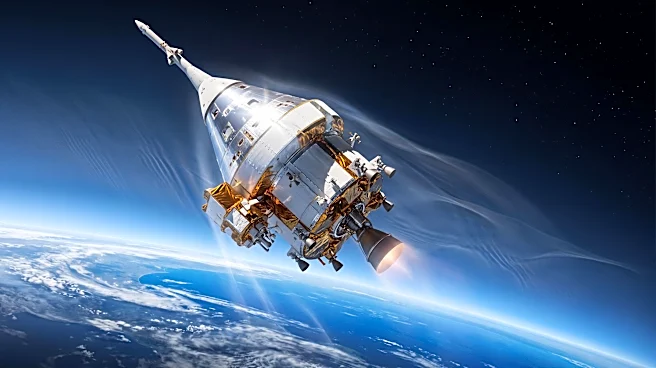
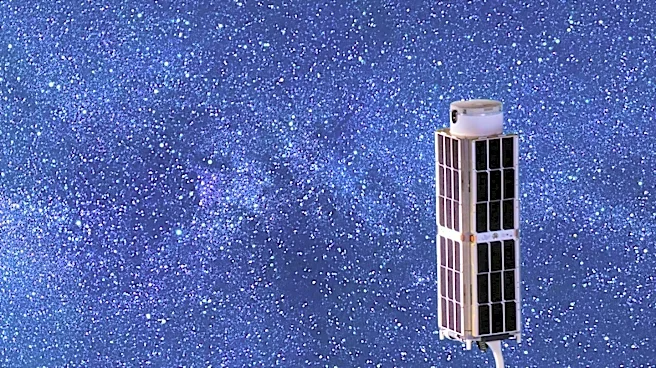
ATS-3 was not just a workhorse; it was a testbed for advanced space technologies. Its experiments included VHF and C-band communications, an image dissector camera, a mechanically despun antenna, resistojet thrusters, and optical surface experiments. A notable improvement over its predecessor, ATS-1, was its hydrazine propulsion system. Failures in the hydrogen peroxide systems on ATS-1 led to ATS-3 being equipped with hydrazine, a decision that proved successful and led to its incorporation as the sole propulsion system on subsequent satellites like ATS-4 and ATS-5.
The satellite's remarkable mission duration of 34 years is a testament to its robust design and the ingenuity of its operators. While it was officially decommissioned in 2001, its legacy as a long-lived, pioneering satellite in both communications and Earth imaging remains significant. Its ability to function for decades, despite challenges such as its spinning beam antennas occasionally locking up and requiring powerful ground-based transmitters to re-aim them, solidified its place in space history.