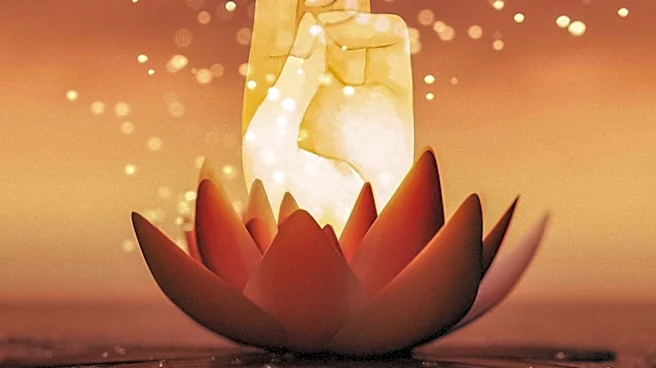





The Abhayamudra, often translated as the "gesture of fearlessness," is a significant hand position found in Hinduism, Buddhism, and other Indian religions. This mudra, or symbolic hand gesture, embodies reassurance, safety, and the dispelling of fear. Its presence is widespread, appearing in some of the earliest depictions across Hindu, Buddhist, Jain, and Sikh imagery. The term "abhaya" itself comes from Sanskrit, where "a" signifies privation and "bhaya"
means fear, thus conveying "absence of fear," leading to meanings of peace and security. This gesture is not merely a static pose but a dynamic symbol offering divine protection and bliss to those who observe it.
The Physical Form and Core Meaning
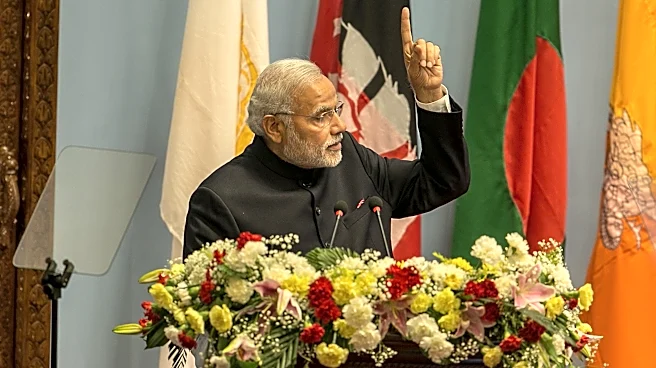
The Abhayamudra is typically performed with the right hand raised to shoulder height. The palm faces outward, and the fingers point upwards, often joined together. In Theravada Buddhism, this specific configuration is common: the right hand is raised, the arm bent, the palm outward with upright and joined fingers, while the left hand usually hangs down. This precise positioning is crucial to its symbolic meaning, representing protection, peace, and benevolence.The gesture's primary function is to dispel fear and offer reassurance. It is a visual promise of safety and divine protection. For instance, in Hinduism, the god Shiva, in his Nataraja form, is sometimes depicted with his second right hand forming the Abhayamudra. This gesture from Nataraja is understood to bestow protection from both evil and ignorance upon those who adhere to the principles of dharma, or righteousness. This illustrates how the mudra is deeply integrated into the theological and philosophical frameworks of these religions.
Historical and Cross-Cultural Presence
The Abhayamudra is recognized as one of the earliest mudras to appear in religious iconography. Its origins likely predate Buddhism, possibly serving as a universal symbol of good intentions and friendship when approaching strangers. This suggests a deeply ingrained human understanding of the gesture as a sign of peace and non-aggression.Beyond India, the gesture has appeared in various forms and contexts. In the art of Gandhara, an ancient region encompassing parts of modern-day Afghanistan and Pakistan, the Abhayamudra is seen in depictions of preaching. Its influence also reached China, where it was utilized during the Northern Wei and Sui eras, spanning the 4th to 7th centuries. This broad geographical and temporal spread underscores the gesture's universal appeal and its capacity to convey profound messages across diverse cultures.
Variations and Specific Associations
While the basic form of the Abhayamudra remains consistent, regional and religious traditions have introduced variations and specific associations. In Thailand and Laos, for example, this mudra is closely linked with the Walking Buddha. In these depictions, the Buddha is often shown with both hands forming a double Abhayamudra, creating a uniform and powerful image of reassurance and peace in motion.Another notable instance of its use is by Gautama Buddha himself. According to various frescos and scripts, Buddha employed this gesture to subdue a drunk elephant that attacked him, an incident instigated by Devadatta or Ajātasattu. This event highlights the mudra's association with power, control, and the ability to overcome threats. In Mahayana Buddhism, deities frequently pair the Abhayamudra with another mudra performed by the other hand, suggesting a combination of symbolic meanings and functions within their complex iconography.