
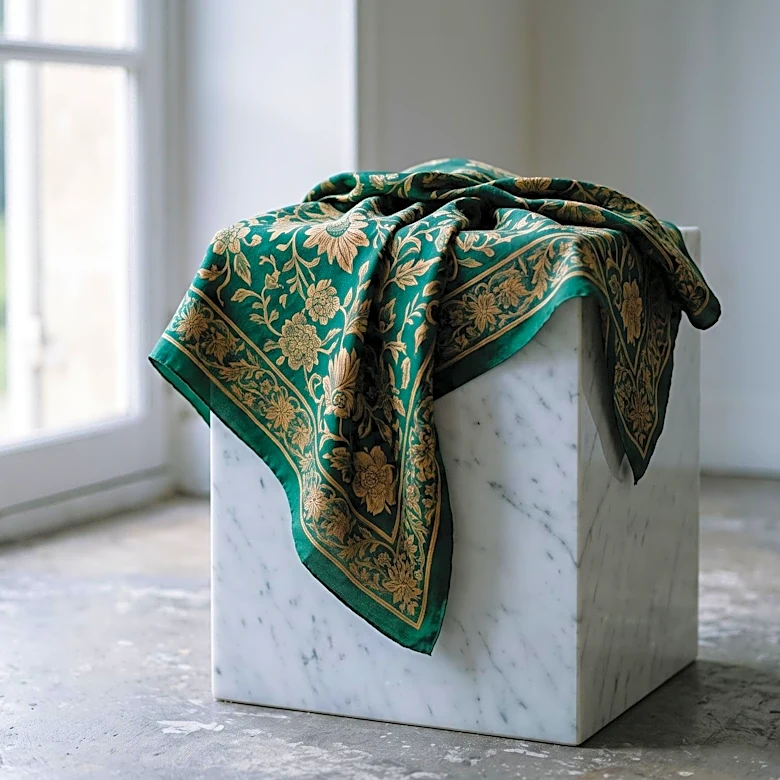





Wrap garments represent a fundamental and enduring category of clothing, characterized by a simple length of fabric worn by being wrapped around the body. This basic yet versatile design has been adopted by various cultures across the globe, serving both practical and aesthetic purposes. A wrap can be a shawl or stole draped around the upper body, or a skirt-type garment created by wrapping material around the lower body. While often associated with
women's fashion in the West, people of all genders worldwide incorporate wraps into their daily attire, highlighting their universal appeal and adaptability.
The simplicity of wrap garments allows for diverse methods of securing them. A corner might be tucked beneath the wrapped material, a knot can be tied, or fasteners like ties, buttons, or even Velcro can be used. Some wraps are even sewn at their edges to form a tube, ensuring they maintain a specific size and shape. This adaptability in form and function has contributed to the longevity and widespread use of wrap clothing throughout history and into contemporary fashion.
Defining the Wrap: A Garment of Simplicity and Function
In the context of clothing, a wrap is broadly defined as a loose garment or article of feminine dress designed to envelop or fold about the person, such as a shawl or scarf. It can also be described as a long piece of cloth worn around the shoulders for warmth or decoration, typically by women, or a loose piece of clothing tied around the body. This definition underscores the garment's inherent flexibility and its capacity to serve multiple roles, from providing warmth and modesty to acting as a decorative element.
The core characteristic of a wrap garment is its construction from a single, often unfitted, piece of fabric. This contrasts with more tailored clothing that relies on seams and complex patterns. The ease of creation and the ability to adjust the fit make wraps a practical choice, particularly in cultures where resources might be limited or where clothing needs to adapt to different body shapes and activities. The wrap skirt, for instance, is a skirt that goes around the waist with an overlap of material, embodying this simple yet effective design principle.
Global Expressions of Wrap Clothing
Wrap garments manifest in numerous forms across different cultures, each with its unique name and cultural significance. In South Asia, Southeast Asia, the Arabian Peninsula, the Horn of Africa, and many Pacific islands, the sarong is a widely worn length of fabric wrapped around the waist by both men and women. Similarly, the pareo, found especially in the Cook Islands and Tahiti, is any piece of cloth wrapped around the body, worn by men or women.
Other notable examples include the lungi and dhoti from the Indian subcontinent, and the mundu worn in Kerala, the Tulunadu region, and the Maldives. The ta'ovala, a mat wrapped around the waist, is a traditional Tongan dress worn by men and women on all formal occasions. These examples illustrate how a basic concept of wrapping fabric can evolve into distinct cultural symbols and everyday wear, reflecting local traditions, climate, and social norms. The kilt, a garment with Gaelic and Celtic history, particularly as part of Scottish national dress, also falls under the umbrella of wrap-like garments, though it is often associated with more formal or occasional wear in modern times.
Modern Interpretations and Enduring Appeal
While many traditional wrap garments continue to be worn in their original forms, the concept of wrapping fabric has also influenced modern fashion. The wrap dress, for example, is a contemporary garment that utilizes the wrapping principle to create a flattering and adjustable silhouette. Even in Western societies, where tailored clothing is prevalent, the appeal of wraps persists, often seen in shawls, stoles, and various skirt designs.
The enduring popularity of wrap clothing can be attributed to its comfort, versatility, and the ability to accommodate different body types. Whether it's a simple piece of fabric for everyday use or a more elaborate garment for special occasions, the wrap continues to be a significant and adaptable element in the global tapestry of clothing. Its timeless design ensures its place in both historical and contemporary wardrobes, demonstrating that sometimes the simplest solutions are the most enduring.