



The Battle of Port Royal, fought on November 7, 1861, stands as one of the American Civil War's earliest and most significant amphibious operations. It showcased the strategic prowess of the United States Navy and Army expeditionary force in capturing a crucial Southern port. The engagement was not without its challenges, from severe weather disrupting the fleet's journey to last-minute changes in tactical plans. However, the Union forces ultimately
executed a decisive naval bombardment that overwhelmed Confederate defenses, securing a vital foothold on the Southern coast.
Pre-Battle Setbacks and Tactical Adjustments
Even as Union gunboats conducted reconnaissance and skirmished with Confederate vessels in the days leading up to the main assault, significant setbacks threatened the operation. On November 5, after the gunboats returned to anchorage, General Sherman informed Flag Officer Du Pont that the army could not participate in the initial attack. The severe storm encountered en route had resulted in the loss of landing boats and much-needed ammunition. Furthermore, his transports were not combat-loaded, and Sherman was unwilling to commit his troops until the arrival of the transport *Ocean Express*, which carried most of his small arms ammunition and heavy ordnance. This vessel, delayed by the storm, would not arrive until after the battle concluded.
Unwilling to cancel the operation at such a late stage, Du Pont ordered his fleet to proceed with a purely naval assault, concentrating fire on Fort Walker. However, as the fleet moved into position, the flagship *Wabash*, drawing 22 feet, ran aground on Fishing Rip Shoal. By the time the vessel was freed, daylight was fading, forcing a postponement of the attack. The following day, November 6, brought stormy weather, leading Du Pont to delay the assault for yet another day. These delays, while frustrating, provided an unexpected opportunity for tactical refinement.
The Innovative Plan of Attack
During the weather-induced delay, Commander Charles Henry Davis, Du Pont's fleet captain and chief of staff, proposed a crucial tactical innovation: keeping the ships in motion while bombarding the forts. This tactic had recently proven successful at the Battle of Hatteras Inlet. Du Pont agreed to the idea, integrating it into his final plan. The revised strategy called for the Union fleet to enter the harbor at mid-channel, engaging both Fort Walker and Fort Beauregard as they passed.
After clearing the forts, the heaviest ships would execute a turn to the left in column, reversing course to deliver another broadside against Fort Walker. This maneuver would be repeated, with the ships continually turning in column after each pass, creating a continuous, moving bombardment until the Confederate defenses were neutralized. While the main fleet executed this complex maneuver, five lighter Union gunboats would form a flanking column. Their mission was to proceed to the head of the harbor, shielding the main fleet from any interference by Confederate Flag Officer Josiah Tattnall's small flotilla.
The Confederate Defense and Its Limitations
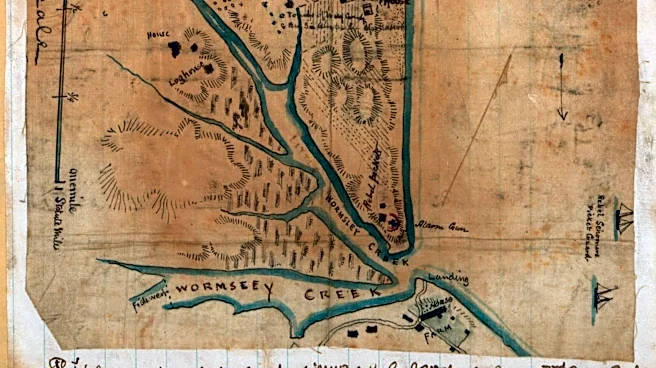
On the Confederate side, preparations had been hampered by slow construction, lack of heavy artillery, and design compromises. Fort Walker, on Hilton Head Island, and Fort Beauregard, on Phillip's Island, were the primary defensive strongholds. Fort Walker mounted thirteen guns facing the channel, along with additional guns for land defense. Fort Beauregard was similarly equipped with thirteen channel-facing guns. The garrisons had been reinforced, with Fort Walker receiving an additional 450 infantry and 50 artillerymen, plus 650 more from Georgia on November 6, bringing its total strength to over 1,100 men. However, due to transportation issues, all late-arriving troops were concentrated at Fort Walker, leaving Fort Beauregard's garrison of 640 men, including 149 in the fort, relatively isolated.
Confederate Flag Officer Josiah Tattnall III commanded a small flotilla of four gunboats—*CSS Savannah*, *Resolute*, *Lady Davis*, and *Sampson*. These were converted harbor craft, each mounting only two guns, and were no match for the heavily armed Union warships. While Tattnall's gunboats attempted to interfere with Union reconnaissance, their limited firepower and shallow draft meant they could not materially affect the main battle against the Union fleet. The Confederate defenders, though brave, faced an overwhelming technological and numerical disadvantage against the Union's well-equipped and strategically deployed naval force.