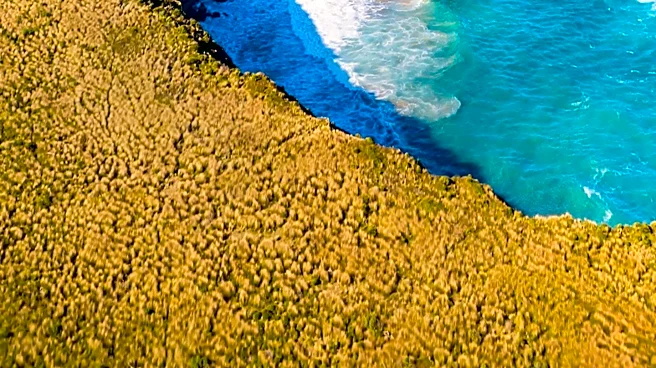









Australia, officially known as the Commonwealth of Australia, is a land of remarkable geographic diversity. As the sixth-largest country in the world, it encompasses a wide range of landscapes and climates, from arid deserts to lush tropical rainforests. This diversity is a result of its vast size and unique position as the world's flattest and driest inhabited continent.
The Vast and Varied Landscapes
Australia's land area spans 7,688,287 square kilometers, making it a massive
expanse of varied terrains. The interior of the country is dominated by deserts, which contribute to its status as the driest inhabited continent. These arid regions are characterized by sparse vegetation and extreme temperatures, creating a stark contrast to the lush coastal areas.
Along the coast, particularly in the north and east, tropical rainforests thrive. These rainforests are home to a rich array of biodiversity, showcasing the country's status as a megadiverse nation. The contrast between the dry interior and the verdant coastal regions highlights the geographic diversity that defines Australia.
Climate Variations Across the Continent
Australia's climate is as varied as its landscapes. The interior deserts experience extreme temperatures, with scorching hot days and cold nights. In contrast, the coastal regions enjoy a more temperate climate, with milder temperatures and higher rainfall.
The northern part of the country experiences a tropical climate, with a distinct wet and dry season. This region is prone to cyclones and heavy rainfall during the wet season, contributing to the lushness of its rainforests. Meanwhile, the southern parts of Australia have a more Mediterranean climate, with hot, dry summers and cool, wet winters.
The Impact of Geography on Biodiversity
Australia's geographic diversity has a significant impact on its biodiversity. The country's isolation has led to the evolution of unique species, with a high percentage of endemic flora and fauna. The varied climates and landscapes provide habitats for a wide range of species, from desert-adapted reptiles to rainforest-dwelling marsupials.
The diverse ecosystems across Australia are home to a significant portion of the world's biodiversity. This includes a variety of plant species that have adapted to the arid conditions, as well as a rich array of animal life that thrives in the different climates. The geographic diversity of Australia not only shapes its natural beauty but also plays a crucial role in supporting its unique biodiversity.