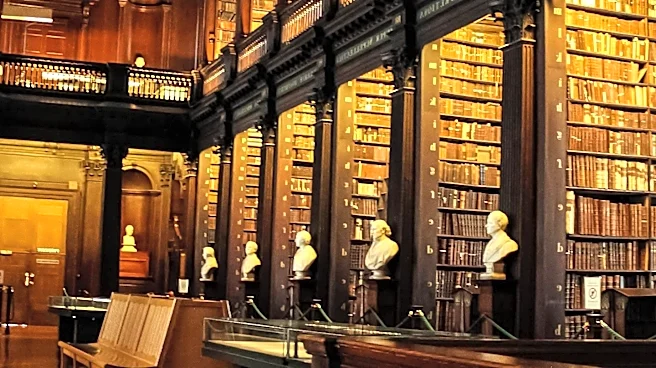









The Thomas Fisher Rare Book Library, located on the St. George campus of the University of Toronto, is not only a repository of rare books and manuscripts but also an architectural marvel. Designed by Mathers and Haldenby, with consultation from Warner, Burns, Toan, and Lunde, the library is part of a larger complex that includes the John P. Robarts Research Library and the Claude Bissel Building. This article explores the architectural significance
of the library and its role within the university's landscape.
Design and Construction
The Thomas Fisher Rare Book Library was established in 1973, with its design reflecting a blend of modernist architectural principles and functional requirements for housing rare collections. The architects, Mathers and Haldenby, collaborated with design consultants Warner, Burns, Toan, and Lunde to create a building that would not only serve as a repository but also as a space that inspires and engages visitors.
The library's design features an open atrium, which serves as a central focal point and enhances the sense of openness and accessibility. This architectural choice allows natural light to permeate the space, creating an inviting atmosphere for researchers and visitors. The building's exterior and interior design elements are carefully crafted to reflect the library's purpose and the university's commitment to preserving and showcasing rare literary and historical artifacts.
Integration with the University Complex
The Thomas Fisher Rare Book Library is part of a larger complex that includes the John P. Robarts Research Library and the Claude Bissel Building. This integration reflects the university's holistic approach to providing comprehensive resources for students, faculty, and researchers. The proximity of these buildings facilitates collaboration and access to a wide range of academic materials and services.
The library's location on the St. George campus, with convenient access to public transit, further enhances its accessibility and integration within the university community. This strategic placement ensures that the library remains a central hub for academic and cultural activities, attracting scholars and visitors from around the world.
Architectural Legacy
The architectural significance of the Thomas Fisher Rare Book Library extends beyond its design and construction. It represents a commitment to preserving and celebrating the written word, providing a space where history and literature come alive. The library's design serves as a testament to the vision of its architects and the university's dedication to fostering a vibrant intellectual community.
In conclusion, the Thomas Fisher Rare Book Library stands as a symbol of architectural excellence and cultural heritage. Its design and integration within the university complex highlight its importance as a center for research, learning, and inspiration. As a beacon of knowledge and history, the library continues to captivate and engage all who enter its doors.